On Intersectionality in Feminism and Veganism

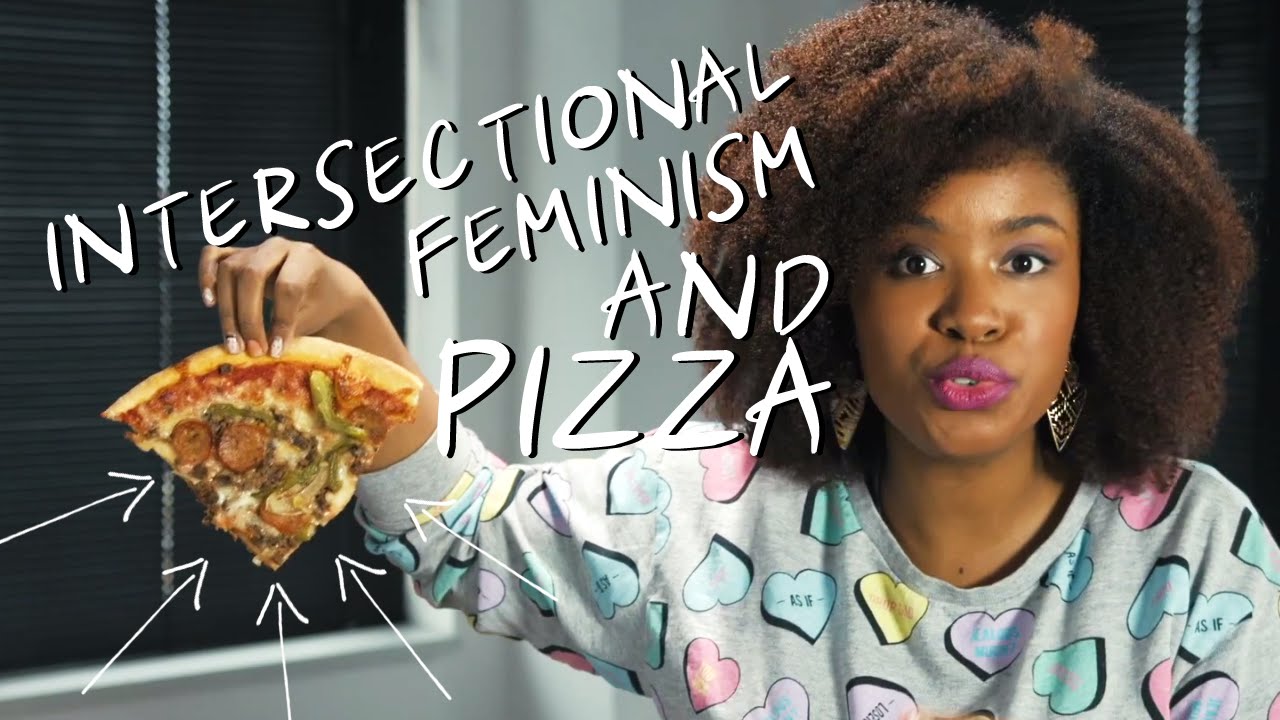
Akilah holding a piece of pizza

By Aph Ko

Dear Akilah,

I hesitated to write this open letter because frankly I think open letters can be corny and self-serving. However, after watching your intersectionality pizza video, I sincerely wanted to reach out to you to open up a conversation about a topic that is usually over-looked, or teased within mainstream feminist spaces: non-human animal rights. As a young black vegan feminist, I feel like I might be able to offer a different perspective on intersectionality, taking into account non-human animal bodies. I would urge you to at least consider checking out black vegan feminist literature in hopes that it might offer something new to your articulation of feminism and intersectional activism.

As a fan of your work, I must say that my goal is not to be a hyper-critical asshole because I am very much aware of how much courage goes into putting your thoughts out there, especially through digital media and vlogging. In this letter, I hope to build on what you’re saying in your intersectional video.

First of all, I thought your video was pretty clever. I am constantly in awe of feminists who diligently attempt to explain how oppression operates to people who might not have the language to completely grasp it. So, kudos to you for taking the time to even focus on intersectionality.

However, I must say that intersectionality too often has been co-opted as a tool to explain oppression to white people, instead of being a tool for minoritized people to understand their social locations and to develop methods to navigate it. So, I’m going to take a slightly different approach to intersectionality.

Trust me—I understand the connections you make in your video. My main contention is with the props and metaphors you used to bolster your thoughts about intersectionality because I think they matter immensely.

Your use of cheese pizza, sausage, and burgers [to explain intersectionality] demonstrates how difficult it can be, even when you’re a feminist, to see how ingrained oppressive hierarchies are.

My goal here is to perhaps start a necessary conversation about the bodies we include in our discussion about intersectionality, as well as the bodies that are routinely excluded [that need to be included].

Your video demonstrates that despite the fact that “intersectionality” is one of the trendiest words in our generation, our social justice movements are still largely compartmentalized, which makes it possible for really awesome anti-racist, intersectional feminists to completely disregard non-human animal rights.
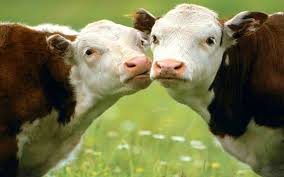
Species Intersectionality

The position that non-human animals occupy in our cultural imagination is proof for how easy it is to accept the lower status of some beings without even a second thought. I would assume that this should be concerning to you, especially since feminism is all about fighting for the rights of the minoritized and powerless.

Please understand this—incorporating animal bodies into your activism isn’t a distraction from anti-racism or sexism—it’s an extension of the conversation because in reality we’re not just talking about racism or sexism, we’re talking about white supremacy and patriarchy. We’re talking about capitalism and other discriminatory systems of domination that operate off of exploitation. Therefore, although our bodies might look different, we must all come together, not to show how we’re similar, but to demonstrate how these systems negatively impact us all.

So many people shout that animal rights is a distraction from feminism and anti-racism…that animal rights “DERAILS” the conversation and to me, it sounds like people have absolutely no idea what the conversation is really about.

Dr. A. Breeze Harper [a prominent kick-ass black vegan feminist and creator of the Sistah Vegan Project] states:

“I simply cannot look at food as an ‘everyday mundane object.’ I understand the meanings applied to food as something that represents an entire culture’s ideologies around everything. For example, food can tell me a society’s expectations about sexuality, gender roles, racial hierarchies of power and ability.”

Our automatic cultural reflex to say “Well, they’re animals, who cares” demonstrates just how deep the roots of injustice run. You can look at the comment sections for some platforms that shared your video: people kept reciting the same scripts like they were on autopilot. People kept saying how they were “hungry” and wanted to go eat hamburgers and cheese pizzas. Many folks in the comments section didn’t seem to challenge themselves or even problematize their behaviors: they seemed comfortable which is generally a sign that their principles are not being challenged. As activists, we shouldn’t appeal to people’s comfort.  Despite the fact that people made the connections you wanted them to make, particularly to race and gender, I thought it was a missed opportunity to politicize non-human animal bodies.

Akilah-2

Oftentimes, when we talk about animal bodies, people get defensive because they don’t want to be “compared” to animals. [Most of us black feminists know the history of black people specifically being compared to apes and monkeys—you can think about the recent Michelle Obama incident] Again-the goal isn’t to “compare” us to non-human animals, it’s to show that the systems that rape and slaughter non-human animals benefit from the systems that exploit us.

The fact that being called an “animal” is even an insult speaks to the ways that animals-as-less-than has already been naturalized in our culture.

This is actually called speciesism. Speciesism is when humans deem themselves the most important and valuable species which allows them to give no moral consideration to other species. Because of this, humans are allowed to do whatever they want to other species Again—it’s another hierarchy socially constructed to explain away the exploitation of another group of sentient beings.

Speciesism isn’t *like* racism or sexism. I’m not here to make crappy analogies to already existing systems of oppression. It is its own brand of oppression that often intersects with systems that intimately minoritize us.

It’s unfair that certain bodies are automatically coded as “less than” and certain bodies are automatically coded as “superior.” We live in a white supremacist patriarchy where white, middle class, able-bodied men are the standard, and everyone else is less-than. Because of this unquestioned, rigged framework, many bodies exist in systems that thrive off of their oppression and exploitation. This is where feminists and social justice activists must intervene.

We can’t reproduce this same logic in our own circles, especially as feminists. To disregard the oppression of other bodies reproduces a Patricia Arquette-type of analysis.

We can’t have activists shout about intersectionality, only to get quiet when it comes to the actual connection-making part of it.

To use cheese, sausage, and hamburgers to “explain” how human oppression operates is nothing short of ironic.

Non-human animal bodies are exploited to such an extent that they are stripped of any type of subjectivity—they exist for us which makes it possible for you to disregard their structural exploitation in a video about oppression. You used meat products as de-contexualized props to talk about humans which made the analysis ironic for those of us who practice veganism and politicize the ways that non-human animal bodies are arbitrarily designated as less-than.

The problem with your video is that it didn’t make people question the structural abuse of animal bodies—or the fact that animal bodies are things for our use and consumption. If anything, your video supported the myth that non-human animal bodies are to be used for human consumption and entertainment. You inadvertently employed speciesism in a video about intersectionality which is kind of anti-intersectional.

Just replacing the meat pizza with a vegan pizza won’t do the trick either because veganism isn’t the cure-all to oppression, although it would have been an improvement. Veganism without politicization will only yield de-contexualized diets. It would have been powerful if you used a vegan product and included non-human animal bodies in your analysis.

We must actively politicize the abuse animals experience as well as the systems that benefit from it. In fact, in studying food politics, it becomes evident how all of these oppressive systems collide, and strategically impact poor folks of color. It’s no secret at this point that the meat and dairy industry in the U.S. exploits the hell out of its brown workers. [Even in some produce industries, this is a problem too which deserves its own post!] Folks of color also disproportionately live in food deserts saturated with unhealthy animal products.

We must seriously consider non-human animals in our intersectional analyses as feminists. We can’t have liberation when people “don’t care” about the exploitation of an extremely vulnerable group of beings.

When you make a video about intersectionality and oppression, and people want to eat hamburgers in response, you know they missed the point.

Sure—to your credit, your video wasn’t specifically about animal abuse. I got that—but your video was about how we can better understand the oppression of bodies that don’t look like our own and how we can build better social justice movements that can accommodate bodies that are routinely excluded from the mainstream social justice narratives.

Non-human animals *must* be a part of this conversation, but not as props to help bolster your other points about humans.

The fact that people even get upset when animals are brought up in feminist discussions is because there’s an inherent anxiety surrounding animal bodies. We don’t have a good argument for abusing animals or eating them. People generally bring up “other” cultures that can’t go vegan, or don’t have the privilege of caring about animal rights—but many of us live in a culture or geographical space where we *can* care and change our behaviors—and those are the folks that I focus on.

People are terrified to talk about non-human animal abuse because it reveals how contradictory our moral compasses are. When we don’t politicize animal suffering in our movements, we merely have people who are committed to social justice-so long as they are at the center of the analysis. This type of set-up can’t yield intersectional movements.

One of the most noticeable tenets of white feminism is the inability to understand how oppressions connect—therefore, some white feminists routinely exclude other bodies from their analyses [cue Arquette]. We shouldn’t use this as a template for our own activism.

So, overall, thank you for making a video and opening up another dialogue about the importance of intersectionality in our social justice movements, however, I would sincerely urge you to check out some material that incorporates vegan feminism. In fact, there’s a conference next week from the Sistah Vegan Project. It’s called “The Sistah Vegan Conference: The Vegan Praxis of Black Lives Matter.”

I hope we can engage in a dialogue about the different bodies we talk about when we discuss intersectionality. I would like to highlight a quote that you said in your own video:

“I think it’s time we talk about feminism a little differently/more inclusively…”

I 100% agree. Understanding intersectionality isn’t about becoming a more “perfect” activist, it’s simply about understanding oppression a little bit better which is something that I think we can all be better at, myself included.

Thanks!

~Aph


This post originally appeared on Striving with Systems on April 16, 2015.

Aph Ko is a freelance writer and creator of the web series Black Feminist Blogger. You can check out a recent interview with her here: “Creating Revolution: Interview with Aph Ko.”

The Patriarchal Orientation of Sex, Race, Economic and Human/Nonhuman Classes

By marv wheale 


Neither capital nor labor tend to consider women as a sex class beneath men.  Both economic classes are prone to treat sexual relations as private, naturalist, voluntaristic, thereby not collectively antagonistic.  Sexual equality is generally perceived as almost a given by men and women of the lower and middle economic classes.  They acknowledge some irrational differences that manifest because of poverty and cultural discrimination.  Racism is frequently explained along the same lines.   Celebrating diversity and commonality  are deemed as the answers to sex and race prejudice.  Full gender and race equality will be achieved in an economic classless society, they think.  So sex and race relations are subsumed into the class struggle and defined in primarily economic terms.  At the same time men and women in the capitalist class are mostly white at least in developed nations.  They often admit that women, especially women of color and of aboriginal descent (minority men as well) do not have equal economic power to white men but this will be resolved over time with more awareness, education and acceptance of differences.   These elite, not unlike their subordinate classes, are resistant to the idea that there is a systemic sex and race division of power inside and outside the marketplace and the state.

In fact the sexes and races are classes too.  Anyone who understands social classes knows that they refer to power inequalities not bigotry.  Male dominance is a sex class.  It signifies the political forms men’s power has taken over time:  the sexual allocation of childcare and labour, pornography, sexual harassment, stripping, burlesque, beauty practices, rape,  prostitution, battering, obligatory heterosexuality, homophobia,  transphobia, the state, capitalism, colonization, the military, etc.  Women assimilate into these constructs.  They did not determine them.  Hence male supremacy is institutional sexism not a natural or solely individual phenomenon.   In terms of race class, it was white men in Europe, Australia and North America who organized  the government, economy, servitude of  men and women of colour, segregation and the occupation of indigenous lands – all illustrations of institutional racism.

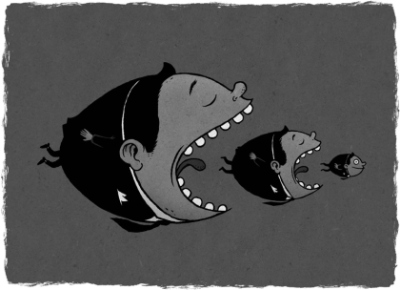
As a correlation think about capitalism.  Capitalists and workers do not have the same power to dictate each other’s lives.  It would be ludicrous to believe that capital is not dominant over labour and that mistrust and intolerance are the causes of the ill feelings towards each other.  To see the enmity in economic class divisions as a result of reciprocal misunderstandings would be an obscene misrepresentation of reality.   Capitalist rule is institutional economic classism.   Mutual respect, dialogue and compromise are not the solutions here to power and powerlessness;  abolition is, at the system design level.

Big fish eating smaller fish eating smaller fish; meant to represent capitalism

Many millennia ago males constructed masculinity thereby creating femininity out  of females, causing the rise of the sex class hierarchy.   When women  were privatized and isolated into pair bonding/marriage it obscured their sex class status and the systemic violence towards them.  Conjugality kept them divided against themselves by publicly declaring their primary identification as spouse/wife.  Women’s lower economic status is shrouded as well when they marry men because men generally have more wealth.  What’s more, women mediate economic class relations between men  when they marry across (and within) class lines.  Women serve to ease monetary and race class hostility by having men of different classes bond across women’s bodies providing political stability and legitimacy to the whole class system.

Woman and man holding signs that read "marriage equals" with a figure of a man and a woman

As noted by Cheryl Abbate the ascendancy of the male gender is obvious on the basis of aggression alone:  The idea that masculinity is responsible for violence, including sexual assault, is rarely disputed.   As Kilmartin points out, the vast majority of violent acts are committed by males, leading us to conclude that there is a high correlation between masculinity and aggression (Kilmartin 1994, 211).   According to the FBI (2011), approximately 90% of violent crimes in the United States are committed by men.”

Male dominance exists cross culturally in common and particular local forms too.  Women are inferior everywhere in terms of the gendered/sex lines of power.  Trouble is, the partitioning is usually defined as the biological sex differences by men (and many women) concealing its sexual politics.  When the Left admits that austerity measures and poverty affect women, First Nations and people of colour more than white men, it seems to be aware of the centrality of white male privilege;  but the Left doesn’t honestly face the universal historicity of patriarchy, preceding and following primitive accumulation.

Since all the world is a structural stage and the central element is patriarchy, gender conditions our choices in sexual relations in conjunction with capitalism in economic relations.   No one purely chooses heterosexuality no matter how much consent there is because the assent is shaped by inequality.  Heteronormativity under male imperialism is (man)datory whether it be monogamy, sexual harassment, pornography, prostitution or polyandrous relations.    As mentioned earlier, in western countries male monopoly is integrated with white supremacy as the public setting for people of color.  The difference is that many progressives suppose race classes should be undone while the majority uphold masculinity and femininity as innate.  They only want femininity to be as socially valued  and empowering as masculinity.  Liberal feminists take this viewpoint that sex work, cosmetics, BDSM, marriage and housework can be liberating.

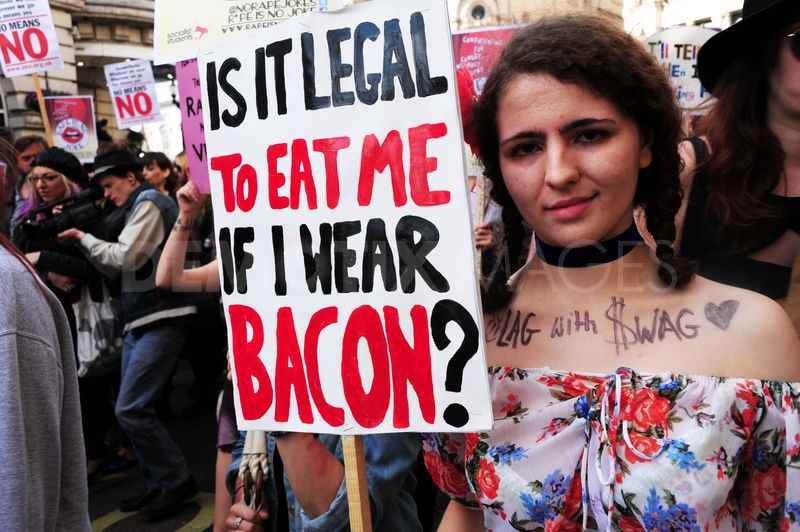
Woman at SlutWalk protest holding sign that reads "Is it legal to eat me if I wear bacon?"

The following rhetorical questions should resonate with socialists and feminists alike :  Do workers meaningfully choose their type of work or place of work?  Have women played an equal part with men in conceiving and building the major institutions of society?  If working conditions improve would oppression disappear? If women are granted greater legal protection from male violence does their exploitation vanish?   If you have satisfying and high paying work, does that imply your work is not exploited? If a woman has high status in society by male standards does that mean she isn’t discriminated against or sexually objectified?   As feminist scholar Catharine Mackinnon once said, is “a good fuck…any compensation for getting fucked?”   I hope we all have honest answers to these questions.  Apply race to these queries, which we must, and you will have another layer of subordination alongside and below white women.  Add colonization, sexual orientation, age, disability, body shape and biosphere debasement to the equation, and more intertwining injustices come to light.


Women and Nonhuman Animals

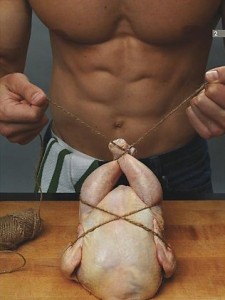
Capitalists, socialists and anarchists have other conceptual barriers linked to male hegemony:  an aversion to regarding nonhuman animals as a subjected class.   Moreover these speciesist androcentrists dismiss women’s rank in interrelationship to animals’ position.   The comparative mirror reveals the oppressions are not the same: women aren’t eaten and animals aren’t usually men’s sexual fetishes, for examples.   Nonetheless there are numerous similarities.  Dog and pony shows are analogous to beauty pageants and runway modelling.Hypermuscular man is binding the corpse of a chicken   Animals are imprisoned and assaulted in our homes, corrals, barns, laboratories, rodeos, horse races, circuses, zoos, aquariums and fight rings.  Women are detained and abused in prostitution, brothels, rape camps, strip clubs, peep shows and in their homes.  It is men who typically control these forms of enslavement of women and animals.  Domesticated animals are cooked and photographed in sexual postures as the pornography of meat.  Women are sexually depersonalized in and by pornography.   Harassment is common to either group.   Animals and women are most frequently killed by men, and some women have been slaughtered, eviscerated and dismembered like animals by men.  In addition, societal assumptions in general that animals “exist” for human welfare should not sound totally different from women’s experiences under male expectations.  Even the therapeutic role animals and women play correlate.   Most people live their entire lives without learning of the barbarity that occurs behind the closed doors of brothels, pornography studios, massage parlours, sex trafficking, strip clubs and private dwellings on the one hand, and slaughterhouses, vivisection labs, animal entertainment industries, animal traffickers, product-testing facilities, factory farms and households on the other.  The business of exploiting women and animals for pleasure, convenience, amusement, taste and moneymaking is intentionally well hidden.   Disclosure would undermine the power and profit of male capitalist and socialist enterprises.   Men must have their sex and steak at all costs.

Men walking through red light district with women's bodies in the windows

The truth of the interrelationship of patriarchy, capitalism and speciesism is revealed by vegan feminists who believe it is crucial not to conflate them in ways that are fanciful and offensive to women or untrue of animals.   When relating the rape of women and farmed animals for instance, Corey Lee Wrenn  calls for respect: “Knowing that about 1 in 3 women have or will be raped, I find it extremely inappropriate to utilize rape imagery to promote veganism.  First off, our primary audience is women.  If 80% of the movement is women, and 1 in 3 women are rape victims, that means that more than 27% of our movement (or more than 1 in 4 activists) are likely to have been the victim of rape.  Any rape victim can tell  you, seeing images of rape or reading graphic descriptions is extremely triggering.  It is also revictimizing when it is made obvious that our community doesn’t care enough about our safety to avoid using our experiences for animal rights claims on our behalf.”   A discerning approach is always necessary to examine these oppressions together and separately.


Transforming Cognizance

Vegan feminists unmask and demystify our personal identities.  Part of seeing through the identity fog means admitting the delusions we took for granted, the “habitual patterns” –  the assigned gender hierarchies of masculinity and femininity, human species superiority and capital control –  reinforced through millions and millions of moments of social learning.  Before “awakening” we thought  it wasn’t possible for things to be any other way as if these tendencies were an unchanging part of human nature (coming from the stork or written in the stars).  These assumptions easily perpetuated themselves because they are some of the most unquestioned beliefs we have.  As we begin to grow in consciousness and apprehend the alternatives to the prison of gender roles, non-human animal inferiority and labour submission, we become unstuck from oppressive attitudes.  Declaring a primary loyalty to women’s or animals’ or workers’ liberation is now regarded as a misconceived notion.  They are different, interrelated and of equal value.  There is no complete separation among them when each is understood as they actually exist in the context of patriarchal systems and rules.

All this illustrates the extraordinary power and influence of male ideologies over our consciousness, unconsciousness and societal institutions. They render dissenting views like the abolition of pornstitution,  animal products and capitalism as absurd and unintelligible – it has always been this way so it must be this way.  Overcoming the suppression of freedom of expression by male dogma is daunting but achievable.   Promoting veganism is an essential though utterly deficient way forward.   Political engagement in women’s, people of colour’s, workers’ and other species’ emancipation from  patriarchal organizational injustice is the ultimate solution.    Single issue approaches focusing on higher status animals as in dogs, cats, bears, whales, dolphins, sharks, elephants, tigers, gorillas, etc., does not constitute a serious engagement with comprehensive structural violence when they omit contextual analyses and strategies.


Feminism, Anti-Capitalism and Anti-Specieisism

That deep feminism is the missing underpinning of anti-speciesist socialist/left/anarchist analyses is another point of this reflection.   Some pro-animal revolutionaries from these traditions agree that all oppressions including sexism are entangled.     However they are reluctant to admit that men, often white males, have dominated the top tiers of monarchial, feudalist, religious, slavery, animal industry, state, military, capitalist, colonialist, family and pornstitution systems.   The animalist left typically denies that the male sex class could well be the enveloping power of all social hierarchies throughout (his)tory. Patriarchy was never unvarying. It evolved in various ways depending on how societies were organized within the hierarchies of men of which women and animals had little decision making power. It would be more factual therefore to resolve other class struggles within the broader sex class struggle.   Male supremacy should be emphasized as the first among equal subjections rather than one structure among many.  Opting for an “interlocking equal oppressions method” has the effect of minimizing foundational sources and influences even though women oppress animals, women capitalists have power over their workers and white women as a group have advantages over people of colour.

How can we devise appropriate strategies to change the world if we don’t  analyze it accurately?


Note: Few of the ideas in this post originate with me.  The principal ones stem from feminists like Cheryl Abbate and Corey Lee Wrenn  who have taught me how to think rationally, critically and inclusively,  something my non-feminist teachers failed to do. 


Party with the Meat Stick: The Sexual Politics of Slim Jim

Slim Jim, an American brand of cheap, convenience store animal-based jerky has launched a new ad campaign, “Party with the Meat Stick.”  A series of three commercials, all place “meat” within the realm of masculinity by feminizing their competitors.  This is done in some cases to degrade the competition.  In other cases, Slim Jim jerky is positioned with women to make their jerky appear more sexy, attractive, and consumable.

Image from Slim Jim website that shows 2 white women's bodies in tiny shorts and tops with midriffs exposed. They are touching each other with the beef jerky sticks.

The first ad features two women’s bodies (their heads are cut off, because this is, much like the jerky, about the consumption of fragmented body parts).  The Slim Jim women touch each other sexually with the “meat sticks” (an obvious phallic referent).  The competitor’s jerky, however, is held by two fat men who rub and poke each other’s protruding bellies with the sticks.  The commercial pulls on homosexuality (and fat-phobia) and makes it “disgusting” in order to feminize their competitor in the negative sense.

In the second commercial, a display box of Slim Jim gets progressively more masculine (first donning men’s sunglasses, then a mustache and an athletic medal, and finally a captain’s hat).  The “impostor” jerky (or, what they call “impostor meat sticks”), however, gets progressively more feminized.  First, the display box dons a baby’s bonnet and diaper, then a possum appears next to the box. In the case of Slim Jim, many masculine referents are used; in the case of the competitor, femininity referents are used (infants and Nonhuman Animals are both feminized bodies).  Note that feminist theory considers any  group that is marked with powerlessness, vulnerability, and low social status and is also oppressed, dominated, and consumed within a patriarchal society a feminized group.

Man dancing behind Slim Jim display surrounded by several dancing women.

Older woman in a pink cat sweater holding two cats next to "impostor" jerky

In the final commercial, the Slim Jim jerky attracts a partying man with several young women dancing behind him.  The “impostor meat sticks” attract an older woman wearing a cat sweater who holds two cats.  With “real” meat, men can expect a sexy good time with lots of available women at their disposal.  With “fake” meat, we should expect non-sexy, worthless women who are of no use to men because they are no longer viewed as sexual resources.  The cats are additional markers of “negative” femininity, as, again, Nonhuman Animals can be considered feminized bodies.

In all cases, “impostor meat sticks” are feminized using references to women, children, homosexuals, older persons, fat persons, and other animals.  “Real meat’ is masculine, or rather “real men” eat meat, and “real men” are defined by what they are not:  feminine. They are in control, they dominate, and their power and social status comes from the denigration and consumption of vulnerable bodies. In the case of the Nonhuman Animals, cows, pigs, and other animals are tortured, killed, ground up, spiced, and squeezed into plastic tubes.  Their bodies are literally being consumed to maintain male privilege.  “Meat” becomes a signifier of masculinity.  The consumption of animal bodies becomes a way of “doing” male gender.  It is a performance of domination enacted through the consumption and the active maligning and mocking of the non-masculine.  Men are encouraged to “party with the meat stick,” meaning, they are invited to celebrate and enjoy the privilege of masculinity using feminized bodies.  Their privileged status is demonstrated by reinforcing the disadvantaged status of others.


This blog is based on the theory of Carol Adams. Learn more about the sexual politics of meat by visiting her website.


Corey Lee WrennDr. Wrenn is Lecturer of Sociology. She received her Ph.D. in Sociology with Colorado State University in 2016. She received her M.S. in Sociology in 2008 and her B.A. in Political Science in 2005, both from Virginia Tech. She was awarded Exemplary Diversity Scholar, 2016 by the University of Michigan’s National Center for Institutional Diversity. She served as council member with the American Sociological Association’s Animals & Society section (2013-2016) and was elected Chair in 2018. She serves as Book Review Editor to Society & Animals and has contributed to the Human-Animal Studies Images and Cinema blogs for the Animals and Society Institute. She has been published in several peer-reviewed academic journals including the Journal of Gender Studies, Feminist Media Studies, Disability & Society, Food, Culture & Society, and Society & Animals. In July 2013, she founded the Vegan Feminist Network, an academic-activist project engaging intersectional social justice praxis. She is the author of A Rational Approach to Animal Rights: Extensions in Abolitionist Theory (Palgrave MacMillan 2016).

Receive research updates straight to your inbox by subscribing to my newsletter.