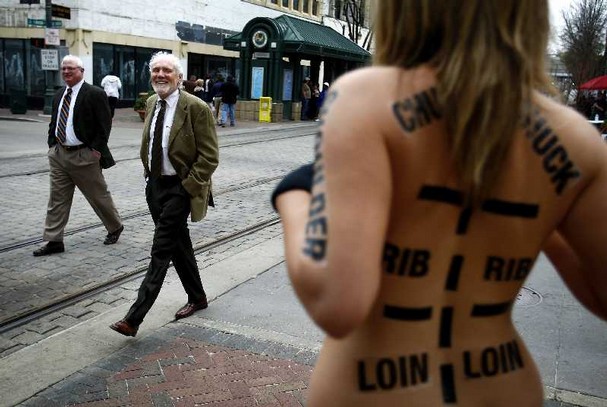
PETA and the Sexual Objectification Checklist

Identifying sexual objectification in the media is a good skill to learn! Here we’ve applied the sexual objectification checklist to PETA campaigning.

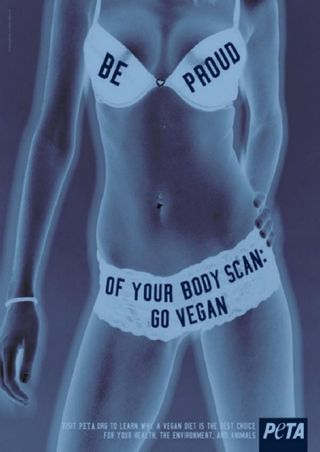
1. Does the image show only part(s) of a sexualized person’s body?

Image of woman's body under a scan. Her bra reads "Be Proud"; her bottom reads: "Of your body scan; go vegan"

Bottom half of a woman in a thong with hair protruding. Reads: Fur trim. Unattractive.

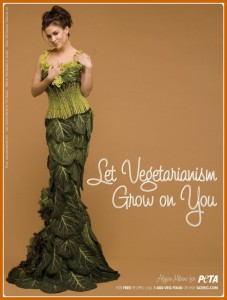
2. Does the image present a sexualized person as a stand-in for an object?

Alyssa Milano dressed in vegetables. Reads: "Let Vegetarianism Grow on You."

Naked woman painted like a globe. Reads: "Fight Climate Change with Diet Change, Go Veg"

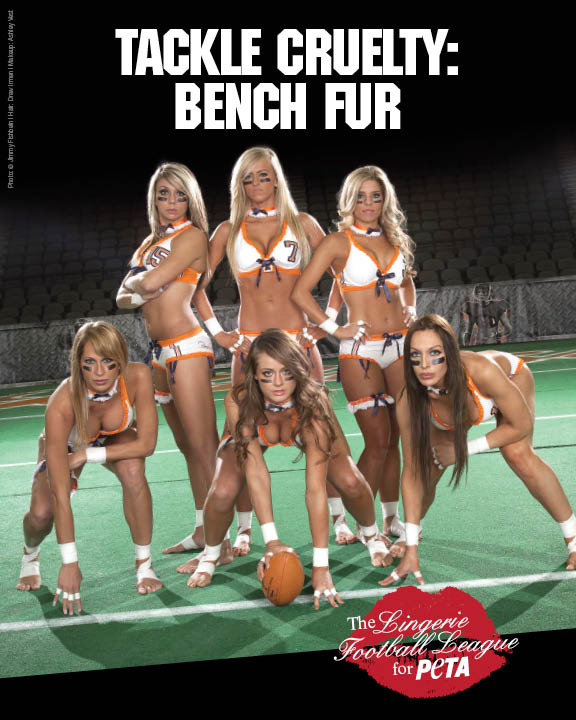
3. Does the image show sexualized persons as interchangeable?

Several thin naked women standing close and intertwining. Reads: "Feel beautiful in your own skin."

Group of cheerleaders wearing the same bikini outfit with long hair, tan skin, same thin athletic physique. Reads: "Tackle Cruelty: Bench Fur"

4. Does the image affirm the idea of violating the bodily integrity of a sexualized person who can’t consent?

Image depicts the upper body of a woman butchered and hanging on a meat hook. Reads: “Hooked on meat? Go veg.”

Woman on the ground wrapped in chains, legs spread and exposed, cleavage. Reads: "Shackled, Beaten, Abused."

5. Does the image suggest that sexual availability is the defining characteristic of the person?

Sasha Gray sits naked on a bed shown from behind, looking over her shoulder and cupping her breast

Thin white blonde woman sprawled out on some haystacks with legs spread pulling her dress down over her bosom. Reads: "No one likes an 8 second ride."

6. Does the image show a sexualized person as a commodity that can be bought and sold?

Image shows a white woman reclining on her hand. She is naked and painted with "meat cuts"

Woman laying under plastic wrap like a piece of meat with a bar code.


Corey Lee WrennDr. Wrenn is Lecturer of Sociology. She received her Ph.D. in Sociology with Colorado State University in 2016. She received her M.S. in Sociology in 2008 and her B.A. in Political Science in 2005, both from Virginia Tech. She was awarded Exemplary Diversity Scholar, 2016 by the University of Michigan’s National Center for Institutional Diversity. She served as council member with the American Sociological Association’s Animals & Society section (2013-2016) and was elected Chair in 2018. She serves as Book Review Editor to Society & Animals and has contributed to the Human-Animal Studies Images and Cinema blogs for the Animals and Society Institute. She has been published in several peer-reviewed academic journals including the Journal of Gender Studies, Feminist Media Studies, Disability & Society, Food, Culture & Society, and Society & Animals. In July 2013, she founded the Vegan Feminist Network, an academic-activist project engaging intersectional social justice praxis. She is the author of A Rational Approach to Animal Rights: Extensions in Abolitionist Theory (Palgrave MacMillan 2016).

Receive research updates straight to your inbox by subscribing to my newsletter.

Why the “We Use Men, Too!” Excuse Doesn’t Work

In a nutshell:  We do not live in a post-gender society where women’s and men’s bodies are interchangeable.  Men’s bodies are portrayed and perceived in much different ways that women’s bodies.  Women’s bodies are also the vast majority of those bodies that are sexually objectified in the media (over 95%!).  The sexual objectification of women is linked to increased rates of domestic violence and sexual violence against women.

Oftentimes in the Nonhuman Animal rights movement, organizations and their volunteers will vehemently state that their sexual objectification of women is not sexist because they also use men in their campaigning. This doesn’t cut it for two reasons:  1. Women’s bodies are disproportionately sexually objectified in the Nonhuman Animal rights movement just as they are in mainstream media; 2. Men tend to be portrayed in ways that protects their masculinity and social power, whereas women tend to be portrayed in ways that reinforce their submissiveness and sexual availability.

Let’s take a look at some images taken from PETA as examples.  As you peruse them, keep in mind the sexual objectification checklist:

1. Does the image show only part(s) of a sexualized person’s body?

2. Does the image present a sexualized person as a stand-in for an object?

3. Does the image show sexualized persons as interchangeable?

4. Does the image affirm the idea of violating the bodily integrity of a sexualized person who can’t consent?

5. Does the image suggest that sexual availability is the defining characteristic of the person?

6. Does the image show a sexualized person as a commodity that can be bought and sold?

Shows muscular boxer staring at camera wit fists raised.

Tattooed man looks at camera, he is shirtless, hand in fist

Basketball player, shirtless, heavily tattooed, has arms spread out, head faced up, holding a basketball in each hand

Shirtless muscular and hairy man faces camera and has arms folded.

Muscular man staring at camera with hands together in front of him, to display his muscles

Heavily tattooed, shirtless man with one arm to the side and one hand pulling at a chain around his neck. Making a tough face, in a tough posture

Muscular boxer raises fists to the camera, stares into camera

Muscular football player grimacing at camera, flexing muscles as he holds football with two hands

Mike from Jersey Shore shown surrounded by cats, holding a cat, no shirt, very muscular, kneeling, smirking at camera

The common factors in these images are direct eye contact with the camera, a threatening or powerful pose, and display of strength and prowess.  Indeed, many of these pictures demonstrate hyper-masculinity.  Look at the hand positions of these men:  They are demonstrating command over space, command over their body, and command over the viewer.  Men are not being used as objects, and their personhood is protected.  There is no sexual violation, and there is no compromised consent.  They are not shown as interchangeable, and they are not shown as sexually available.  These images don’t say, “Come and get me,” they say, “I’m coming to get you.”

Some images depict naked men, but these are often shown as humorous.  Because sexually objectifying men is so rare and so abnormal for our understanding of masculinity, it becomes funny.

David Cross is naked and on a fashion runway. He is striking a pose and looking at the camera with a silly face.

Steve-O is naked and jumping in the air. We see him from behind. He is making a goofy face. He has a tattoo of himself making that face on his back.

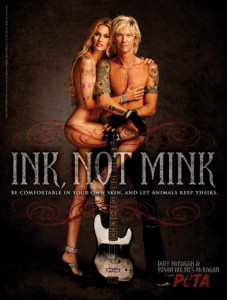
In images where men and women are pictured, the difference is easily spotted.  Notice how this man is facing the camera head on, displaying no vulnerability.  The woman, however, faces the camera from the side, leans on him, and is standing on one foot on tip toe, demonstrating her vulnerability.  Indeed, many mixed-gender images show women leaning on men for support.

Naked man sitting on stool with guitar covering his bottom half, naked woman at his side leaning on him with one leg latched on to him the other on a tip toe. Her head is tilted against his, he is looking straight at the camera.

See also this image where Corey Feldman is facing the camera head on, playing an instrument, and in command of his space.  His wife is shown leaning on him, and looking at the camera from an upturned face.  Much more of her body exposed.  She is not in command of her space, but rather  she is finding support on the man.

Corey Feldman and Susie Feldman in bed. Corey is playing guitar, sitting cross legged on the bed looking straight at the camera. His wife is leaning on him exposing much more skin.


Corey Lee WrennDr. Wrenn is Lecturer of Sociology. She received her Ph.D. in Sociology with Colorado State University in 2016. She received her M.S. in Sociology in 2008 and her B.A. in Political Science in 2005, both from Virginia Tech. She was awarded Exemplary Diversity Scholar, 2016 by the University of Michigan’s National Center for Institutional Diversity. She served as council member with the American Sociological Association’s Animals & Society section (2013-2016) and was elected Chair in 2018. She serves as Book Review Editor to Society & Animals and has contributed to the Human-Animal Studies Images and Cinema blogs for the Animals and Society Institute. She has been published in several peer-reviewed academic journals including the Journal of Gender Studies, Feminist Media Studies, Disability & Society, Food, Culture & Society, and Society & Animals. In July 2013, she founded the Vegan Feminist Network, an academic-activist project engaging intersectional social justice praxis. She is the author of A Rational Approach to Animal Rights: Extensions in Abolitionist Theory (Palgrave MacMillan 2016).

Receive research updates straight to your inbox by subscribing to my newsletter.

What’s Wrong With This Soap?

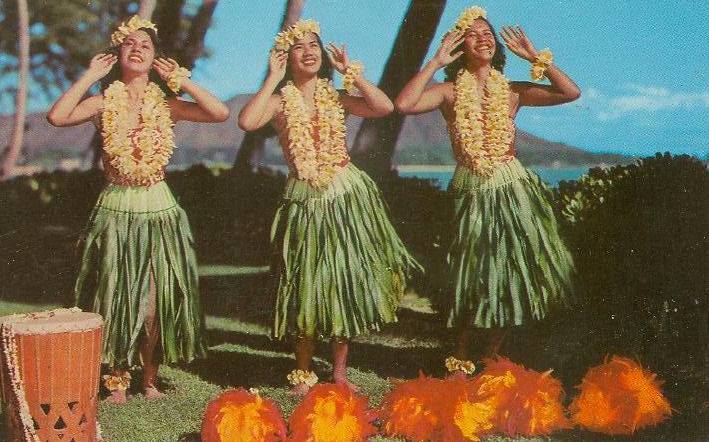
Three hula dancers

Hugo and Debra Naturals is a high-end vegan soap company that touts food-grade, ethically sourced, cruelty-free bath and body products.  To promote their new Creamy Coconut line, which it describes as an “exotic blend” of oils, exfoliants, and scents, the company has been posting a vintage image of three Hawaiian hula dancers (pictured above) on its Facebook promotional page.

Sociologists have noted that the hula girl is a symbol of western imperialism. She is the accessible ethnic woman ready to serve and please the colonizers.  In fact, the hula dance as we know it today is an adulterated version of a men’s storytelling dance.  Colonizers morphed it into a sexualized dance for “exotic” women to perform in front of white tourists.

When Hugo and Debra Naturals draws on the image of the sexualized, tokenized, and colonized brown woman to sell “exotic” products to wealthy (and primarily white) customers, it is drawing on a history of white imperialism and the “othering” of the oppressed.  Dr. Breeze Harper has often commented on the “whiteness” preserved and protected in vegan consumption and the concealment of human suffering behind many so-called “cruelty-free” vegan products.  The white-dominated vegan community has largely failed to welcome people of color, often alienating them and tokenizing them when convenient.

Using a symbol of racial colonization and sexual domination to sell “cruelty-free” “exotic” soap demonstrates the white normativity of veganism.  Obviously, products that are free from Nonhuman Animal ingredients and testing are a major improvement, but we should be cognizant of how human suffering often goes overlooked in ingredient sourcing and, in this case, product promotion.  The intention seems to be to romanticize luxury soap items by drawing on Hawaiian imagery.  In many ways, however, it is colonization, sexual conquest, and systemic racism that’s actually being romanticized.


Corey Lee WrennDr. Wrenn is Lecturer of Sociology. She received her Ph.D. in Sociology with Colorado State University in 2016. She received her M.S. in Sociology in 2008 and her B.A. in Political Science in 2005, both from Virginia Tech. She was awarded Exemplary Diversity Scholar, 2016 by the University of Michigan’s National Center for Institutional Diversity. She served as council member with the American Sociological Association’s Animals & Society section (2013-2016) and was elected Chair in 2018. She serves as Book Review Editor to Society & Animals and has contributed to the Human-Animal Studies Images and Cinema blogs for the Animals and Society Institute. She has been published in several peer-reviewed academic journals including the Journal of Gender Studies, Feminist Media Studies, Disability & Society, Food, Culture & Society, and Society & Animals. In July 2013, she founded the Vegan Feminist Network, an academic-activist project engaging intersectional social justice praxis. She is the author of A Rational Approach to Animal Rights: Extensions in Abolitionist Theory (Palgrave MacMillan 2016).

Receive research updates straight to your inbox by subscribing to my newsletter.

Why Can’t Men Be Feminists?

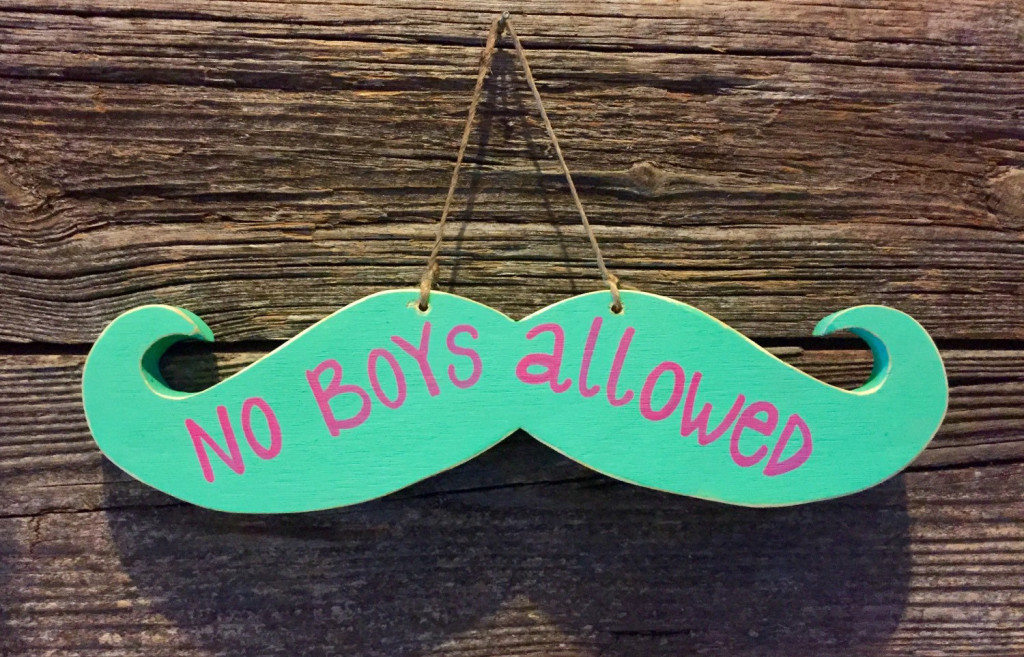
Hanging wall sign the shape of a mustache that reads, "No Boys Allowed"

Can men be feminists? Certainly, this question is a contentious one, and there is little consensus on the matter. As a scholar of gender studies and an activist of fifteen years, it is my position that, no, cis-men* cannot be feminists. And there’s a good reason or two. However, these reasons are complex and there are many points to consider, so bear with me.
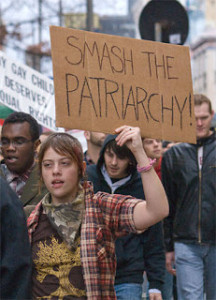
Female protester holding cardboard sign that reads: "Smash the Patriarchy!"

While I acknowledge that many disagree with this position, it is hardly a radical one.  Quite a few feminists insist that men can’t be feminists (and the National Organization for Men against Sexism agrees).  To be feminist is to be a self-identified woman fighting for female equality; to be a feminist requires a direct experience of gender oppression. Why? Because it is this unique experience as a member of a targeted group that will inform one’s activism.

Male Territorial Claims

Men who become disgruntled with this definition and demand inclusion only underscore the ubiquitousness of male privilege.  When men reassert their entitlement, they are demonstrating their need to be in control and they are pulling on their patriarchal capital.

But wait! This doesn’t mean that men should hit the road, all men are scum, etc. Men, of course, have a role to play, too. Although cis-men can never fully remove themselves from the privileges of their gender, men can and should absolutely be allies! We should be wary of any man who insists on being included and insults those feminists who deny him inclusion. Individuals who engage this kind of behavior are demonstrating an inability to recognize their male entitlement. These are the very types of people who should never be considered a feminist in the first place, regardless of your position on the debate.

I think it’s a waste of energy to concern ourselves with those men who are irritable at the thought of being excluded.  Truth be told, cis-men have full entitlement to 99% of the world’s social spaces.  They also enjoy the infinite benefits of being male (like better jobs, better pay, more prestige, perceived credibility and authority, etc.). I know in my heart of hearts that men will do just fine without access to feminist spaces.

Insisting that Men Can’t be Feminist is Not Sexist

50's comic of a white man in a suit and hat saying to a woman: "Look kitten, I don't give a damn what YOU THINK, If I SAY I'm a feminist then BY GOD I AM ONE!"When men consider it “sexist” to be excluded, it illustrates how little they understand the meaning of sexism. Women–who are an oppressed group living under a patriarchy that privileges men–cannot, by the very nature of their social status, wield sexism against men. Calling a woman sexist, a man-hater, or a misandrist is a counter-tactic that is intended to redirect attention from men–a privileged group that typically goes completely unexamined–back to women where it normally lies. In other words, it is a conscious attempt to divert focus from the oppressor to the oppressed. It is a tactic intended to silence and maintain male entitlement and privilege. Men cannot be oppressed by women under a patriarchy that is structurally designed to benefit men.

In a similar tactic meant to undermine women, some men will insist that these “sexist” or “misandrist” women who exclude men aren’t really feminist themselves because they are discriminating based on sex/gender. The problematic nature of this reaction is put into sharp relief when we consider other identity-based movements like the disabled people’s movement or the Native American self-determination movement. Is it really a right for non-disabled persons or white-identified persons to claim entitlement to inclusion in those movements?  There is a reason why some social justice spaces are semi-exclusive. It has to do, firstly, with the tendency for privileged persons to dominate and create hurt (even if doing so is not intended). It also has to do with a shared experience with oppression.  It is a history that people with privilege cannot fully experience or understand, even if they give it their best effort and best intentions (which is admirable!).

It’s About Gender, Not Biology

Another retort is that a women’s only feminist space relies on biological determinism to maintain boundaries. But this response falsely conflates biology with social construction. Feminism is based on gender, not sex. Gender implies socially constructed roles, expectations, and treatments.  Gender is about experience.  Chromosomal makeup will have only a limited and arbitrary impact on how the social environment will shape one’s gender.  For example, many people are born with penises or with intersex traits, identify as female, and share the female experience.  These people are female (if they identify as such).

Gender is fluid and adaptable. This is what is meant by the feminist emphasis on “experience”; gender distinction relates to socialization processes, social interactions, and cultural meanings.  Gender is not about genitalia, but, rather, it is concerned with the ways in which the world treats people according to the gender they have been assigned or identify with.  In fact, many social identities are ascribed, such as race or species.  Identification with a particular gender, race, or species means differential treatment and differential perceptions of the world. Again, the fluidity of gender means that some people who are ascribed one gender can resist and identify how they feel is most appropriate (and some will choose to reject the gender binary altogether).

It is cis-masculinity in particular that acts as an ideological barrier, and that is what this essay is intended to examine. In an ideal world, gender would be abolished and no one would feel bound by its restrictive and often harmful effects. But we do not live in a gender-neutral, gender-absent world. Differences still exist, and they still matter.

Consider Jane Goodall who studied chimpanzees for 45 years.  She is a human, but she knows chimps well.  She probably knows more about chimps than any other human on Earth.  But does she know what it’s like to be a chimp as well as a chimp would?  No, of course not, because she is a human.  She experiences the world differently.  She has her own history, her own social conventions, her own culture, and her own knowledges that obscure the possibility of ever fully knowing the chimpanzee experience.   She may be an important ally to chimpanzees, but her human privilege will bias how she advocates for them.  Her human privilege also means she can advocate for them when she wants to, if she wants to.  Clearly, chimpanzees are not a direct correlation to human women, as chimpanzees, for the most part, lack the ability to mobilize and advocate for themselves, but the point is that social identity and privilege can impose a barrier that is difficult to overcome.

I argue that genders, too, represent distinct cultures.  Many men will have women in their lives and feel that they know women well.  They might study feminism, attend rallies, and read extensively on gender-based social justice.  But do they ever really know the female experience?  For cis-men, this is unlikely.  They can develop a good understanding of course, but, ultimately, their socialization and personal history with privilege prevents them from ever fully being immersed in womanhood.  This leads us to the crux of the argument: without really knowing the female experience, it quickly gets dangerous when a privileged group of people begin to advocate on behalf of a vulnerable group. This isn’t about putting men down and turning men away. This argument only reflects a desire that men acknowledge and respect that women will be the best positioned to advocate for women. It’s a desire for space and autonomy.
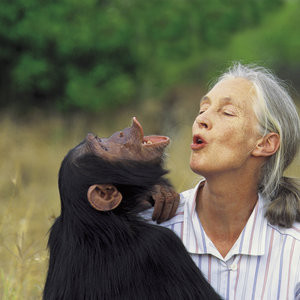
Jane Goodall with Chimpanzee

Caring About It Part-time vs. Living It Full-time

Even the most committed male ally to feminism can walk away at  any time.  He might spend a few days a week advocating for feminist causes, but he will always have the privilege to support or not support women at his whim.  Women, on the other hand, will always be exposed to sexual harassment, sexual abuse, violence, rape, sexism, second class citizenship, etc.  Men can critically examine patriarchy when it is convenient to them, but women have no choice but to endure the consequences of patriarchy at all times.

This is the crucial difference between a feminist and a male ally.  A feminist lives that oppression, but an ally doesn’t have his neck out.  He will always be protected and supported by patriarchy. He has male privilege as a safety net. So many times I’ve seen the most committed of “feminist” men turn their backs on women in need in order to protect their male buddies, to avoid drawing negative attention to themselves, or to escape some other consequence as is convenient to them. And really, men don’t have to walk in women’s shoes to help. That is, there need not be any urgency to experience the female experience. Men don’t need to worry so much about understanding women’s oppression so much as their privilege. Men can help by working on themselves rather than working on women.

Oppressed groups need a safe space where they can have leadership over their own struggles.  There needs to be at least one space where male privilege does not usurp, control, and marginalize women.  This is not a war on men, this is simply working to protect women’s spaces from male co-optation. That doesn’t mean there is no room for men in the feminist movement, it simply means that men will not be granted the full leadership and control they enjoy elsewhere. When we’ve got patriarchy under control, then we can talk about gender neutrality in collective action. But, until then, men should mind the boundaries.

Enacting Male Authority to Define and Police Oppression

Another reason we should be hesitant to include men as feminists is the tendency for men to take it upon themselves to define what feminism is.  For instance, one male-identified Nonhuman Animal rights theorist in particular repeatedly argues that only vegans can be feminists.  However, this person has not (and probably would not) insist that African Americans, Hispanic Americans, Native Americans, gays, lesbians, trans persons, disabled persons, etc. have a flawed sense of social justice or that they “aren’t real activists” because they are not vegan.

I suspect that men pick on women because women are an at-risk group, and this group still endures horrific levels of discrimination and violence that most people still consider completely normal.  It’s easy to push women around.  We would find it ridiculous if these same men made a similar argument to the Black Power movement:  “African Americans cannot be Black nationalists if they are not vegan!”  It is, if not laughable, then insulting.
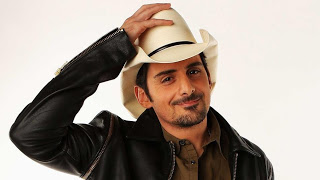
Brad Paisley Accidental RacistMen should not enjoy the privilege of defining what feminism is. There is something fundamentally wrong with men attempting to invoke their authority in this matter. Remember Brad Paisley’s “Accidental Racist” song?  Paisley wrote  about how he was rebuffed for wearing a confederate flag t-shirt by a man of color who was serving him at Starbucks.  Paisley didn’t take too kindly to this. In his eyes, it was his hurt feelings that should take center stage; he was the one being discriminated against. What gives him the authority as a white-identified man to define racism? Likewise, what gives men the authority to define feminism?

The Role of Allies

Many movements rely heavily on allies, like the anti-slavery movement of the 18th and 19th centuries and the Civil Rights movement of the 20th century. The difference between being an ally and being a full-fledged activist who gets to share in the identity of the movement is simple: knowing your place and being respectful.

Consider, for instance, the Freedom Buses of the Civil Rights movement.  African Americans and whites rode those buses through the South in the face of life-threatening danger. The white activists in this example were allies. They were very important allies to be sure, but they could not claim for themselves the same space in social justice that African Americans had carved out for themselves. What if the Freedom Bus organizers had asked white activists to stand aside, and white activists responded by berating the African American riders with insults? What if the whites demanded to be included, and accused the riders  of color of racism? It would be difficult to consider these people activists or allies, right?
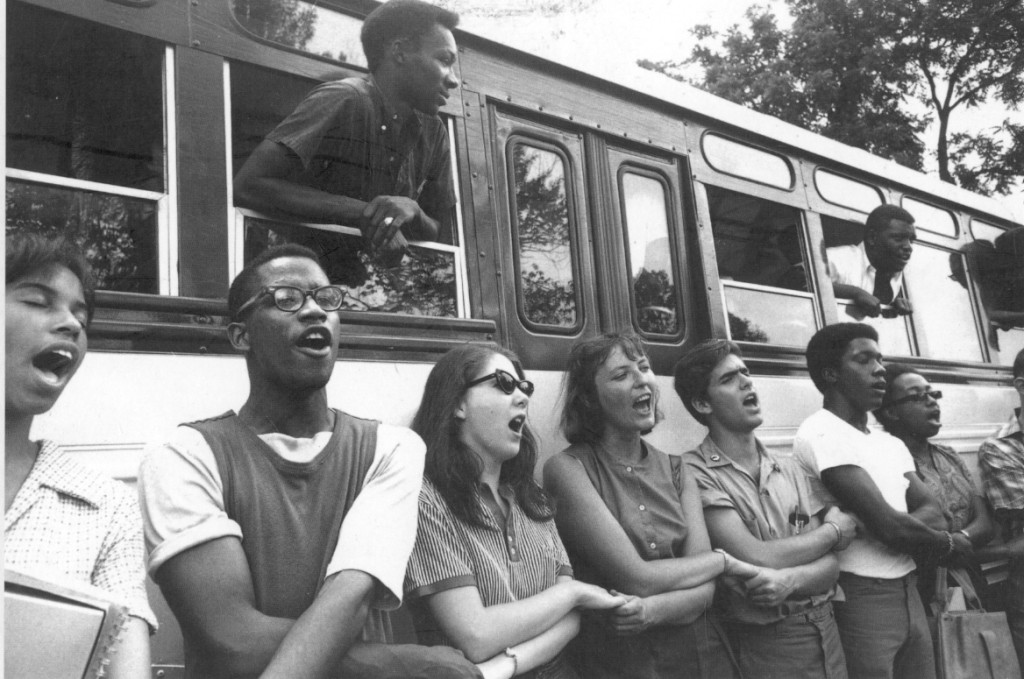
Men as Feminists Freedom Bus

The Sexual Politics of Supporting Men

Sometimes men will draw on other women to support their entitlement the female space.  Men may commission women to write essays or blog posts in support of their patriarchal position. Or, they may claim, “My girlfriend/wife/female friend/female administrator/etc. agrees and she’s a woman.”   Women supporting these men will often call women “sexist” for asking men to keep their respectful distance.

These types of “reverse sexism” comments are sexist.  Yes, even if coming from a woman.  Any person that utilizes the framework of patriarchy to  oppress women is engaging sexism, regardless of gender.  Women are people, too, and they are also indoctrinated with the normalcy of sexism in our society.  Women are taught to think less of themselves, celebrate masculinity, obey men, doubt their own experiences and voices, and basically cater to men as a strategy of survival.  Women are expected to support men; that’s a primary duty of the female gender role.  So, it should not be surprising in the least when men exploit this socialized obligation and encourage women to speak out in the defense of male authority.

What are Some Solutions?

In this essay, I have argued that men’s role in the social movement space is most respectfully that of an ally. The reasons for this position are many, but mostly relate to men’s limited understanding of women’s experiences and their tendency to dominate and abuse power given that we live in a patriarchy. The importance of this position is evidence in men’s aggressive reactions that rely on sexism to shame, insult, coerce, threaten, intimidate, or gas-light women into complying with male authority and male entitlement.

Again, men certainly can participate in their own way. Being an ally takes careful consideration and careful treading, however. Men who want to see an egalitarian future can help the cause by listening, learning, and working on their own attitudes and behavior (and that of the other men). Really, it’s as simple as that. Overcoming oppressive gender privilege is not an easy task, so it will necessitate a conscious effort to appreciate and accommodate the experiences of oppressed persons. It’s also important to be actively involved in making spaces safe for women. Women need support, not co-optation.


* This article takes “men” to mean cis-men and “women” to mean cis and trans women.  This article also takes “men” to mean the cis-male perspective.  This could also include women who identify with and support that position. It should also be acknowledged that not all men are cis.


Corey Lee WrennDr. Wrenn is Lecturer of Sociology. She received her Ph.D. in Sociology with Colorado State University in 2016. She received her M.S. in Sociology in 2008 and her B.A. in Political Science in 2005, both from Virginia Tech. She was awarded Exemplary Diversity Scholar, 2016 by the University of Michigan’s National Center for Institutional Diversity. She served as council member with the American Sociological Association’s Animals & Society section (2013-2016) and was elected Chair in 2018. She serves as Book Review Editor to Society & Animals and is a member of the Research Advisory Council of The Vegan Society. She has contributed to the Human-Animal Studies Images and Cinema blogs for the Animals and Society Institute and has been published in several peer-reviewed academic journals including the Journal of Gender Studies, Environmental Values, Feminist Media Studies, Disability & Society, Food, Culture & Society, and Society & Animals. In July 2013, she founded the Vegan Feminist Network, an academic-activist project engaging intersectional social justice praxis. She is the author of A Rational Approach to Animal Rights: Extensions in Abolitionist Theory (Palgrave MacMillan 2016).

Receive research updates straight to your inbox by subscribing to my newsletter.

An Open Letter to PETA

Open Letter to PETA

Dear PETA,

We have such a complicated relationship and history. You were one of my first entry points into animal activism, made me feel not so alone, gave me a sense of connection, and so much passion and hope as a middle schooler. I proudly wore my PETA t-shirts to school, lived on your street team website, and even spent the summer interning with you. I learned how to organize my first protest from you. You provided advice when my teacher wouldn’t allow me dissection alternatives. The “Street Team” forums helped me not feel so weird in the world (although, now I know – weirdness is the best) and gave me the strength to keep going, to keep fighting, even after cruel kids and comments.

So much has changed – and it really, really hurts, to be honest. I know you haven’t changed, and I guess that is the problem. You are still doing what you’re doing – in the way you are doing it. I see your campaigns/advertisements – over the past few years, have reflected back on the media “brainstorming” sessions we had when I was an intern, and it creates these twisted knots in my stomach. It’s really hard to describe the feeling. It’s like when a family member says something really homophobic or sexist, does something that you know isn’t right – but they were the ones who stayed up with you  at night as a kid, read you bed time stories, and fought against some of the monsters in your closet. There’s always this soft spot, this hope that they can change, will change.

I’m just. Angry. And sad. Sad for the non-human animals – sad for the animal rights and social justice movements – because it’s a loss, a huge loss, and it’s hurting all of us. We need organizations that are working towards ending ALL forms of oppression – not perpetuating them in the name of justice for one – because it’s not possible. Nothing is a single level issue. And animal rights IS a social justice issue. The non-human animals need everyone.

I struggle when feeling the divide between the social justice/feminist movements and animal rights movements- as though they are separate non-connected issues. And I hate that you are so often the face of the animal rights movement – but you are, so it’s time to hold yourself accountable, take responsibility, and make a change. I beg of you. As that bright and teary fire eyed middle schooler. Please stop with this sexist, racist, non-consent centered bullshit, and please get rid of any remnants related to your latest campaign: “Vegans go all the way.” NO. NO. NO. We need to challenge rape supportive culture, not contribute to it – for non-human animals and human animals.

I don’t really have any more words, but please, I beg of you, on my hands and knees, for all the passionate teens, the cant-quite-fit-in people like me – teach them that we can make a difference, and support them in their multiple identities and experiences, and in ending all forms of violence. Because it’s all connected. Only then can we create a beautifully loving and compassionate world – where violence is not digested. Where sexualized violence is not normalized. Where marginalized non- human animals and human animals are not objectified and seen as inferior.

This goes out to all the feminist movements as well – it’s time to recognize the role violence against non-human animals plays in desensitizing us and normalizing other forms of violence and oppression.

-A once young PETA lover, hoping for change.

By Mary Sue Savage

You can follow her on her blog, Confessions of an Activist with Social Anxiety.

What’s that Dirty “V” Word?

Women dressed in vagina costumes wave banners that read: "VAGINA" and "I heart Vaginas"

Vegans and vaginas, yes, there is an important connection. Hang with me here…

A colleague of mine mentioned to me that she would be using “the V word” in an essay she was working on and was worried about the push back she expected to receive. A little confused, I responded asking if she meant “vagina” or “vegan.”  Honestly, given the stigmatization of both words, I had no idea which she meant.  And I must not be the only one. When I conducted an image search for “the V word” to illustrate this essay, most of the results are pictures of feminists and vegan food.

I see news items from time to time in the feminist media chastising this or that organization for censoring the word “vagina.”  I also hear a lot of talk in the Nonhuman Animal rights movement about moving away from the word “vegan” in favor of “vegetarian,” “veg,” “veg*n,” “plant-based,” “meat-free,” etc.

I’m wondering what exactly is so off-putting about vaginas and veganism.  Why have these words become so stigmatized that they are often censored?  What are we trying to hide?  Who are we trying to silence?

VAGINAS: Many women have them; patriarchy wants to control them.*

VEGANS: Many activists are them; anthroparchy wants to control them.

I think the common factor between vaginas and vegans is that being loud and proud about them means posing a direct challenge to oppressive social structures.

But, if feminists wouldn’t dream of telling women to shut up about their vaginas, then why do professionalized welfare organizations tell people to shut up about their veganism?

Vegan campaigners hold signs at a demo

Being a woman shouldn’t be something to be ashamed of, neither should being a vegan.  Hiding these terms and identities away as if they’re dirty no-nos only serves to protect structural oppression. The strategy of silence does little to liberate.  It will not be possible to make any headway as long as women, men, and the media are uncomfortable using the word “vagina.” The same holds true for vegans and Nonhuman Animal rights/welfare organizations that are uncomfortable using the word “vegan.”

*This essay is meant to be trans-inclusive. Not all women have vaginas, and some men have vaginas.


Corey Lee WrennDr. Wrenn is Lecturer of Sociology. She received her Ph.D. in Sociology with Colorado State University in 2016. She received her M.S. in Sociology in 2008 and her B.A. in Political Science in 2005, both from Virginia Tech. She was awarded Exemplary Diversity Scholar, 2016 by the University of Michigan’s National Center for Institutional Diversity. She served as council member with the American Sociological Association’s Animals & Society section (2013-2016) and was elected Chair in 2018. She serves as Book Review Editor to Society & Animals and has contributed to the Human-Animal Studies Images and Cinema blogs for the Animals and Society Institute. She has been published in several peer-reviewed academic journals including the Journal of Gender Studies, Feminist Media Studies, Disability & Society, Food, Culture & Society, and Society & Animals. In July 2013, she founded the Vegan Feminist Network, an academic-activist project engaging intersectional social justice praxis. She is the author of A Rational Approach to Animal Rights: Extensions in Abolitionist Theory (Palgrave MacMillan 2016).

Receive research updates straight to your inbox by subscribing to my newsletter.