Chère Nouvelle Vegane

Translation by Christophe Hendrickx. See more French translations of critical vegan essays by grassroots activists by visiting his blog, La Pilule Rouge. The original English version of this essay can be found by clicking here.

TRIGGER WARNING: Sexisme et violence sexuelle

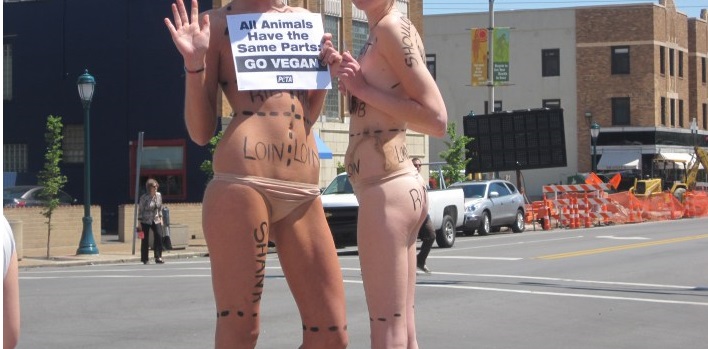
Two young thin white PETA volunteers pose naked on a street corner with their bodies marked like meat cuts holding a PETA sign that asks viewers to go vegan
Chère Nouvelle Végane,

Prépare-toi, car un parcours mouvementé t’attend. Devenir vegane est, au début, une expérience très frustrante et traumatisante. Tu devras apprendre à manger autrement, ce que tu peux acheter ou non, comment gérer tes amis et ta famille, et comment gérer les sentiments intenses de colère et de tristesse qui viennent lorsque l’on ouvre son esprit et son cœur à la souffrance des autres. Rien de tout cela ne sera facile, mais, je te prie de ne pas abandonner, car cela deviendra vraiment plus facile au fur et à mesure de ton parcours. Cela deviendra normal et habituel avant que tu ne le réalises, je le promets.

Tu te tourneras probablement vers la communauté vegane pour t’aider lors de cette transition. Tu te feras beaucoup d’amis formidables et tu apprendras beaucoup des autres. Tu ressentiras un grand sentiment de paix en sachant que tu n’es pas seule et qu’il existe d’autres personnes qui sont aussi passionnées que toi pour changer le monde.

Par la suite, cependant, tu pourrais commencer à réaliser qu’être vegane est une chose, mais qu’être vegane et s’identifier1 comme une femme est tout autre chose. Si tu es en couple, tu pourrais t’apercevoir que ton/ta partenaire est hostile par rapport à ton choix. Surtout si ton partenaire s’identifie comme un homme, ta présence vegane pourrait présenter une remise en question de son autorité masculine. Il pourrait insister sur le fait que tu ne pourras jamais le changer (même si tu n’as jamais mentionné quoi que ce soit à ce sujet !). Il pourrait insister à ce que tu prépares des plats non-vegans, ou que tu l’accompagnes dans des restaurants non-vegans. En tant que femme, tu pourrais ressentir une pression importante à concéder cela. On apprend très tôt aux femmes que les intérêts des hommes passent en premier. C’est nul, mais c’est comme ça. Ne te sens pas mal si c’est le cas.

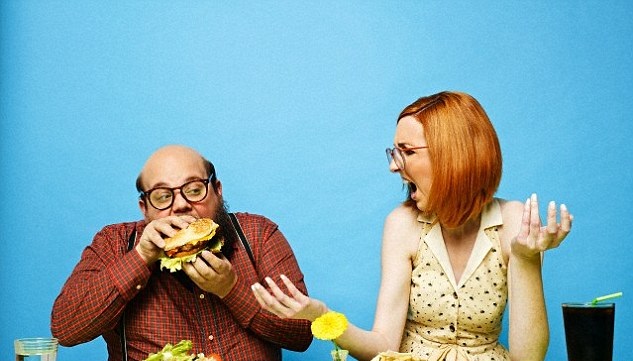
Woman looking outraged as her male partner scoffs down a burger

Si tu t’identifies en tant que femme, tu pourrais réaliser que tes amis s’identifiant comme des hommes sont également rebutés par ton véganisme. Par exemple, un post Facebook bien intentionné qui rappelle à tes lecteurs que les animaux non-humains comptent aussi, pourrait ennuyer des hommes qui sont prompts à répondre par des commentaires te décrivant comme quelqu’un de a) trop sentimentale ; b) grande gueule ; ou c) « folle ». La sensiblerie, le franc-parler, et la maladie mentale sont toutes des caractéristiques hautement sexuées. Les femmes sont vite rejetées comme étant soit trop féminines, soit pas assez féminines. Pendant des siècles, nous les femmes avons été stéréotypées comme étant « hystériques » et de là institutionnalisées pour nous contrôler et nous faire taire. Tu te trouveras souvent entre le marteau et l’enclume : ne sois pas trop sentimentale, mais, en même temps, surveille ton ton et ne sois pas trop agressive. Tu réaliseras qu’il est quasiment impossible de leur faire plaisir, et je suggère que tu continues simplement à continuer ce que tu faisais.

Male-identified vegan leader gives talk with microphoneMais tes combats en tant que femme végane pourraient ne pas s’arrêter là. Si tu décides qu’être vegane n’est pas assez et que tu veux t’impliquer dans l’activisme, tu feras à nouveau face à plus de violence masculine. L’activisme vegan est dominé par les femmes en termes de nombres, donc tu pourrais t’imaginer que c’est un espace sûr pour toi. De nombreuses manières, ça l’est. Tu trouveras de la solidarité féminine. En revanche, le mouvement vegan est fortement contrôlé par les hommes. Les hommes mènent l’activisme vegan – ils créent la théorie et ils définissent les tactiques qui sont acceptables. Ils occupent majoritairement la scène et leur voix sont les plus fortes.

Ce que cela veut dire c’est que tu ressentiras beaucoup de pression pour aider les autres animaux en ayant un rôle discret en coulisses en soutien de ces hommes. Tu pourrais aussi être encouragée à enlever tes vêtements pour certaines campagnes. Ce ne seront peut-être pas directement les hommes qui te diront de les enlever (les femmes t’encourageront aussi), mais les normes patriarcales du mouvement ont créé un environnement dans lequel on attend tout simplement des femmes qu’elles deviennent des objets sexuels « pour les animaux ». Tu pourrais commencer à penser que se déshabiller pour la cause est « libérateur ». Si tu commences à penser cela, wow, stop. Détrompe-toi. Songe également au fait que seules les femmes minces, blanches, cis sont autorisées à « s’émanciper » pour les autres animaux, et que réveiller les hommes sexuellement n’est pas réveiller les hommes sur le véganisme. Les recherches empiriques indiquent que faciliter l’oppression des femmes ne remet pas en cause l’oppression d’autres animaux.

Tu trouveras également beaucoup d’harcèlement et de violence sexuelle envers les femmes dans le mouvement vegan. Je ne veux pas te faire peur, mais c’est la vérité, et tu devrais être prévenue. C’est quelque chose dont on parle peu, mais c’est plutôt monnaie courante. Si tu es une femme, ne laisse pas cela te dissuader : rappelle-toi simplement que l’engagement pour la justice sociale pour les animaux non-humains ne se traduit pas nécessairement en un engagement pour la justice sociale pour tous. Vraiment, ces hommes qui insistent sur le fait qu’ils se soucient des droits et du bien-être des femmes, des personnes de couleur, et autres groupes humains désavantagés tendent à être tout aussi dangereux que ceux qui ne prennent pas la peine de s’en soucier. Si tu t’identifies comme un homme, je t’implore de travailler pour rendre les espaces militants plus sûrs.

Malheureusement, le travail du changement du monde est le travail des hommes. Si tu t’identifies comme femme, il est probable que tu rencontres de la résistance si tu souhaites participer à la sensibilisation au véganisme de façon plus significative qu’en faisant le café ou en te déshabillant. Cela ne doit pas se passer comme ça. Essaye de ne pas te perdre. Reste forte, prend la parole, et demande à être respectée. Insiste pour que le véganisme soit une expérience positive et ferme. Ne laisse pas les mentalités oppressives de certains t’empêcher de faire le travail important que tu avais prévu. Et messieurs, soyez s’il-vous-plaît solidaires des femmes. Un peu d’aide ne ferait pas de mal.

P.S. Si tu es une femme de couleur, c’est un ensemble supplémentaire de défis. En tant que femme blanche, je ne peux pas parler en profondeur de ces défis, mais je peux te dire que le mouvement vegan peut être un endroit vraiment désagréable par moments. Jette absolument un oeil au Projet Sistah Vegan!

– Corey Lee Wrenn, M.S., A.B.D. Ph.D.

Notes:

1. Cet article parle de l’expérience féminine, qui peut inclure celle des femmes trans, femmes intersexuées, et femmes gender-queers. Il faut prendre en compte le fait que les veganes trans, intersexuées, et gender-queers font face à un nombre supplémentaire de défis dans le mouvement.

This piece was originally submitted to an advocacy anthology designed to introduce new vegans to the movement, but did not make the final cut. For more information on sexism in the Nonhuman Animal rights movement, please stay tuned for my forthcoming release, A Rational Approach to Animal Rights: Extensions in Abolitionist Theory to be published by Palgrave Macmillan later this year. Please also see my publication with the Journal of Gender Studies, “The Role of Professionalization Regarding Female Exploitation in the Nonhuman Animal Rights Movement and my essay for The Feminist Wire, “Gender Policing the Vegan Woman.”


Corey Lee WrennDr. Wrenn is Lecturer of Sociology. She received her Ph.D. in Sociology with Colorado State University in 2016. She received her M.S. in Sociology in 2008 and her B.A. in Political Science in 2005, both from Virginia Tech. She was awarded Exemplary Diversity Scholar, 2016 by the University of Michigan’s National Center for Institutional Diversity. She served as council member with the American Sociological Association’s Animals & Society section (2013-2016) and was elected Chair in 2018. She serves as Book Review Editor to Society & Animals and has contributed to the Human-Animal Studies Images and Cinema blogs for the Animals and Society Institute. She has been published in several peer-reviewed academic journals including the Journal of Gender Studies, Feminist Media Studies, Disability & Society, Food, Culture & Society, and Society & Animals. In July 2013, she founded the Vegan Feminist Network, an academic-activist project engaging intersectional social justice praxis. She is the author of A Rational Approach to Animal Rights: Extensions in Abolitionist Theory (Palgrave MacMillan 2016).

Receive research updates straight to your inbox by subscribing to my newsletter.

Dear New Vegan

TRIGGER WARNING: Discusses sexism and sexual violence.

Two young thin white PETA volunteers pose naked on a street corner with their bodies marked like meat cuts holding a PETA sign that asks viewers to go vegan

Dear New Vegan,

Brace yourself, because it’s going to be a bumpy ride. Becoming vegan is, at first, a very frustrating and traumatizing experience. You will have to learn what to eat, what to buy, how to deal with friends and family, and how to manage the intense feelings of anger and sadness that come with opening your mind and heart to the suffering of others. None of this is going to be easy, but, please don’t give up, because it will definitely get easier the longer you stick with it. It will become normal and habitual before you know it, I promise.

You will probably reach out to the vegan community to help you through this transition. You will make lots of great friends and learn a lot from others. You will find great peace in knowing you are not alone and that other folks are out there who are just as passionate as you are about changing the world.

Eventually, however, you may start to realize that being vegan is one thing, but being vegan and female-identified1 is another one altogether. If you are in a relationship, you may find your partner is hostile to your choice. Especially if your partner is male-identified, your vegan presence may present a challenge to his masculine authority. He may insist that you can never change him (even if you never mentioned any intention of doing so!). He may insist that you cook non-vegan meals, or join him in non-vegan restaurants. As a self-identified woman, you may feel considerable pressure to concede. Women are groomed from early on to put the interests of men first. It stinks, but that’s how it is. Don’t feel bad if you do.

Woman looking outraged as her male partner scoffs down a burger

If you are a self-identified woman, you may find that male-identified friends are turned off to your veganism as well. For example, a well-meant Facebook post that reminds your readers that Nonhuman Animals matter, too, may aggravate men who are quick to respond with comments about how you’re a) too sentimental; b) loudmouthed; or c) “crazy.” Emotionality, outspokenness, and mental illness are all highly gendered characteristics. Women are easily dismissed for being either too feminine, or not feminine enough. For centuries, we women have been stereotyped as “hysterical” and subsequently institutionalized to control us and shut us up. You’ll often find yourself between a rock and a hard place: don’t be too sappy, but at the same time, watch your tone and don’t be too aggressive. You’ll find they’re pretty much impossible to please, and I suggest you just keep doing what you do.

Male-identified vegan leader gives talk with microphoneBut your struggles as a vegan woman might not end there. If you decide that simply being vegan isn’t enough and that you want to get involved with activism, you are going to come up against more male violence. Vegan activism is dominated by women as far as the numbers go, so you may think it’s a safe space for you. In many ways, it is. You will find female solidarity. On the other hand, the vegan movement is very much controlled by men. Men lead vegan activism—they create the theory and they define what tactics are acceptable. They take up the most space and their voices are loudest.

What this means is that you are going to feel a lot of pressure to help other animals by taking a quiet role behind the scenes in support of these men. You may also be encouraged to take your clothes off for some campaigns. It may not be men directly telling you to get naked (women are in on it, too), but the patriarchal norms of the movement have created an environment where women are simply expected to become sex objects “for the animals.” You might start to think that getting naked for the cause is “liberating.” If you start thinking that, woah, stop. Think again. Consider also that only thin, white, cis women are allowed to “empower” themselves for other animals, and that turning men on sexually is not the same as turning men on to veganism. Empirical research shows that facilitating the oppression of women does not challenge the oppression of other animals.

You will also find a lot of sexual harassment and violence against women in the vegan movement. I don’t mean to scare you off, but it’s true, and you should be warned. It’s something that isn’t talked about a lot, but it’s actually quite common. If you are a woman, don’t let this deter you; just remember that commitment to social justice for Nonhuman Animals does not necessarily translate to a commitment to social justice for all. Really, those men who insist they care about the rights and wellbeing of women, people of color, and other disadvantaged human groups tend to be just as dangerous as those who don’t purport to care at all. If you identify as a man, I implore you to step up and work to make advocacy spaces safer.

Sadly, the work of changing the world is men’s work. If you are female-identified, you are likely to meet resistance if you want to participate in vegan outreach in ways more meaningful than making the coffee or stripping. It doesn’t have to be that way. Try not to lose yourself. Stay strong, demand voice, and demand that you be respected. Insist that veganism be a positive and affirming experience. Do not let the oppressive mentalities of some prevent you from doing the important work you’ve set out to do. And men, please stand with women in solidarity. We could use your help.

P.S. If you are a woman of color, that’s a whole extra set of challenges. As a white woman myself, I can’t speak to the depth of these challenges, but I can tell you that the vegan movement can be a really nasty “color blind” place at times. Definitely check out the Sistah Vegan Project!

Notes:

1. This piece speaks to the female experience, which may include that of trans women, intersex women, and gender-queer women. It should be acknowledged that trans, intersex, and gender-queer vegans have a number of additional challenges faced by the movement.

This piece was originally submitted to an advocacy anthology designed to introduce new vegans to the movement, but did not make the final cut. I suspect that the piece was accepted but later rejected due to its political undertones. It is reproduced here because I feel strongly about bringing honesty and accountability to our movement as a matter of justice for marginalized women. For more information on sexism in the Nonhuman Animal rights movement, please see my book, A Rational Approach to Animal Rights: Extensions in Abolitionist Theory (Palgrave Macmillan 2016). Please also see my publication with the Journal of Gender Studies, “The Role of Professionalization Regarding Female Exploitation in the Nonhuman Animal Rights Movement and my essay for The Feminist Wire, “Gender Policing the Vegan Woman.”


Corey Lee WrennDr. Wrenn is Lecturer of Sociology. She received her Ph.D. in Sociology with Colorado State University in 2016. She received her M.S. in Sociology in 2008 and her B.A. in Political Science in 2005, both from Virginia Tech. She was awarded Exemplary Diversity Scholar, 2016 by the University of Michigan’s National Center for Institutional Diversity. She served as council member with the American Sociological Association’s Animals & Society section (2013-2016) and was elected Chair in 2018. She serves as Book Review Editor to Society & Animals and has contributed to the Human-Animal Studies Images and Cinema blogs for the Animals and Society Institute. She has been published in several peer-reviewed academic journals including the Journal of Gender Studies, Feminist Media Studies, Disability & Society, Food, Culture & Society, and Society & Animals. In July 2013, she founded the Vegan Feminist Network, an academic-activist project engaging intersectional social justice praxis. She is the author of A Rational Approach to Animal Rights: Extensions in Abolitionist Theory (Palgrave MacMillan 2016).

Receive research updates straight to your inbox by subscribing to my newsletter.

Lessons in White Fragility: When Vegan Abolitionists Appropriate Intersectionality

By: Dr. C. Michele Martindill

A recent blog post essay by Unfriendly Black Hottie (Hottie, 2013) should have prompted an open discussion of the appropriation of intersectionality in the so-called vegan abolitionist animal rights community. So far, that discussion has yet to happen. Why not? Is it another case of a white-centered social movement making Blacks invisible and silencing their voices? Are movement members who use the concept of intersectionality unwilling to or afraid to critically examine their understanding of the concept? To what extent does white fragility (Diangelo, 2011) (see definition of white fragility below) come into play as an explanation for the lack of discursive dialogue? Under the best of circumstances it is painful to examine values and beliefs we hold close to our hearts and to do so with the knowledge we may be wrong. Critical analysis can lead to that feeling of sickness in the pit of the stomach or an unwelcome feeling of embarrassment. It can lead to disorientation and loss of control, rare feelings for those who have long benefited from white privilege and who have the power to define concepts such as intersectionality, appropriation, racism, sexism and feminism to suit their purposes. It can alternatively lead to learning, to growth and the impetus to make social change happen.

Intersectionality is one of the current buzz words in the vegan abolitionist animal rights movement. Some people love it, others hate it. The meanings are varied, confusing and debated across countless online discussion threads. One vegan blogger tells us that, “…intersectionality does not mean that all forms of oppression intersect” and they go on to define it as, “in specific situations, multiple forms of discrimination can create specific situations for a group not described by the forms of oppression that intersect. The primary example is the failure of racism and feminism to describe their intersection for women of colour” (Unknown, Intersectionality and Abolitionist Veganism: Part 1, 2014). The reader is left to wonder if the blogger is suggesting that racism alone or feminism alone cannot explain the “discrimination” experienced by women of color so then it is important to look at the interactive effect of these oppressions. While the blogger provides a brief history of how intersectionality “started to be used frequently in the 1990s and has become something of a fashion in academic circles, rather like “queer theory” in the 1980s,” no direct connection is made to Patricia Hill Collins and Kimberle Crenshaw, the originators of the concept, and queer theory is shoved to the background as nothing more than a trend.
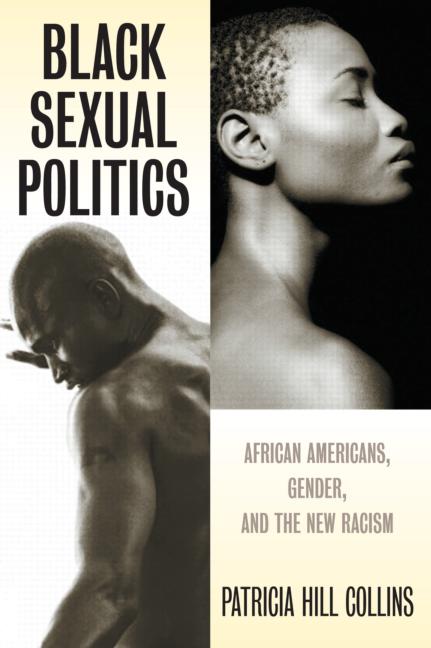
Patricia Hill Collins - "Black Sexual Politics" cover

Random comments sprinkled throughout the rest of the essay serve mainly to keep any discussion of intersectionality white-centered and to argue that veganism will bring everyone together to end all oppressions:

If people are really interested in intersectionality and ending human-on-human oppression, it seems to me that sexism in developed countries might be less urgent (and I say this as a woman) than wholesale slaughter of people, men, women, and children, in Gaza, Afghanistan, Yeman [sic], Syria, and Iraq and the culture of hatred that supports this destruction.

So, intersectionality in this instance becomes a method for rank ordering the form of oppression that most needs to be addressed, but in the next breath all of these oppressions are dismissed in favor of getting people to understand how only a commitment to being vegan will stop the large number of deaths:

Ending war, sexism, racism, oligopoly is important but change will only happen when society as a whole is affected. Veganism is something we can do now, and convince others to do now. It will only result in large social change when there are enough of us, but every single vegan has an impact on how many deaths occur, and it is something we can all do, right now.

Our blogger leaves us with a rationalization of how and why veganism is white-centered and why it such white-centeredness is not a problem:

Veganism is not the province of any race. Just because a majority of online vegans are “white”, that does not make it a “white” issue. I’d guess the majority of people commenting on police killings in the US are also “white”, even though the victims are generally “black”. I’d guess that’s an artefact of internet participation and availability of time, …and it’s changing.

Apparently, if Blacks are not visible online it is simply an “artefact of internet participation and availability.” White centeredness is not a numbers game. It specifically refers to how whites dismiss, ignore and otherwise make invisible the presence of Blacks. Did this blog author even look online for Black vegans? Our author continues:

I look at this issue, the current scurrying to shame abolitionist vegan advocates as racist, with dismay. The promotion of the idea that there are “exceptional” circumstances for people of colour, and that it is racist not to address these circumstances, is not helpful, …and I think it holds a certain contempt for people of colour. The issues of veganism are not different for people of colour. Our thinking is not different. We either recognise the autonomy, the moral personhood, of other animals, and respect them enough not to use them as things, or we don’t. There are no “special” economies for people of colour. Plant-based diets are cheap diets, and traditionally the diets of the poor. There are no “special” cultural conditions for people of colour in most parts of this global consumer world. [emphasis added]

Never mind that Black men are being murdered by the police, that racial profiling is rampant or that poverty rates are at an all-time high among POC, the message here is we can and should ignore intersectionality and just go vegan. Indeed.

Another vegan animal rights Facebook page that was created specifically to promote intersectionality is The Vegan Intersectionality Project (Unknown, Vegan Intersectionality Project’s Photos, 2015). A single meme effectively sums up their definition of intersectionality:
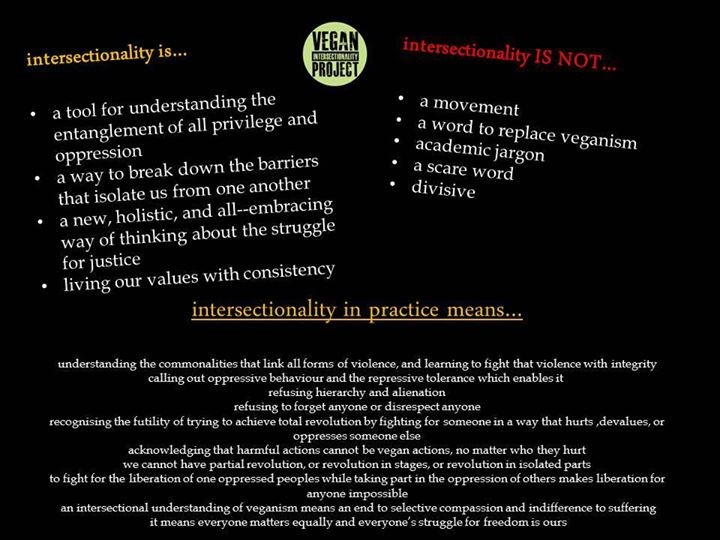
Vegan Information Project poster about intersectionality

Anyone researching intersectionality on this Facebook page will learn via bullet points it is “a tool for understanding the entanglement of all privilege and oppression, a way to break down the barriers that isolate us from one another, a new, holistic, and all-embracing way of thinking about the struggle for justice, [and] living our values with consistency.” Nowhere on the meme is there mention of or credit given to Patricia Hill Collins or Kimberle Crenshaw, nor is there so much as a tip of the hat to the notion that the concept of intersectionality was never meant to be white-centered. The meme concludes with a statement that is perilously close to the white-centered claim that all lives matter:

Intersectionality in practice means…an intersectional understanding of veganism means an end to selective compassion and indifference to suffering, it means everyone matters equally and everyone’s struggle for freedom is ours [emphasis added]

The author ignores the #BlackLivesMatter campaign which aims to center the discussion of racism with persons of color, and then the author proceeds to suggest that the Black struggle for freedom is the property of whites, that the struggles of others are shared or even owned by whites. How is that even possible? Are whites now being pulled over by police for the crime of driving while white? Are white men now being incarcerated in the prison industrial complex at rates that exceed those of Black men? Whites can never know or share the struggles of Blacks. Also, whites seem incapable of acknowledging the Black discourse on intersectionality, much to the detriment of veganism.

We are at a point now where we have to ask what white vegans are missing when they close their ears and minds to the Black understanding of intersectionality, when the result is the erasure of the lived experiences of Black women. In the essay on intersectionality from the Unfriendly Black Hottie blog the author describes a meeting with Patricia Hill Collins, a Distinguished University Professor of Sociology at the University of Maryland and the first to theorize intersectionality (Collins, 2005). Collins was asked, “How do you feel about the ways white feminists have taken your work on intersectionality as a feminist way to be more inclusive while erasing the creations as part of a Black feminist tradition and without a dedication to Black women’s lives in any way?” While Collins did not use the word appropriation to describe what happened with her work, she related a story of how white musicians took the works of Black jazz and blues artists and imitated them without having the lived experiences that inform the music. Technically, the music is similar, but in the process whites erased Black lives from the music, the very heart and driving force of the music.
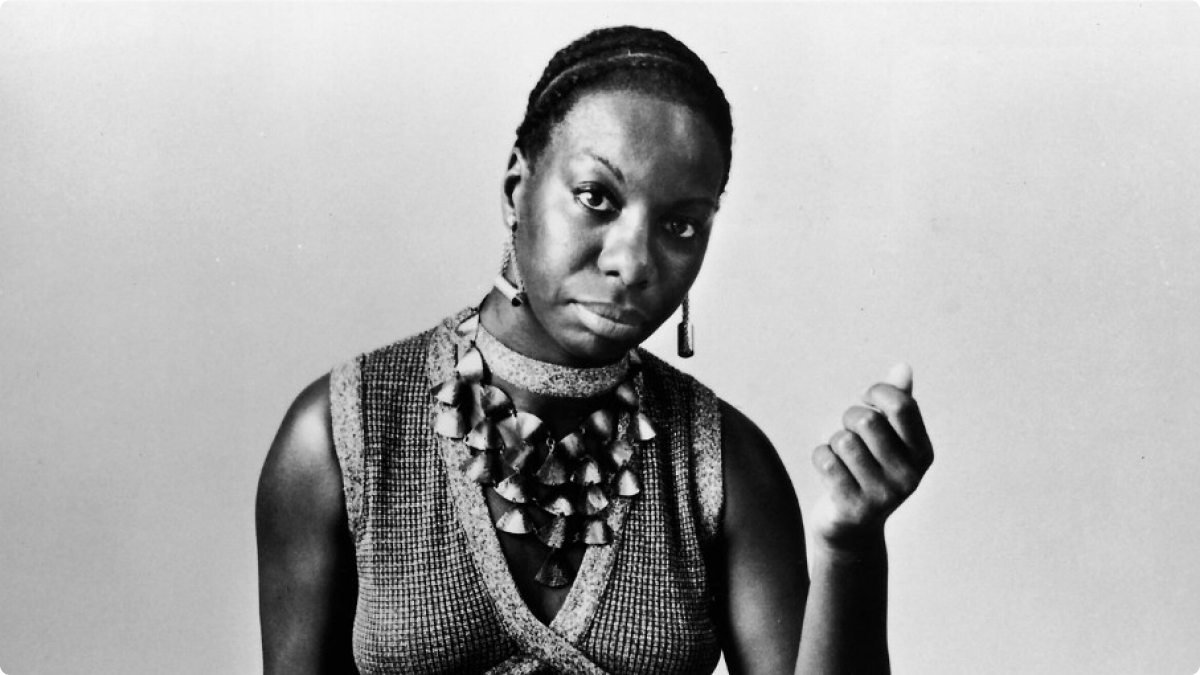
Nina Simone

The Unfriendly Black Hottie author goes on to summarize how Patricia Hill Collins views intersectionality:

intersectionality is meant as a bottom up approach, not a top down approach. those with power cannot be “intersectional”. you are also not living intersectional experiences. intersectionality was always about exposing the ways Black women are caught up in multiple systems of oppression, namely race, gender and class, but often many more. it is meant to help Black women understand their experiences in a white supremacist patriarchal culture like the U.S. or much of Western nations that have applied this model onto most cultures from the outside. most importantly, it is meant to help Black women see the ways their experiences are connected to one another and not a product of self-deficiency but structural real systems that have cultural and economic benefits for ruling/dominant classes. [emphasis added]

understanding Black women live intersectional experiences gives us insight into the ways race, gender and class, heterosexism and more all work together in ways that restrict Black womens access to resources. and access to resources is what is really one of the most important things needed in Black women’s lives. which white feminism is not committed to in any way. when Black women learn more about classism, sexism, racism, heterosexism and more (such as transmisogyny, islamophobia, convicted felon status, etc) and how they work, we learn more about how we can define ourselves without those systems imposing our identities onto us.

In other words, the white-centered, man-dominated leadership of the vegan movement cannot and should not be dictating the meaning and use of the concept of intersectionality. Vegan leadership has no direct experience of intersectionality. White men are a part of the very “white supremacist patriarchal culture” intersectionality is meant to challenge and thereby allow Black women to define themselves sans the systems of classism, racism, sexism and other oppressive systems. Whites are simply wrong to take intersectionality as their own:

when you’re white saying your an intersectional feminist, you are wrong. you are the white boy singing sad songs to a blues twang claiming to be a Blues artist. you are the miley who wears black womens bodies and perceived sexualities as fun identities to put on and off, without living within those experiences always and forever. it is erasure, it is warping, it is the continual narrative of whiteness as a dominant force, in opposing the creators and destroying the creators while then attempting to re-create those creations with whiteness firmly installed inside of it. which is false, warped, fake and without heart and soul. it is a lifeless imitation. and mostly, it isn’t REAL.

So, what is “REAL” as vegans come to terms with the white fragility born of realizing they appropriated a concept and misrepresented it? So far, silence or defensive posturing are the ‘go-to’ responses of vegan leadership, essayists and Facebook responders. They spout clichés such as “all lives matter” or “just go vegan” or “veganism is not about race” or “intersectionality shows the interconnectedness of all oppressions.” When anyone in the animal rights movement claims they are practicing intersectional veganism, defining it merely as wanting justice for all and being against all exploitation and oppression, they are operating under a misguided act of cultural appropriation. They are also working to insure that an upper class white cis gendered ableist man dominated ideology remains at the center of the vegan abolitionist animal rights movement. Intersectionality or pro-intersectionality is not a let’s-have-a-group-hug approach to social justice, nor is it simply a path to growing a revolution—increasing movement membership–that will end all oppressive social systems. If vegans want to be pro-intersectional, the term for those who support Black feminist intersectionality, then they have to acknowledge the history of the concept, stop trying to dismiss intersectionality as a distraction from veganism, and put an end to any practice that de-centers Blacks and inserts white dominance. Specifically, stop the following kind of commentary:

Abolitionist vegans are not being speciesist when they don’t let those raising issues of human oppression hijack a vegan forum. Abolitionist vegan advocacy forums are “non-human animal space” (Unknown, Intersectionality and Abolitionist Veganism; Part II, 2014).

The net effect of this message is to exclude Blacks from yet another white centered organization in much the same way they have been excluded for centuries and by making the all too familiar comparison of Black lives to those of animals, only this time Blacks are not as welcome as the animals.

Shouting Intersectionality

It is no wonder that veganism is now seen as an apolitical mish-mash of diet fads. When people are told to just go vegan or that veganism is only for the animals, then what they are really being told is vegans are not serious about pro-intersectionality, about becoming an inclusive movement. The whiteness of the abolitionist vegan movement isn’t an illusion based on white online involvement—the whiteness of the movement happens because vegans are known for their appropriation of Black culture and history, e.g. abolitionism was taken without permission:

Abolitionism as it was first conceived was built and mobilized to free oppressed humans who continue to be oppressed. For vegan advocates to completely appropriate the language and ideas of this movement and then forsake suffering humans, abandon them in their time of need, aggravate their hurting, benefit from their hurting, and then accuse victims and survivors of selfishness is deplorable. Without a doubt, this approach will only further alienate anti-speciesist efforts, tarnishing it as yet another a space of violence, oppression, and white male Western privilege (Wrenn, 2014).

Dismissing and ignoring the suffering of humans makes a mockery of anti-speciesism, of its aim to stop rank ordering others based on their perceived value. Vegans need to stop putting whites at the top of the ladder, granting them the power to tell others who matters and who doesn’t, who should be heard and who shouldn’t. White fragility, that roller-coaster-whooshy feeling in the pit of the stomach, can be a signal to stop rationalizing the status quo and to stop colonizing Black spaces in order to appropriate their language or whatever else abolitionist vegans deem useful. Stop appropriative behaviors. At the same time, know it is not putting humans over the animals when we practice pro-intersectionality; rather, it is centering and respecting the resistance of Black feminists, resistance to the racism, sexism, ageism, classism, ableism and speciesism of a white man dominated patriarchal society. Veganism was never meant to be a justification for white dominance or appropriation.


Definition of White Fragility:

White Fragility is a state in which even a minimum amount of racial stress becomes intolerable, triggering a range of defensive moves. These moves include the outward display of emotions such as anger, fear, and guilt, and behaviors such as argumentation, silence, and leaving the stress-inducing situation. These behaviors, in turn, function to reinstate white racial equilibrium. (Diangelo, 2011)



Michele Spino MartindillDr. Martindill earned her Ph.D. in sociology from the University of Missouri and taught there in the Sociology Department, the Peace Studies Program and the Women’s and Gender Studies Department. Her areas of emphasis include political sociology, organizations and work, and social inequalities. Dr. Martindill’s dissertation focuses on the no-kill shelter social movement and is based on ethnographical research conducted during several years of working in an animal shelter. She is vegan, a feminist and is currently interested in the stories women tell through their needlework, including crochet, counted cross stitch and quilting. It is important to note that Dr. Martindill consistently uses her academic title in order to inspire women and members of other marginalized groups to pursue their dreams no matter what challenges those dreams may entail, and certainly one of her goals is to see more women in academia.


References

Collins, P. H. (2005). Black Sexual Politics: African Americans, Gender, and the New Racism. Routledge.

Diangelo, R. (2011). White Fragility. International Journal of Critical Pedagogy, 54-70.

Hottie, U. B. (2013, November 6). Unfriendly Black Hottie. Retrieved from Unfriendly Black Hottie: http://femmefluff.tumblr.com/post/66233480328/like-being-very-clear-when-i-asked-patricia-hill

Unknown. (2014, December 14). Intersectionality and Abolitionist Veganism: Part 1. Retrieved from Abolitionist Veganism: Issues in the Movement: https://veganethos.wordpress.com/2014/12/14/intersectionality-and-abolitionist-veganism-part-i/

Unknown. (2014, December 26). Intersectionality and Abolitionist Veganism; Part II. Retrieved from Abolitionist Veganism: Issues in the Movment: https://veganethos.wordpress.com/2014/12/26/intersectionality2/

Unknown. (2015, April 17). Vegan Intersectionality Project’s Photos. Retrieved from Facebook: https://www.facebook.com/774093712704517/photos/pb.774093712704517.-2207520000.1430768357./774431842670704/?type=1

Wrenn, C. (2014, December 13). Intersectionality is a Foundational Principle in Abolitionism. Retrieved from The Academic Abolitionist Vegan: http://academicabolitionistvegan.blogspot.com/search/label/Intersections

Dealing with Sexual Abuse in Our Community

Trigger Warning: This essay discusses sexual harassment and assault.

Not Safe for Work: Contains one sexually suggestive photograph.

I want to preface this essay by clarifying that I am not a medical professional, nor am I licensed in counseling or anything of that nature. I specialize in gender studies, feminist theory, and social movement theory with an emphasis on politics in the Nonhuman Animal rights space. This essay intends to share wisdom based on this expertise and is not meant to offer psychological or medical advice. 

Let’s start with context: the Nonhuman Animal rights movement is 80% female. A large percentage of these women are college age, and the movement specifically targets college age persons. The movement is also male-led and adheres to patriarchal norms. Masculinized violent tactics like aggressive confrontation or property destruction tend to be celebrated. As are patriarchal tactics like sexual objectification, whereby female-identified activists are pressured to sexually objectify themselves “for the animals.” So, what we have here is a very toxic situation where men are elevated for violent, patriarchal, and sexist behavior, and the movement is predominately populated by young women (a group that is especially vulnerable to sexual assault, rape, murder, and other forms of male violence) who are valued primarily as sex objects.

Group of scantily clad, sexualized women barely covered with vegetable underwear, their breasts covered with PETA stickers

Men enter the Nonhuman Animal rights movement with the expectation and understanding that female-identified activists exist primarily as sex objects. This also creates a movement culture where activists of all genders may find it difficult to believe survivors who speak out about their experiences.

The unfortunate result is that violence against women in our community is extremely common. Please review our victim services page to learn more about what constitutes violence. Readers may also want to check out Emily Gaarder’s 2011 Women and the Animal Rights Movement, which includes an ethnographic survey of violence against women. I also recommend The Revolution Starts at Home: Confronting Intimate Violence Within Activist Communities (Chen et al. 2011). Abusers take advantage of social justice spaces where they know young women will be easily accessible, where survivors will be afraid to come forward and the movement will be unwilling to hold abusers accountable in an effort to protect the movement’s image.

Based on this context, activists who come across violence in our community should consider the following hierarchy of concern:

1. The victim or survivor

2. The movement

3. The abuser

Given that we live in a sexist society and our movement is a microcosm of that sexist society, advocates tend to default to victim-blaming, victim-shaming, dismissal, disbelief, etc. We need to overcome this internalized sexism and always keep the survivor first and foremost. It is tempting to be swayed by redemption narratives, especially when the abuser owns up to their abuse (which is rare, making their openness all the more alluring). But keep in mind that this is a movement with a majority demographic consisting of vulnerable persons (women), and men are, as a matter of course, elevated to positions of power and prestige. Survivors must come first, as should the safety of other women.

Activists lined up outside of Whole Foods holding an animal rights banner. Man in front of them is yelling the message to the public.

In a movement that celebrates aggressive tactics and elevates male activists to “heroes” and leaders, a culture is created that endangers women. Groups like DXE and ALF epitomize this hyper-masculinized approach. Image from Direct Action Everywhere Chicago.

Many also pressure victims to keep it hushed because of fears about the movement looking bad. Keep in mind, however, if we have a movement where women cannot be granted basic guarantees of safety, and if those victims come forward and are not believed (or, worse, they are insulted or threatened), this makes for a very weak collective. We must put the vulnerable first, not the abusers.

So where does this leave the abuser? Given the tendency for men in female-dominated spaces to abuse their power (this has been documented in the feminist movement as well), we need to be extra vigilant about male-on-female violence in this movement. There must be accountability for interpersonal violence. For those who own up to their behaviors, that is a good start, but we should engage the admission with caution. The redemption narrative can easily be used to protect male privilege, especially when a discouraged movement desperately wants to maintain hope that a just world is possible and also wants to keep a positive outlook for purposes of sustaining morale and attracting new members. But, remember who we must keep at number one: the survivor, not the abuser. Perhaps abusers should begin to exit the movement out of respect for the safety and well-being of others. The community should support this departure. For the sake of social justice and movement integrity: survivors first; abusers last.

Those who prioritize the movement might balk at such a suggestion. Indeed, many claim we need “all the help we can get,” so anyone and everyone is welcome to participate. But there are other ways for individuals to help animals that will not involve them being in direct contact with vulnerable persons in the activist community. If we do not maintain an accountable and safe movement, we are unnecessarily weakening our movement. This is serious. Survivors can experience severe mental health issues following the incident(s) like anxiety, depression, or post-traumatic stress disorder. Some even kill themselves. Many drop out. We support incredible suffering and we lose valuable activists when we refuse to take violence seriously. If this truly is a movement that values peace, nonviolence, and social justice, we need to keep our priorities in check. Survivors first.


Corey Lee WrennDr. Wrenn is Lecturer of Sociology and past Director of Gender Studies (2016-2018) with Monmouth University. She received her Ph.D. in Sociology with Colorado State University in 2016. She received her M.S. in Sociology in 2008 and her B.A. in Political Science in 2005, both from Virginia Tech. She was awarded Exemplary Diversity Scholar, 2016 by the University of Michigan’s National Center for Institutional Diversity. She served as council member with the American Sociological Association’s Animals & Society section (2013-2016) and was elected Chair in 2018. She serves as Book Review Editor to Society & Animals and has contributed to the Human-Animal Studies Images and Cinema blogs for the Animals and Society Institute. She has been published in several peer-reviewed academic journals including the Journal of Gender Studies, Feminist Media Studies, Disability & Society, Food, Culture & Society, and Society & Animals. In July 2013, she founded the Vegan Feminist Network, an academic-activist project engaging intersectional social justice praxis. She is the author of A Rational Approach to Animal Rights: Extensions in Abolitionist Theory (Palgrave MacMillan 2016).

Receive research updates straight to your inbox by subscribing to my newsletter.

Animal Victimization in the Service of Male Vengeance

Consider the following story line:
1. Woman is assaulted/raped/kidnapped/murdered.
2. Man goes on rampage in revenge.

How many movies (and television shows, video games, comics, etc.) can you think of that follow this plot? Bravehart? Taken? Just about every video game ever created? The victimization of women is an extremely over-used plot device meant to allow for rampant, unabashed violence from leading male-identified characters.

Taken Vegan Neeson

Feminists have taken issue with the trope, not simply because it gives a green light to hyper-masculinized violence, but also because of the ways in which women are presented. In seeing women vulnerable, victimized, dependent on men, and rarely actively involved in their own protection or survival, women become objects. Women don’t exist as persons or meaningful characters–they exist solely as an excuse for Liam Neeson to blow up half of Europe in search of his daughter, or for Mel Gibson to disembowel and behead half the English army.

Consider the impact this imagery has within a sexist culture. Imagine what it is like to be a woman in a media space that is saturated with images of women being hurt. Think about how difficult it can be to watch an action movie or television drama without being subjected to the obligatory rape scene. Media socializes not only male viewers, but female viewers as well.

Are we being encouraged to empathize with the victim, or are we being encouraged to root for the “good guy”/”hero”?  Are we encouraged to think critically about the systemic violence that the victimization is embedded within? Or are we really just pushed to unload our hatred on one individual “bad guy” and his cronies? When images of violence against the vulnerable are presented as entertainment and cheap plot devices, is this not a form of revictimization?

Lee Hall, a feminist and legal scholar in animal rights, has a chapter in her book On Their Own Terms: Bringing Animal Rights Philosophy Down to Earth which questions the use of violent images of Nonhuman Animal suffering in a similar vein. Social movement scholars have pointed to the utility of “morally shocking” imagery as a motivation for becoming an activist, but at what point do graphic images simply begin to reinforce the object-status of Nonhuman Animals as helpless victims? What impact could these millions of images be having on our conceptualization of other animals?

To me, it seems that activists are not only blasting the public with these demeaning images, but they are also sharing them within the activist community as a means of exciting rage and desire for vengeance. Crude images of Nonhuman Animals being kicked, beaten, sexually assaulted, dismembered, etc. are shared among activists with encouragements to “GET ANGRY!” or “DO SOMETHING!”

Ecofeminist Marti Kheel has been writing about this “savior complex” in anti-speciesist spaces for decades. Instead of examining the root cause of exploitation, activists and theorists are looking for a reason to call on their inner Liam Neeson. The vegan feminist perspective, however, sees social change grounded in respect for the exploited and peaceful, non-violent education for the exploiters. Kheel explains:

Whereas nature ethicists have tended to concentrate on “rescuing” the”damsel in distress,” ecofeminists have been more likely to ask how and why the “damsel” arrived at her present plight. [ . . . ]

The natural world will be “saved” not by the sword of ethical theory, but rather through a transformed consciousness toward all of life.

“From Heroic to Holistic Ethics,” Ecofeminism,1993, p.243-4

My concern is that “victims in pictures” simply become revictimized when their experiences are shared in a matter that does not necessarily respect their personhood. In doing so, they simply become objects in the story line of activism:
1. Nonhuman Animal is assaulted/raped/kidnapped/murdered.
2. Human goes on rampage in revenge.

Given that the Nonhuman Animal rights movement already operates according to patriarchal norms and generally celebrates violent direct action, it seems quite fitting that Nonhuman Animals are presented as victims in order to allow men the justification they need to rampage. While violent activism is done in the name of social justice, the “might makes right” logic that supports this approach clearly works within an ideology of patriarchy.

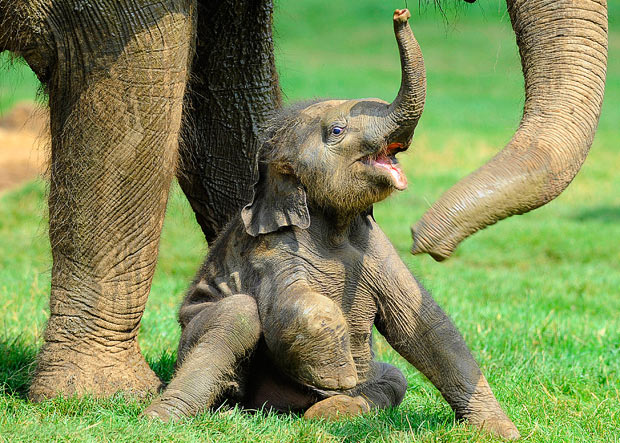
Baby elephant smiles and lifts their trunk upwards towards mother, whose legs and trunk frame the shot

Popular media loves to play this victim card so that audiences can quickly “cut to the chase.” But is it wise to employ the same tactic in social justice efforts?  I think it is fair to say that the norm in other movements is to focus on the personhood of victims and survivors, instead of blasting audiences (and each other) with images of bloodied and mangled corpses or near-corpses. The video capturing the murder of Walter Scott by a police offer has gone viral in the Black Lives Matter movement’s media circles, drawing criticism from some that the revictimization of Black men through imagery mimics the same process found in pornography (an argument I have also made regarding the use of rape memes in the Nonhuman Animal rights media):

Yes, we should celebrate that even though an unarmed black man was killed, his killing was caught on film, so there’s a better shot at justice and closure. But I’m trying desperately to make sense of why watching and sharing the video that tore his mother’s heart to pieces is as normal as making your latest Instagram post. So far I’m landing at this: In a world where we are inundated with explicit content, watching black men die on camera provides a thrill that America thought she lost when popular lynchings ended with no need for a “mature audiences only” disclaimer. [ . . . ]

The black man’s death is repeated, reproduced, shared, and celebrated in a macabre way specific to the snuff genre. These films and activities have always existed, but in the past people didn’t consume them so publicly, or so proudly outside of public executions and lynchings.

Perhaps the Nonhuman Animal rights movement should take note. Instead of revictimizing Nonhuman Animals, let’s present them as persons. Let the Nonhuman Animals take center stage, not their human avengers. This is a movement that seeks to restore dignity to Nonhuman Animals. Reproducing victimization through movement media might not be sending the right message.


Corey Lee WrennDr. Wrenn is Lecturer of Sociology. She received her Ph.D. in Sociology with Colorado State University in 2016. She received her M.S. in Sociology in 2008 and her B.A. in Political Science in 2005, both from Virginia Tech. She was awarded Exemplary Diversity Scholar, 2016 by the University of Michigan’s National Center for Institutional Diversity. She served as council member with the American Sociological Association’s Animals & Society section (2013-2016) and was elected Chair in 2018. She serves as Book Review Editor to Society & Animals and has contributed to the Human-Animal Studies Images and Cinema blogs for the Animals and Society Institute. She has been published in several peer-reviewed academic journals including the Journal of Gender Studies, Feminist Media Studies, Disability & Society, Food, Culture & Society, and Society & Animals. In July 2013, she founded the Vegan Feminist Network, an academic-activist project engaging intersectional social justice praxis. She is the author of A Rational Approach to Animal Rights: Extensions in Abolitionist Theory (Palgrave MacMillan 2016).

Receive research updates straight to your inbox by subscribing to my newsletter.

On the Hegemony of White Male Vegan Voices

Sarah Woodcock


If you claim to be against all forms of oppression but find yourself mainly subscribing to, valuing, and sharing the voices of white men when it comes to veganism or really all of life’s topics, you need to think about why. And you need to think about the consequences of that.


– Sarah K. Woodcock of The Abolitionist Vegan Society