The Chinese Doctor Who Advocated Tofu for the US War Effort

According to the Smithsonian, Benjamin Franklin, an inventor, gastronome, and “founding father” of the United States introduced tofu in the mid-18th century. Likely not having had any direct experience with the product himself, he only mentions it in a letter composed to a colleague. In the letter, he discusses his research of a Dominican friar’s account of Chinese cuisine with specific mention of “teu-fu” as an intriguing type of cheese.

One has to wonder why the huge population of Chinese immigrants might not be credited with this honor. The first wave began in 1815, and, surely, these folks would have brought knowledge of their own traditional foods. Unlike Franklin, they would have had a great familiarity with soy.

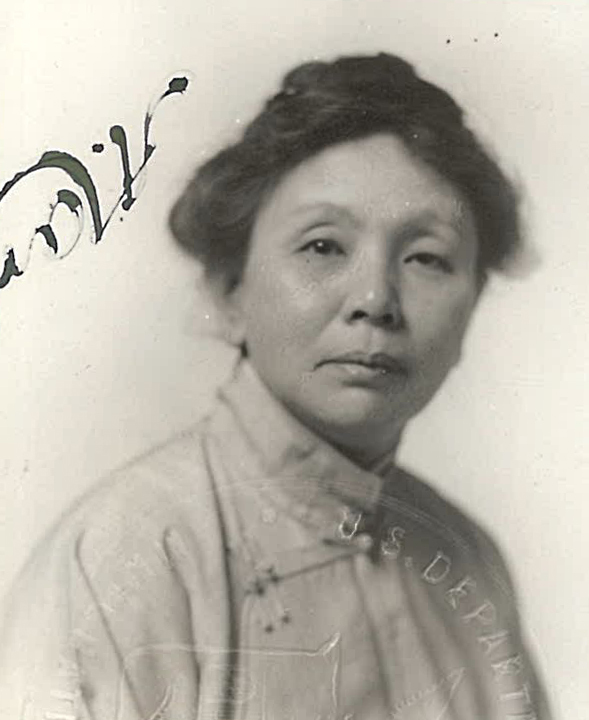
In any case, the efforts of a Chinese doctor can certainly be credited for an all-out campaign to introduce and popularize soy at the height of the first world war. The first Chinese woman to earn a medical degree in the US, Yamei Kin collaborated with the American government in its search for efficient and nutritious foodstuffs in a time of great scarcity.

Dr. Kin insisted that the US stood to greatly benefit from Chinese soy (and Chinese culture more broadly) and the many creative dishes it could render. She was also clear that the intense anti-Chinese sentiment of the era, coupled with imperialist stereotypes that characterized Asians as malnourished and weak, should be challenged. Indeed, she was quite aware that America’s qualms with the diet of the Chinese nation had much to do with nativism:

The chief reason why people can live so cheaply in China and yet produce for that nation a man [sic] power so tremendous that this country must pass an Exclusion act against them is that they eat beans instead of meat.

New York Times. 1917. “Woman Off to China as Government Agent to Study Soy Bean: Dr. Kin.” New York Times, June 10, p. 65.
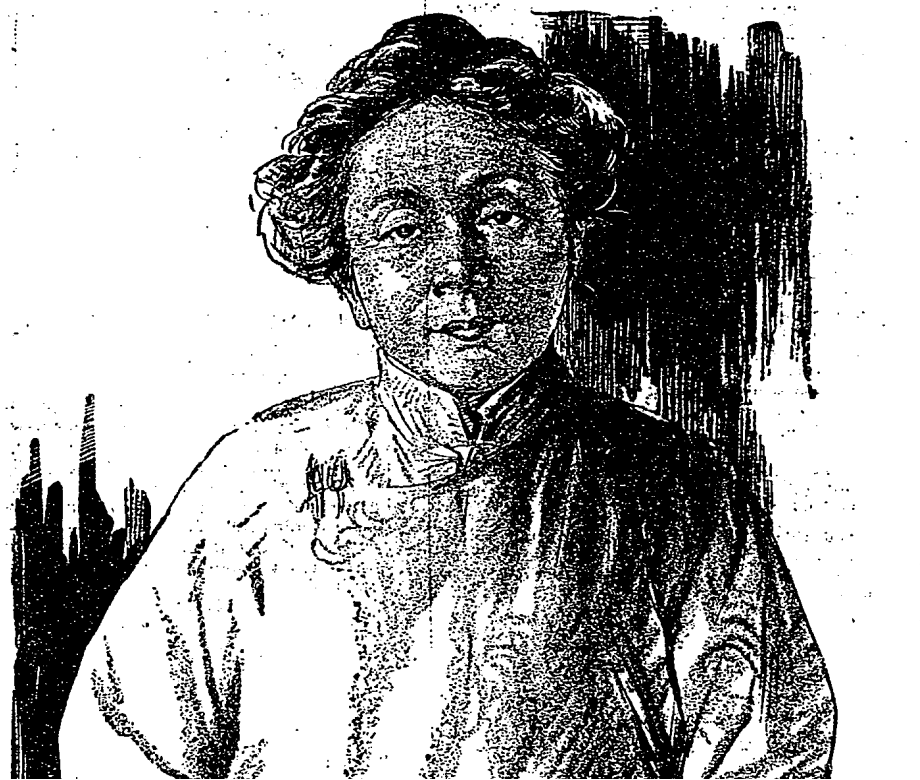
Although she was raised in Japan and spent considerable time in the US, she was an ardent advocate of her native China. More specifically, she busied herself aiding girls and women of the country, making regular return trips in service to feminism.

Kin herself was not vegan, but she was certainly critical of meat and dairy. The world, she explained,

cannot very well afford to wait to grow animals in order to obtain the necessary percentage of protein. Waiting for an animal to become big enough to eat is a long proposition. First you feed grain to a cow, and, finally, you get a return in protein from milk and meat. A terribly high percentage of the energy is long in transit from grain to cow to a human being. […]

Instead of taking the long and expensive method of feeding grain to an animal until the animal is ready to be killed and eaten, in China we take a shortcut by eating the soy bean, which is protein, meat, and milk in itself.

New York Times. 1917. “Woman Off to China as Government Agent to Study Soy Bean: Dr. Kin.” New York Times, June 10, p. 65.

She sympathized a bit with the animals themselves. In an interview with St. Louis Post-Dispatch Sunday Magazine, she explains:

The trouble with vegetarians was that they expected us to eat such awful things. I’m not a vegetarian, but I must admit that I find great satisfaction in being able to sit down to most of my meals without facing the fact that I am eating slices of what was once a palpitating little animal, filled with the joy of life. I shouldn’t be surprised if the soy bean will save the lives of many American animals.

Kin developed tofu provisions for the war effort and successfully taste-tested them with soldiers. Unfortunately, logistical difficulties in procuring and transporting soy prevented its largescale adoption.

American experiments with soy as a potential savior of the nation’s nutrition would persist after the war. We also have George Washington Carver to thank for this. A scientist and food inventor who had been born into slavery, he is most often celebrated for popularizing the many ways to cook with peanuts. He did the very same with soybeans.

Tofu did not take off in American cuisine until the 1960s thanks to the hippie commune movement. Residents began making tofu (and soy milk) on-premises to feed the community. Some of these folks went on to start businesses as the commune movement came to an end and the back-to-the-land bohemians went back to their 9 to 5’s. The popularity of “natural foods” that persisted thereon catapulted soy into the American imagination, where it remains today.

It is a rocky love affair. Soy is increasingly vilified for its environmental impact, particularly when it is grown as a monoculture. However, the vast majority of soy that is produced today goes toward livestock feed, completely undermining the original vision of Kin and Carver. America’s hamburger culture, sadly, would come to prominence. The dream of a tofu nation populated by liberated animals and fortified humans would not fully materialize. Not yet, anyway.


Corey Lee Wrenn

Dr. Wrenn is Lecturer in Sociology at the University of Kent. She received her Ph.D. in Sociology with Colorado State University in 2016. She was awarded Exemplary Diversity Scholar, 2016 by the University of Michigan’s National Center for Institutional Diversity. She served as council member with the American Sociological Association’s Animals & Society section (2013-2016) and was elected Chair in 2018. She is the co-founder of the International Association of Vegan Sociologists. She serves as Book Review Editor to Society & Animals and is a member of the Research Advisory Council of The Vegan Society. She has contributed to the Human-Animal Studies Images and Cinema blogs for the Animals and Society Institute and has been published in several peer-reviewed academic journals including the Journal of Gender Studies, Environmental Values, Feminist Media Studies, Disability & Society, Food, Culture & Society, and Society & Animals. In July 2013, she founded the Vegan Feminist Network, an academic-activist project engaging intersectional social justice praxis.

She is the author of A Rational Approach to Animal Rights: Extensions in Abolitionist Theory (Palgrave MacMillan 2016), Piecemeal Protest: Animal Rights in the Age of Nonprofits (University of Michigan Press 2019), and Animals in Irish Society: Interspecies Oppression and Vegan Liberation in Britain’s First Colony (State University of New York Press 2021).

Receive research updates straight to your inbox by subscribing to my newsletter.

How to Celebrate the New Year the Vegan Feminist Way

As each new year unfolds on December 31st and January 1st bringing millions to contemplate new beginnings, the same period marks the annual massacre of marginalized nonhumans. Free-living animals, domesticated animals (such as dogs and horses), and even human children are traumatized, harmed, or killed by fireworks. In the United States, where fireworks are also discharged on July 4th, the number of accidents can exceed 10,000 each year.

Most of these victims are children. The number of nonhuman victims is, of course, unknowable, but presumably many times that. Following the 2021 celebrations in Rome, the bodies of hundreds of roosting starlings were found dead or dying on the streets as the sun rose on January 1st.

The fascination with fire, noise, gunpowder, and other explosives marks the practice as distinctly masculinized. The entitlement to the sky and landscape for the pleasure of a relatively small group of people is also patriarchal.

Fireworks may be clearly macho, but other forms of aerial celebrations demark anthropocentrism in our relationship to Nonhuman Animals and the environment. Balloon and lantern releases, while much more peaceful, cause horrific silent suffering for the animals who ingest the remains when they fall to earth or sea. Glitter and plastic confetti, likewise, collect in ecosystems (and digestive systems), slowly suffocating land and animal bodies. Closer to the ground, bonfires can set unsuspecting shelterers ablaze, such as hedgehogs and owls. They also run the risk of starting wildfires, a “natural disaster” that claims millions of lives every year.

Must we destroy and litter in order to celebrate? New Year’s Day is part of the larger yuletide season in which the northern hemisphere enters a period of rest, death, and decay. As the spring returns, new birth and growth begin with another rotation around the sun. Perhaps this explains humanity’s penchant for grievousness at times of celebration. Renewal requires destruction. Yet, while there may be an element of necessity to this process in the natural world, in the cultural world, we can certainly sustain one another through the process in communal, less violent means.

One of my favorite ways to celebrate is with vegan food! On the desirability of this practice, most of us, human or not, can agree. I often leave bits out for the animals in my community to share. We can make our celebrations opportunities for inclusion and togetherness, rather than another opportunity to terrorize other animals.

Neopagans and modern witches often leave offerings of food for the “fae” as part of their ritual practice. Faeries are, of course, fictional representatives of the seemingly magical unseen workings of the natural world outside our door. When I leave squash or berries out in the evening, in the morning they are gone. Was it the fae? A fox? A hedgehog? It’s fun to imagine.

A witch feeding her ‘familiars’

Although paganism often practiced celebrations that were violent to other animals (including animal sacrifices, feasts of animal flesh, ceremonial “hunts,” and wildlife-threatening bonfires),1 the pagan way also encourages communion. As Christianity colonized the West, the animistic pagan lineage, a threat to the newly establishing order, was through to survive in women. Witches were believed to be closely bound to other animals, as both represented the wild, potentially dangerous, natural world. Women’s relationship with other animals was thought highly suspicious, in fact. The stereotype of the “crazy old cat lady” is a vestige of this distrust of independent women who treat other animals as persons and reject traditional, patriarchal institutions like marriage and child production.

The witch’s new year begins at Samhain (literally “November” in Gaelic). Samhain Oiche2 (“Halloween” or “Samhain’s night”) is the traditional day of celebration. New Year’s Day came to be celebrated on January 1st with the spread of Roman culture across the West. It is a Christian and colonial imposition. How fitting that the witch’s new year, November 1st, also falls on World Vegan Day.

Caring for other animals and building relationships with them, both inside the home and outside, is an act of vegan feminist resistance. By celebrating the new year with attentiveness to others in our community, we can make the yuletide truly a season of rest and rejuvenation. Forgo the fireworks and feed your familiars!


1. Stonehenge, a neolithic site designed to celebrate the winter solstice and new year is now known to be a major site of animal sacrifice and feasting given the vast number of butchered bones left behind.
2. Gaelic is sure fun to pronounce! Samhain Oiche should be read as “sah-win ee-heh”.


Corey Lee WrennDr. Wrenn is Lecturer of Sociology. She received her Ph.D. in Sociology with Colorado State University in 2016. She received her M.S. in Sociology in 2008 and her B.A. in Political Science in 2005, both from Virginia Tech. She was awarded Exemplary Diversity Scholar, 2016 by the University of Michigan’s National Center for Institutional Diversity. She served as council member with the American Sociological Association’s Animals & Society section (2013-2016) and was elected Chair in 2018. She serves as Book Review Editor to Society & Animals and is a member of the Research Advisory Council of The Vegan Society. She has contributed to the Human-Animal Studies Images and Cinema blogs for the Animals and Society Institute and has been published in several peer-reviewed academic journals including the Journal of Gender Studies, Environmental Values, Feminist Media Studies, Disability & Society, Food, Culture & Society, and Society & Animals. In July 2013, she founded the Vegan Feminist Network, an academic-activist project engaging intersectional social justice praxis. She is the author of A Rational Approach to Animal Rights: Extensions in Abolitionist Theory (Palgrave MacMillan 2016).

Receive research updates straight to your inbox by subscribing to my newsletter.

The Racial Injustice We Eat

George Floyd.

You know his name. And you should.

But do you recognize these names?

Jose Andrade-Garcia. Jeronimo Anguiano. Tin Aye. Eduardo Conchas de la Cruz. Husen Jagir. Juan Manuel Juarez Alonzo. Sha Myan Kaw Bu. Axel Kabeya. Way Ler. Guadalupe Olivera. Tibursio Rivera López. Gonzalo Peralta. Augustine Rodriguez. Saul Sanchez.

These people, like George Floyd, suffered the lethal costs of systemic racism. And while police officers were responsible for the death of George Floyd, we, the general members of the public, are responsible for the deaths of these others. After all, they died so that we can enjoy hamburgers. More specifically: these people lost their lives by working in meatpacking facilities, which are notorious for their dangerous and dirty working conditions. Tragically, they disproportionately exploit racial and ethnic minorities.

The pandemic has only exacerbated the risks for meatpacking workers. At least 370 meatpacking facilities have had confirmed cases of Covid-19, which makes them one of three major coronavirus hotspots (in addition to prisons and nursing homes). At least 35,597 meatpacking workers have tested positive for Covid-19, and at least 148 of them have died. But not all races are affected equally: while most of the managers are white, 70% of the production line workers are Black, Latino, and Asian; as a result, 87% of those infected with the coronavirus are ethnic and racial minorities. This, too, is a civil rights issue.

Meatpacking facilities are commonly referred to as “coronavirus incubators” because production floors are organized in such a way that makes social distancing impossible. Line workers stand shoulder-to-shoulder skinning, pulling, cutting, deboning, packing, and cleaning animal carcasses for hours at a time. Production lines are overcrowded due to their pace: the faster the lines, the greater number of employees needed. And the speed of the work makes it impossible for employees to worry about whether their masks are properly positioned. Despite knowing this, meat plants have neither slowed processing speeds, nor spaced workers six or more feet apart, as was recommended by the CDC. Moreover, the USDA’s Food Safety and Inspection Service granted at least 15 poultry processors waivers to increase poultry processing lines.

Understandably, then, line workers are terrified to report to work, but they continue to risk their lives; the alternative is unemployment. Moreover, a number of meatpacking employers offer workers $500 “responsibility bonuses” for working through the pandemic, incentivizing employees to work while ill. Low-income meatpacking employees, the majority of whom are racial and ethnic minorities, have been standing in coronavirus incubators for hours each day, all so that we can enjoy hamburgers.

While you might think that the answer is just to offer meatpacking employees paid sick leave and better protection from the coronavirus, it isn’t so simple. Meatpacking employees have long been subjected to dangerous working environments, frequently suffering physical injuries, including repetitive-motion injuries, such as rotator cuff injuries, tendonitis and carpal tunnel syndrome, and back and shoulder problems. Workers often die from knife accidents, chemical exposure, machine injuries, and deadly encounters with large animals who thrash about on production lines when stunned incorrectly.

Working in production lines is inherently dangerous. Moreover, because slaughterhouse work is inherently violent, and workers kill hundreds of animals each hour and thousands per week, the workers suffer severe psychological trauma. And because the physical and psychological risks disproportionately impact ethnic and racial minorities, this is a racial injustice. That’s why a recently filed civil rights complaint against Tyson Foods and JBS states that meatpacking facilities are responsible for a pattern of racial discrimination. So, banning higher line speeds, adhering to the CDC’s social distancing recommendations, and giving workers paid sick leave won’t eliminate the injustices meatpacking employees face.As the late philosopher Tom Regan puts it, “you don’t change unjust institutions by tidying them up.”

There’s a very different story to be told when it comes to the production of plant-based meats, which are produced in high-tech facilities that allow for social distancing. For instance, at the Impossible Foods factory, shifts are staggered to limit the number of employees in the plant at one time, workers are provided with masks and personal protective equipment, and surfaces are constantly sanitized.

Given the wide assortment of ethically produced plant-based alternatives, we can go without meat. And if we oppose racial injustice, we should. You can do something about our unjust systems of food production. You can stop supporting an industry that profits from systematically exploiting the vulnerable, that readily devalues the lives of black and brown people. You can stop eating food that’s tainted with racial injustice. Will you?


Cheryl Abbate is an assistant professor of philosophy at the University of Nevada, Las Vegas and the co-president of the Society for the Study of Animal Ethics. She specializes in ethics (especially animal ethics), social and political philosophy, and epistemology (especially the intersection of epistemology and ethics). Recent publications include: “A Defense of Free-roaming Cats from a Hedonist Account of Feline Well-being” (Acta Analytica), “Veganism, (Almost) Harm-free Animal Flesh, and Nonmaleficence: Navigating Dietary Ethics in an Unjust World” (Routledge Handbook of Animal Ethics), and “Valuing Animals as They Are: Whether they Feel It or Not” (European Journal of Philosophy).

Gender and Victorian Animal Advocacy

Although the nonhuman animal rights movement in the West is frequently framed by activists and remembered by historians as gender-neutral, Donald’s (2020) Women against Cruelty (which examines meeting notes and campaigning documents reaching back to the movement’s founding in the early 19th century) demonstrates just the opposite. Women’s affinity for anti-speciesist activism within the context of a prevailing sexism which pitted all female pursuits as lesser-than would prove a difficult hurdle to surmount with regard to social movement resonance. This is not to reify or reduce women’s contributions. Women against Cruelty catalogs a diversity of feminine and feminist approaches to advancing the interests of nonhuman animals: some religious, some scientific, and some intersectional. Many women favored educational outreach, while others relied on rational debate, shocking images, direct intervention, and legal resistance.

Donald showed that women’s efforts in some ways discredited the movement through feminine associations, but, in other ways, women also buoyed it with their consistent and energetic support. Women, it is clear, existed as the movement’s foundation, providing critical insight, labor, donations, and tactical innovations. As Donald uncovers, women consistently made up the majority of various organizations’ memberships as well. However, the strict gender norms of Victorian Britain ensured that their desire to participate in the public affairs of anti-speciesism would be difficult to reconcile with their expected domestic role as caretakers (and their supposed natural affinity to other animals, a connection that many women saw as a strength but many men saw as a reason to discredit them). The Royal Society for the Protection of Animals (RSPCA), for instance, routinely confined women’s participation and restricted their leadership in campaigning.

To an extent, the tension between feminine and masculine social spheres actually reflected a tension between religiosity and the changing mores of the Industrial Revolution. Activism of the 18th and early 19th centuries was imbued with Biblical doctrine, but adherence to this approach would diverge under the growing influence of capitalism. Women, responsible as they were for upholding society’s morals, became agents of a romanticized Christian vision of equality and compassion, while men, privileged with the duty to advance society through industry and politics, became immediate opponents given the importance of speciesism (and other forms of domination) to this agenda. Thus, on one level, women and girls policed speciesist cruelty, but, on another, they also came to police the unchecked power of men who increasingly pushed the boundaries of social order through conquest, colonialism, and science. The treatment of nonhuman animals, in other words, came to symbolize the uncomfortable and monumental transition into modernity.

Read the full review here.


Corey Lee WrennDr. Wrenn is Lecturer of Sociology. She received her Ph.D. in Sociology with Colorado State University in 2016. She received her M.S. in Sociology in 2008 and her B.A. in Political Science in 2005, both from Virginia Tech. She was awarded Exemplary Diversity Scholar, 2016 by the University of Michigan’s National Center for Institutional Diversity. She served as council member with the American Sociological Association’s Animals & Society section (2013-2016) and was elected Chair in 2018. She serves as Book Review Editor to Society & Animals and is a member of the Research Advisory Council of The Vegan Society. She has contributed to the Human-Animal Studies Images and Cinema blogs for the Animals and Society Institute and has been published in several peer-reviewed academic journals including the Journal of Gender Studies, Environmental Values, Feminist Media Studies, Disability & Society, Food, Culture & Society, and Society & Animals. In July 2013, she founded the Vegan Feminist Network, an academic-activist project engaging intersectional social justice praxis. She is the author of A Rational Approach to Animal Rights: Extensions in Abolitionist Theory (Palgrave MacMillan 2016).

Receive research updates straight to your inbox by subscribing to my newsletter.

The Vegan Experience for Older Women

In a publication authored with my colleague Alexus Lizardi, Older, Greener, and Wiser: Charting the Experiences of Older Women in the American Vegan Movement, we offer the first exploratory research on an underserved demographic: older vegan women. Minimal data is available on this group–most of it is relegated to subscriber feedback reported by The Vegan Society. 

Interestingly, our sample had not put much thought into what it means to be older and vegan. Some noted that they were aware of how older vegans are objectified in the movement if they were seen to “age well.” In other words, age is leveraged to promote veganism as a means to beat aging. For the average person who ages normally, they may find themselves invisibilized. Indeed, the vegan and vegetarian movement has actively dismissed key leaders thought to sully the movement with their prolonged illness and premature death (like founder of the American Vegan Society Sylvester Graham and founder of the British Vegetarian Society William Cowherd). 

Otherwise, our respondents noted that being older granted them a degree of confidence in their political choices. This is an important finding given the movement’s focus on young people and its concern with recidivism (many young people will revert to nonveganism should they lack social supports). Older people are more resolved in their decisions and are less swayed by social pressures. 

This could sometimes backfire. A few of our respondents felt they were rather isolated given their hesitancy to associate with non-vegans who they felt were hostile to their lifestyle. Older folks in general risk isolation as they age, leading us to consider whether older vegans were doubly burdened in this respect.

Some respondents also expressed concern with accessing medical professionals who took veganism seriously. As many of our participants were middle-class and living in the New York area, they were relatively privileged in this respect, but it was clear that more marginalized older vegans could find difficulty in this regard.

Lastly, many of our respondents noted that their gender definitely informed their veganism. They reported being compelled by the horrors of dairy production, something they could empathize with given their own reproductive journeys as female-bodied persons. We consider whether this awareness is due to the popularity of Carol Adams’ vegan feminist work in the movement. It is likely that greater acknowledgement of aging issues in the vegan community might increase activist consciousness to the unique challenges facing older folks in a relatively ageist society.


Corey Lee WrennDr. Wrenn is Lecturer of Sociology. She received her Ph.D. in Sociology with Colorado State University in 2016. She received her M.S. in Sociology in 2008 and her B.A. in Political Science in 2005, both from Virginia Tech. She was awarded Exemplary Diversity Scholar, 2016 by the University of Michigan’s National Center for Institutional Diversity. She served as council member with the American Sociological Association’s Animals & Society section (2013-2016) and was elected Chair in 2018. She serves as Book Review Editor to Society & Animals and is a member of the Research Advisory Council of The Vegan Society. She has contributed to the Human-Animal Studies Images and Cinema blogs for the Animals and Society Institute and has been published in several peer-reviewed academic journals including the Journal of Gender Studies, Environmental Values, Feminist Media Studies, Disability & Society, Food, Culture & Society, and Society & Animals. In July 2013, she founded the Vegan Feminist Network, an academic-activist project engaging intersectional social justice praxis. She is the author of A Rational Approach to Animal Rights: Extensions in Abolitionist Theory (Palgrave MacMillan 2016).

Receive research updates straight to your inbox by subscribing to my newsletter.


Queer Appalachia and Vegan Activism


Photo Credit: Raymond Troumbly

By Z. Zane McNeill

People always assume that growing up queer in West Virginia was difficult, but I always tell them that I was bullied more for being vegan than being LGBTQIA+. I went vegetarian around the same time I realized that I had a crush on my best friend who was a girl. She was vegetarian too, and I was head over heels for her.  At 14, I went vegan after learning more about factory farming and the suffering that is connected to dairy and egg production. In high school and early college, influenced by Carol Adams, Josephine Donovan, and Alice Walker, I was an adamant believer that in order to be a feminist I needed to be vegan. This later extended to queer liberation as intrinsically intertwined with animal liberation.

In my early 20s, I found queer community in Appalachia thanks to the zine, artist, and activist project Queer Appalachia. Through their social media accounts, I found other queer southern projects that I  discovered, and subsequently collaborated and contributed to, like Bible Belt Queers, a community book project led by and for Southern queers, and Queering the Mountain, an art exhibition highlighting the work of Appalachian queers.  Inspired by these, I eventually started my own zine project called Marx in the Mountains, have been working on a community book project on queer(ing) Appalachia, and have recently released a collection highlighting queer vegan voices around the world under Sanctuary Publishers, a resource activism focused vegan book publisher.

People who weren’t raised in this part of the world tend to not fully understand the way in which Appalachia is not simply a place. ‘Appalachia’ is in and of itself a contested definition. Appalachia is a space containing around 25 million people, or around 8% of the US population. It stretches through thirteen states following the Appalachian mountain range from New York to Alabama. Beyond a stretch of land, it is an area historically comprised of marginalized people—Indigenous folk, immigrants working for the coal companies, and other impoverished people tied into a form of serfdom in late-stage capitalism. In What You’re Getting Wrong About Appalachia, Elizabeth Catte explains that Appalachia is “a political construction, a vast geographic region, and a spot that occupies an unparalleled place in our cultural imagination.”[1] She herself is hesitant to label the concept of Appalachian identity and usually works with those who self-identify as Appalachian instead, as historically who self-identify as Appalachian instead, considering that, historically, who counted as Appalachian was decided by those in power or with massive amounts of capital. It is more than a geographic region—it is an environmental space with a history of toxicity from natural resource extraction, a cultural construction fashioned by conservatives to support revisionist arguments of what ‘America’ is and what bodies represent ‘America’, and a politically contested space that pushes disadvantaged voices to the margins.

When I was growing up in Appalachia, I was mostly bored but managed to pick up activism from my family. My stepfather was a well-traveled kayaker, and my mother was an HIV+ advocate in West Virginia.  They were both schoolteachers, and I was lucky to grow up in the fun environment of music and books. However, to the dismay of the stepfather, I was more interested in reading Twilight than Marx. During the invasion of Iraq, my parents brought me with them to protests. The military practiced their maneuvers over our town, so my stepfather mowed a peace sign into our backyard. He delighted in knowing military pilots would gaze upon his anti-war protest while they performed their exercises. Both of my parents had a lot of gay friends and I was raised in the queer punk and art scenes in Morgantown—an environment a lot of people would be surprised existed in the mountains. Truthfully, growing up queer in West Virginia shaped my identity and understanding of self. I don’t feel the same way about my gender or sexuality as someone from the city might.

Coming to terms with being queer and coming out was awkward, but that was really it. In high school, when I came out as bi, I didn’t face discrimination—but people loved throwing their cafeteria food at me, showing me frogs they dissected, and stepping on bugs in front of me once they realized I was also vegan. At the same time, however, my friends and I had a Vegetarian Awareness Club and got a two-page spread in the yearbook. So, I would say that growing up vegan and queer in Appalachia was a weirdly empowering and isolating experience that informed my work in various animal welfare NGOs and queer grassroots organizing. My day-to-day life was continuously impacted by poverty, lack of transportation, and devastation by corporate greed. An area gutted by addiction, natural resource extraction, and neoliberalism left shadows on my friends’ faces and cuts on their arms. A lack of employment opportunities pushed the privileged out of the state to the cities, further pushing the marginalized into their homes with needles and pills. Being queer only makes sense to me with this as a backdrop. Constant violence has seemingly queered us all who are “from around here”.

I have seen progress as the years have passed, which is exciting in itself. In 2017,  Queer Appalachia released the zine Electric Dirt, and since its release, a community of LGBTQIA+ folks from Appalachia, the South, and the Rust Belt has sprung up around it fighting to show that the discourse surrounding Appalachia leaves queer, Indigenous, Black, POC, femme, and leftist voices out. Queer challenges normative generalizations about the culture of Appalachia and explores how queer folks define themselves and the region “within the intersections of coal mines and class, race and religion, food justice and colonialism.” Queer Appalachia, as an overarching work, has benefitted the marginalized folk of Appalachia, giving a wide-ranging audience to those too often denied a platform. Yet, despite this progress, I still felt alienated by some of the content produced by the LGBTIQA+ Southern and Appalachian community. I was disappointed that collectives focused on the intersections between queer life, the opioid epidemic, the carceral system, Indigenous and Black liberation, and leftist organizing but did not also embrace animal welfare and veganism. This continued to shadow my experiences growing up queer and vegan.

In Appalachia, corporations see people as expendable, just as nonhumans are seen as objects to be used. I felt strongly about the work of scholar-activists like Dr. Breeze Harper, Adams, Julia Feliz Brueck, and Aph and Syl Ko who have illustrated that nonhuman oppression is inherently intertwined with our own. Specifically, Feliz Brueck coined the term ‘consistent anti-oppression’ to describe how marginalizations are inherently connected and should be equally fought against, which makes sense to me.

Fueled by this framework, I approached Feliz Brueck, who also runs Sanctuary Publishers, about an anthology that would invite folks who identified at LGBTQIA+ and vegan to meditate on how their identities intersect, how being LGBTQIA+ affects their vegan activism, and what they would like to say to non-vegan LGBTQIA+ folk. The end result, which was recently released, was a book project that includes over 25 contributors—activists, scholars, artists, and writers who identify as LBTQIA+ and vegan—who explored the interconnections between social justice groups, building bridges between movements, and dismantling hierarchies between oppressed groups through consistent anti-oppression in this volume. In the book, known activists like Jasmin Singer speak about their initial work with AIDS Awareness, while scholar Margaret Robinson discusses how veganism ties into her decolonization as a two-spirit person, and Shiri Eisner speaks to her journey of coming out as a bisexual, genderqueer Mizrahi vegan. However, the focus is not on known activists, and that’s what makes this book and the work of Sanctuary Publishers different. Voices often denied a platform are able to have one if they choose to in written form.

Growing up queer and vegan in Appalachia was an experience that challenged metronormative stereotypes—happily queer in the holler, organizing Earthlings showings in West Virginia, and going on queer dates to a vegan-friendly co-op. Yet, I find a special kind of comfort knowing that those in other parts of the world from different cultures and life journeys understood me in a way that I had not felt before. Since embarking on the road to publish the queer vegan anthology, I found myself validated in both these identities—being vegan and queer—and in recognizing that they were always inherently connected to me, and that being vegan has informed my queer activism and vice versa. Queer vegans across the globe share this sentiment, perhaps because we have historically faced an otherization that has led to our own violence and marginalization.

I hope that vegans recognize the importance of embracing a veganism that is consistently against all oppression in an effort to ensure we recognize that the movement has work to do regarding how we avoid marginalization of others at the expense of nonhumans. I also hope that non-vegan LGBTQIA+ folks, especially my friends in the queer Appalachian community, recognize that our marginalization extends to others through our daily choices, and that in order to fight for our queer liberation, we must also fight for nonhuman animal rights.

[1] Catte, Elizabeth. What You Are Getting Wrong about Appalachia. Cleveland, OH: Belt Publishing, 2018, 10.


Zane McNeill is an independent scholar-activist from Appalachia. Their newly published book Queer and Trans Voices: Achieving Liberation Through Consistent Anti-Oppression edited by themselves and Julia Feliz Brueck explores the interconnections between social justice groups in order to consistently and effectively achieve liberation for all.

You can read more on intersections of queer activism and veganism in Queer and Trans Voices, available for purchase through Amazon website or Sanctuary Publishers Instagram.