Vegan Body Shaming: Analyzing the Evidence

Trigger Warning: Fat-shaming.Vegan Body Image Shaming
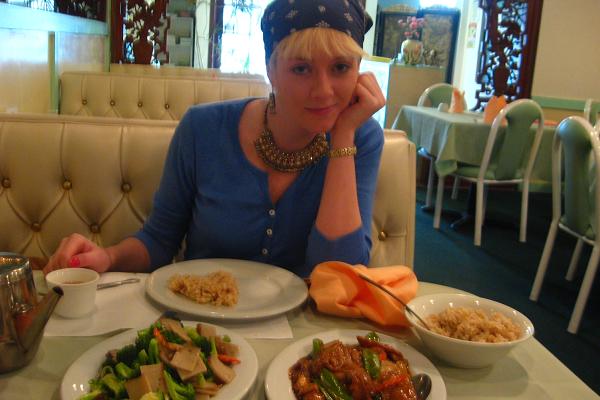
After coding data for a publication on demographic representations in vegan media, I was utterly shocked to discover that nearly all analyzed subjects were undeniably skinny.  Over a twelve year span, the two magazines included in my study featured only a handful of subjects (mostly men) who were noticeably athletic, toned, or carrying “excess” body fat.  Only one female subject appeared to deviate from the thin norm, but she was also wearing baggy clothing, so it was unclear.

Vegan campaigns sometimes go beyond this otherwise indirect connection between veganism and weight loss and blatantly suggest that if you want to be “hot” and “fit,” you need to go vegan.  Freedman and Barnouin’s Skinny Bitch is a prime example, as is PETA’s “Save the Whales” billboard campaign. The overwhelming representation of thinness in our movement is a problem in itself, but our fixation on veganism as a weight loss miracle carries with it several implications that target vulnerable populations:  women, people of color, and “obese” persons.

PETA Fat Shaming

Body shaming is especially problematic for a movement whose largest demographic is women.  When we promote veganism as a means to lose weight, we normalize thinness as the ideal body type.  This alienates those vegan women who do not fit within this ideal and it denigrates non-vegan women who do not fit it either.  Research has shown that veganism is indeed an important variable in reducing excess body fat, but one 2005 medical report found that as much as 29% of vegans are overweight or obese.  That means about 1/3 of our vegan community does not reflect the idealized thin body that represents us on magazines, websites, videos, and other lifestyle or outreach literature.

Idealizing thinness is really the idealization of higher socioeconomic class.  It oftentimes takes considerable income to have access to fresh vegetables and fruits.  Vegans without that luxury must rely on cheap, carbohydrate-heavy grains like flour, pasta, and potatoes.  Fresh fruits, vegetables, and even spring water tend to be far more expensive than their processed counterparts.

We cannot forget that socioeconomic status is not simply about economic resources, but social resources as well.  In the United States, African Americans, Native Americans, and Hispanics are disproportionately poor, a result of centuries of oppression and continuing inequality.  They are also disproportionately located in areas with limited availability for healthful foods (rural areas and segregated inner city neighborhoods); these are known as food deserts.  In The Inspired Vegan, Bryant Terry, who advocates for improving food access for disadvantaged peoples, notes that in 2007, Oakland California housed 53 liquor stores, but not a single full-service supermarket.  Those living in food deserts might not have a car, could lack access to public transportation, and they may lack the time to travel out of town for healthier groceries due to work and childcare responsibilities.

Finally, the demonization of “fat” in the United States has very real and disastrous consequences for those humans unfortunate enough to fit within that socially constructed category.  “Overweight” humans (especially women) can face hiring discrimination, are less likely to be promoted or selected for prestigious projects, and they ultimately make less money overall.  And of course, weight discrimination can result in hurtful interpersonal mistreatment as well, like name-calling and objectification.
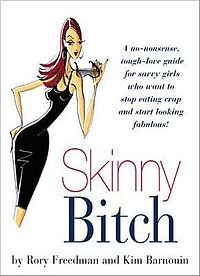
Skinny Bitch

I can understand that many vegans enthusiastically promote veganism as a weight-loss diet, but we must be mindful that body weight is a complex social issue and the celebration of thinness can be hurtful to others who lack the social and economic privilege that most vegans enjoy.  This movement is about nonviolence, and this principle must extend beyond Nonhuman Animals to include our fellow activists as well.

Vegan media sources, too, should be aware of their influential role.  Consistently portraying a particular body type that is relatively unachievable for a good number of us creates a harmful and unrealistic ideal.  The impact of thinness in women’s magazines is well documented.  When the media is inundated with thin (often airbrushed) figures, this can seriously impact consumer self-esteem and lead to eating disorders. But some magazines like Seventeen have responded with a commitment to picturing “real” people.  This should be a goal for vegan media as well.

As social activists, we should not only be concerned with the well-being of our community members, but we should also recognize that our media portrayals are influential in attracting (or repelling) certain demographics.  If we consistently show thin people (or women, or whites, or higher socioeconomic status individuals), we are framing our movement as one meant for certain types of people, but not for others.  Yet, I suspect that diversity will be an essential variable in achieving social change.  I suggest, then, that we begin to think critically about how our movement is being represented and set our bar a little higher to include all body types and all backgrounds.

This post was originally published by One Green Planet on January 30, 2013.


Corey Lee WrennDr. Wrenn is Lecturer of Sociology. She received her Ph.D. in Sociology with Colorado State University in 2016. She received her M.S. in Sociology in 2008 and her B.A. in Political Science in 2005, both from Virginia Tech. She was awarded Exemplary Diversity Scholar, 2016 by the University of Michigan’s National Center for Institutional Diversity. She served as council member with the American Sociological Association’s Animals & Society section (2013-2016) and was elected Chair in 2018. She serves as Book Review Editor to Society & Animals and has contributed to the Human-Animal Studies Images and Cinema blogs for the Animals and Society Institute. She has been published in several peer-reviewed academic journals including the Journal of Gender Studies, Feminist Media Studies, Disability & Society, Food, Culture & Society, and Society & Animals. In July 2013, she founded the Vegan Feminist Network, an academic-activist project engaging intersectional social justice praxis. She is the author of A Rational Approach to Animal Rights: Extensions in Abolitionist Theory (Palgrave MacMillan 2016).

Receive research updates straight to your inbox by subscribing to my newsletter.

Vegans, Procreation, and “Overpopulation”, Oh My…

Vegan overpopulation“There are definitely too many of you!”

If you spend enough time reading vegan blogs, websites, and social media, or if you frequently participate in vegan forums, you will inevitably encounter vegans making arguments against human procreation. Invariably these arguments are premised, at least in part, on the assumption that the world is overpopulated with humans and that the size of the human population is the primary driver of just about every ecological and social crisis we are facing today. Often the people making these arguments go even further, suggesting that there is no ecologically acceptable place on this planet for humans because humans are destructive and parasitical by nature. Some vegans will even go so far as to declare that procreation is decidedly not vegan because, given all these obvious problems caused by human overpopulation, the decision to add to the surplus of humans harms countless nonhuman animals.

These simplistic arguments – that “there’s too many people on earth, just look at all the destruction humans cause to the planet” and “obviously 7 billion humans is too many because that’s a really, really big number” – are typical among the vegan and non-vegan anti-procreationists/populationists, but if we examine them we can begin to see how they are deeply flawed and how they necessarily obscure much more than they reveal.

The truth is that most of us 7 billion humans are not endangering the planet; The primary drivers of environmental destruction, pollution, resource shortages, deforestation, loss of biodiversity, species extinction, climate change, and many other pressing problems often attributed to “too many people”, are, in reality, our unjust political and economic systems -controlled by a small minority of humans- and the military industrial complex that allows them to function and expand. The tragic irony of the blame-the-“breeder” position is that the vast majority of humans are actually the victims -not perpetrators- of this profoundly exploitative system in various ways.

We need to understand that our materials economy is designed to create an endless supply of “cheap” disposable stuff merely for profits gained by a small percentage of humans (think about the “1%” articulated by the Occupy Wall Street movement), and not for the needs and well-being of humans or other animals, for the health of our ecosystems, or to create sustainable and equitable social systems. Rampant ecological destruction that negatively affects the lives of many humans (particularly marginalized groups) and countless other animals is inherent in this infinite growth economic model, from the extraction of materials and resources, to the production, distribution, and disposal of all this stuff, much of which is intentionally designed to become obsolete after a very short period of time.

Additionally, it has been reported that the US Department of Defense is “responsible for the most egregious and widespread pollution of the planet” and that “This impact includes uninhibited use of fossil fuels, massive creation of greenhouse gases, and extensive release of radioactive and chemical contaminants into the air, water, and soil”. Futhermore, “the Department of Defense … produc(es) more hazardous waste than the five largest US chemical companies combined. Depleted uranium, petroleum, oil, pesticides, defoliant agents such as Agent Orange, and lead, along with vast amounts of radiation from weaponry produced, tested, and used, are just some of the pollutants with which the US military is contaminating the environment”. It should go without saying that the vast majority of people on this planet are not included in any decision making process within the US DoD.

Many people challenging anti-procreationist/populationist arguments often attempt to shift focus and blame onto individual consumption choices, and in some ways this also misses the point. According to Annie Leonard, author of The Story of Stuff, 97.5% of solid waste in the United States comes from industrial operations, not household waste, and up to 97% of  all energy and material that goes into manufacturing products is simply wasted. This is not to say that individual consumption choices don’t matter, but clearly the vast majority of us have little or no immediate control over, or even any say in the decisions made that use the most resources, produce the most waste and pollution, and cause most ecological destruction.

Moreover, populationists often tend to overlook or ignore substantial inequalities, and thus disparate levels of consumption, even within rich nations. In reference to individual greenhouse gas emissions, David Satterthwaite writes that “…the lifetime contribution to GHG emissions of a person added to the world’s population varies by a factor of more than 1,000 depending on the circumstances into which they are born and their life choices…”

On top of all this, it’s downright silly for vegans, of all people, to argue that the planet is overpopulated with humans when it is estimated that “livestock” systems occupy nearly half (45%) of the global surface area. This is a true overpopulation problem for the planet: we breed billions of land animals into existence every year -roughly 8 times the human population- just to exploit and kill them for unnecessary purposes, misusing vital resources and causing widespread pollution and environmental catastrophe. Not to mention the many billions of aquatic animals unnecessarily killed every year, brutalizing our oceanic ecosystems.

Can we seriously maintain that the size of the human population (or even human existence), in and of itself, is the main driver of the destruction of our world? The issue of human “overpopulation” is, and historically has always been, a huge distraction.

Note that none of what I have mentioned above even addresses the fact that the human population is not currently exploding as many populationists claim. Rather, it is experiencing a global trend that will likely result in stabilization, if not decline, later this century. Nor did I address the inherent racism, classism, and misogyny in an argument that focuses blame on women’s bodies and on folks that still have rising populations: mainly poor people of color. Nor have I begun to address the history of the “too many people” position, or what groups of people have constructed these arguments to justify elitism, racial supremacy and oppression, or how overpopulation theory has been, and is currently, put into horrifying practice.

If anything is “not vegan” or unethical, it’s attempting to shame fellow vegans (or anyone else) for their reproductive choices and relying on flimsy “overpopulation” arguments to validate one’s own shallow misanthropy. Now that’s a real shame, and we should not tolerate such nonsense if we are truly concerned about challenging oppression and promoting social justice…

By Lucas

You can follow him on Twitter and on his blog, Our Vegan Pregnancy.

This post was originally published by Our Vegan Pregnancy on January 8, 2013.

Why is the Animal Rights Movement so Toxic for Women?

Sexism is all too prevalent in the Nonhuman Animal rights movement. Anyone familiar with PETA’s advocacy has seen their heavy reliance on female nakedness to garner attention and fundraise. Of course, how they hope to alleviate the objectification of Nonhumans while simultaneously objectifying women is questionable. Their inability to respect the interconnectedness of speciesism, sexism, and other oppressions has been criticized heavily by academics and advocates alike.

PETA Shoe Protest

However, sexism remains indirectly prevalent in other advocacy organizations and activist communities. The problem is so rampant that I would venture to say that the Nonhuman Animal rights movement has become a microcosm of patriarchal domination. This is especially bizarre given that advocating against speciesism (which I define as the structural oppression of the vulnerable) is inherently an anti-patriarchy endeavor.

Femininity and concern for other animals have long been linked. Traditional gender roles view women as creatures of nature with an “instinct” for nurturing. Adding to this, the oppression of women often mirrors the oppression of other animals, and many times these oppressions reinforce one another. So it comes as no surprise that the Nonhuman Animal rights movement is composed largely of female activists (to the tune of about 80%).

As we know, gender stereotypes are not always so flattering. Femininity is also associated with hyper-emotionality and irrationality. This is a socially constructed reality that women of the Nonhuman Animal rights movement recognize. In an effort to overcome these stereotypes and resonate with audiences, female activists often adopt rational discourse and suppress emotion in their advocacy. Sociological research has found that male Nonhuman Animal right activists are perceived to be so rare and so important to lending the movement credit that women (and other men) will praise these men heavily and readily elevate them to positions of leadership. Women are often relegated to the less glamorous and more mundane tasks behind the scenes.

Clearly, we wouldn’t expect to see organizations like PETA prioritizing female empowerment, but other more “serious” liberation organizations drop the ball as well. Some of these factions are so reliant on rational arguments that feminine perspectives are generally unheard of or are dismissed as unnecessary. Femininity is suppressed in favor of rational, unemotional, masculine discourse. This is especially unfortunate because emotionality is actually an asset in affecting social change. Social psychology has shown emotional appeals to be far more persuasive and motivating than rational ones.

To be sure, race and gender intersect as well. Masculinity and whiteness have become normalized and go largely unexamined. White world views predominate and white, thin vegan bodies have become the ideal. Vegan critical race activist Dr. Breeze Harper warns that this has had the effect of alienating people of color. Likewise, T.O.F.U. Magazine recently published a special issue on the detrimental impact of fat-shaming and privileging thinness.

When recognized at all, people of color are often tokenized. While white activists may draw parallels between speciesism and racist atrocities like antebellum slavery, most fail to acknowledge the ongoing discrimination that people of color face. Many campaigns are designed to sensationalize animal cruelty associated with people of color, exploiting racial prejudice for the cause. Still other campaigns default to the white world view and ignore human rights violations, environmental racism, and racialized food politics. Structural racism is ignored, unless it is something advocates can campaign behind.

Ignoring gender and race has real consequences, consequences that hurt at-risk populations. Women find themselves sexually objectified by organizations like PETA, Animal Liberation Victoria, and LUSH Cosmetics, who see them as nothing more than naked bodies to prostitute for media attention and donations. Women who advocate with their clothes on do not escape these consequences either. Sociologist Dr. Emily Gaarder, author of Women and the Animal Rights Movement (2011) reports that sexual harassment is a very common experience among female activists. By pushing men into positions of power and relegating women to subordinate tasks and stripping, the movement becomes toxic for the vulnerable. As for people of color, they are often left out of outreach efforts altogether. Those who are outspoken about this exclusion risk backlash and accusations of “reverse racism” or “reverse sexism.” Like many other critics of oppression, it has even been suggested that I have a mental illness (the exploitation of disability identity in Nonhuman Animal rights advocacy is another topic altogether!).

LUSH-Cosmetics-Sexism-300x228

The Nonhuman Animal rights movement would be wise to consider how gender and race continue to be salient identities that warrant special consideration in a social movement environment that privileges men and whites. Gender and race matter, despite any personal fantasies we may have about a post-feminist, post-racial utopia. Diversity in leadership and advocacy should be encouraged. Femininity and emotional appeals should be given their place alongside rational discourse and the language of rights.

Until the Nonhuman Animal rights movement cleans up its act in its treatment of vulnerable populations within its own ranks, I don’t believe it’s possible to make any real headway for other animals. A coherent battle against oppression cannot be fought so long as the movement’s own oppressiveness goes unchallenged.

This post was originally published on Feminspire on June 11, 2013.


Corey Lee WrennDr. Wrenn is Lecturer of Sociology. She received her Ph.D. in Sociology with Colorado State University in 2016. She received her M.S. in Sociology in 2008 and her B.A. in Political Science in 2005, both from Virginia Tech. She was awarded Exemplary Diversity Scholar, 2016 by the University of Michigan’s National Center for Institutional Diversity. She served as council member with the American Sociological Association’s Animals & Society section (2013-2016) and was elected Chair in 2018. She serves as Book Review Editor to Society & Animals and has contributed to the Human-Animal Studies Images and Cinema blogs for the Animals and Society Institute. She has been published in several peer-reviewed academic journals including the Journal of Gender Studies, Feminist Media Studies, Disability & Society, Food, Culture & Society, and Society & Animals. In July 2013, she founded the Vegan Feminist Network, an academic-activist project engaging intersectional social justice praxis. She is the author of A Rational Approach to Animal Rights: Extensions in Abolitionist Theory (Palgrave MacMillan 2016).

Receive research updates straight to your inbox by subscribing to my newsletter.