Vegan Campout…for Men?


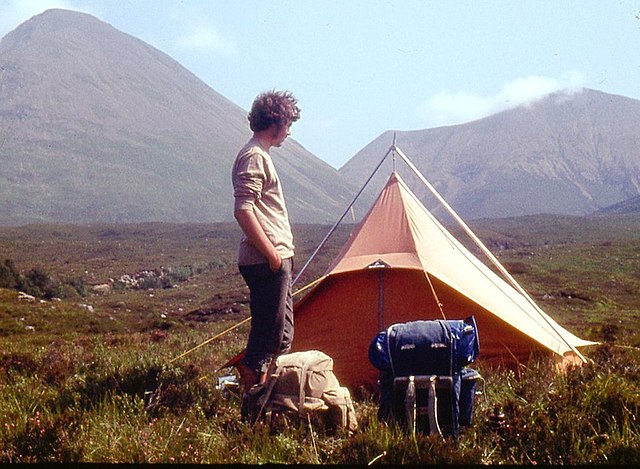
Photo credit: Wikimedia Commons

Vegan Camp Out is a British vegan festival held every uly that gathers thousands of attendees for a weekend of vegan talks, activities, and socialising. With tickets starting at £85 pounds, Vegan Camp Out is hardly an accessible event. Folks who rely on mobility devices would also find the campground difficult to access. Women, too, it seems are having issues with accessibility. Year after year, “the world’s largest vegan camping festival” features a nearly all-male lineup. 

In 2023, Vegan Camp Out highlights 20 speakers and performers on its promotional flyer. Only 6 of them appear to present as women.

In 2022, it highlighted Earthling Ed, Evanna Lynch, Simon Amstell, Lucy Watson, JME, Gaz Oakley, Bimini Bon-Boulash “and many others.”

In 2021, it celebrated its “incredible line-up” of Russell Brand, BOSH!, Chris Packham, Joey Carbstrong, Benjamin Zephaniah, P Money, Cosmic Skeptic “and more!”

In 2019, it cheered its “impressive line-up” of Earthling Ed, Matt Pritchard, Shikari Sound System, Akala “and many more.”

In 2018, it touted its “fantastic line-up” consisting of Simon Amstell, JME, Macka B, Neal Barnard, Melanie Joy, Heather Mills “and many more!”

The above highlights pulled from the Vegan Camp Out “Previous Years” website (as of April 23, 2023) include 28 speakers and artists. Only four of them present as women (in addition to Bon Boulash who is openly non-binary). The other female speakers, we are left to assume, must be counted among the “many more.”

The fantasy that Vegan Camp Out nurtures, whether intentionally or not, is a vegan movement by men for men. Too often in social movements, women are not deemed worthy of political thought or organizational contribution beyond making coffee and copies or serving as groupies. In the animal rights movement, which is comprised of a female majority (approximately 4 out of 5 vegan activists are women), the invisibilization of women exemplifies institutionalized sexism. It misrepresents, devalues, and erases women’s contributions while platforming men as more interesting, intelligent, and appropriate for leadership.

When challenged on this misrepresentation, Vegan Camp Out responded to me via Facebook on April 20, 2023, noting that their mostly male approach is acceptable because “the number of high profile acts/activists is [not] always proportionate” and “we book our line-up by listening to who our audience wants us to see, rather than us specifically.”

It is a Catch-22. Vegan Camp Out defers to audience polls to determine who will be approached as a speaker. Yet, with perpetual all-male lineups across the animal rights movement, how could the average activist be expected to know of any speakers who are not male? Women aren’t granted platform and this, in turn, ensures they will not be granted platform into perpetuity.

For that matter, the reality is that our society is sexist and male-favoring. Women, too, are socialized by patriarchy. The point is that movement leaders like Vegan Camp Out are in an important and influential position to develop the movement rather than replicate its weaknesses. Rather than recognize this responsibility, leaders too often dismiss anti-sexist critiques with gaslighting.

Vegan Camp Out furthers:

We don’t just book other people that our audience aren’t interested in seeing just to increase the number for that demographic, as we don’t book people based on their race or gender as that would be discriminatory and something we don’t agree with.

Vegan Camp Out bills itself as “The UK’s Best Vegan Festival.” This means it is in a unique position of professional obligation. When feminists and anti-racism activists raise attention to inequality and demand intervention, a common liberal response is to charge them with “reverse sexism” and “reverse racism.” This kind of response is an effective means to resist meaningful diversity efforts and maintain systems of inequality. It is effectively anti-affirmative action to the effect of maintaining white male supremacy. As a social movement, we have a duty to challenge inequality, not make excuses for it. Particularly for community leaders like Vegan Camp Out, it is vital that platforms are used to promote the world we want to see rather than replicate inequality and marginalization. 

The vegan feminist community calls on organizations and individuals to do better. Organizations should actively ensure a diversity of contributors (and accessibility for a diverse audience). Men should boycott events that do not have some semblance of diversity in representation. Everyone can nominate more women, trans women and men, non-binary people, people of color, people with disabilities, and other folks from marginalized groups who, despite their marginalization, have important things to say. Everyone can read more of their work, reference them more, and make space for their ideas and experiences that might differ from the middle-class white male Western experience.

This is not just a matter of equality for our movement, but it is of vital importance for creating a robust and effective movement. Western white men created many of these problems, we should hesitate in deferring to Western white men to fix them. Their expertise should be integrated into a multifaceted repertoire of tactical knowledge and theories of change, not rise to the top of that repertoire and crowd out the rest. This is not a matter of divisiveness; it is a matter of consistency in the anti-oppression work we engage in anti-speciesist spaces. To achieve total liberation for all species, vegan activists must also examine their own participation in inequality. If we, as a movement, cannot take seriously gender discrimination, this renders dubious our challenge to species discrimination. Why? Because oppressions share similar roots and mechanisms; sexism and speciesism are intimately entangled. 


Contact Vegan Camp Out and ask that they step up as movement leaders and ensure a more diverse program:

Twitter: @VeganCampOut
Facebook: @VeganCampOut
Instagram: @VeganCampOut


Read more about this issue in my 2017 essay, “Uh Oh… Your Vegan Panel is All White or Male.”


Learn more about challenging vegan sexism from our “Tips for Male Allies


Corey Lee Wrenn

Dr. Wrenn is Lecturer in Sociology at the University of Kent. She received her Ph.D. in Sociology with Colorado State University in 2016. She was awarded Exemplary Diversity Scholar, 2016 by the University of Michigan’s National Center for Institutional Diversity. She served as council member with the American Sociological Association’s Animals & Society section (2013-2016) and was elected Chair in 2018. She is the co-founder of the International Association of Vegan Sociologists. She serves as Book Review Editor to Society & Animals and is a member of the Research Advisory Council of The Vegan Society. She has contributed to the Human-Animal Studies Images and Cinema blogs for the Animals and Society Institute and has been published in several peer-reviewed academic journals including the Journal of Gender Studies, Environmental Values, Feminist Media Studies, Disability & Society, Food, Culture & Society, and Society & Animals. In July 2013, she founded the Vegan Feminist Network, an academic-activist project engaging intersectional social justice praxis.

She is the author of A Rational Approach to Animal Rights: Extensions in Abolitionist Theory (Palgrave MacMillan 2016), Piecemeal Protest: Animal Rights in the Age of Nonprofits (University of Michigan Press 2019), and Animals in Irish Society: Interspecies Oppression and Vegan Liberation in Britain’s First Colony (State University of New York Press 2021).

Receive research updates straight to your inbox by subscribing to my newsletter.
International Women’s Day is a Vegan Feminist Issue, not a PETA Campaign

Each March 8th, People for the Ethical Treatment of Animals (the world’s largest Nonhuman Animal rights organization) appropriates International Women’s Day to spotlight its sexist campaigning. Given persistent issues with gender inequality in the animal rights movement, this appropriation is not just disappointing, but dangerous.

Figure 1

Consider one 2013 blog post that encourages readers to “Celebrate International Women’s Day With the Strong, Powerful Women of PETA.” The blog author must have bent over backward to identify the few PETA print campaigns that do not sexualize women activists. While the effort is admirable, the blog post nonetheless diminishes its selected activists as “brazen beauties” and also spotlights a number of PETA’s pornographic celebrity campaigns. One chosen image depicts Pamela Anderson, an icon of the sex industry, in a promiscuous position and sexualized expression (Figure 1). Another depicts talk show host Wendy Williams completely nude in a similarly sexualized position (Figure 2). PETA seems to suggest that “strong” and “powerful” women are those who are sexually available and objectified for the male gaze.

It’s “Girl power!” PETA exclaims.

Figure 2

Ten years later, some things have changed, but many remain the same. On the positive side, PETA celebrated International Women’s Day in 2023 by actually featuring international women (as opposed to mostly white American women as it has in the past). As another consequence of this internationalization, PETA has decreased its reliance on naked campaigning in some regions (such as the UK) where the public and media have been less accommodating to sexist images. But sexism is still sustained in PETA’s appropriation of feminism in the US. The image chosen to represent one featured female activist appears to be pulled from a pornographic magazine (Figure 3).

Figure 3

This is not to say that PETA’s female activists have no agency and are uninvolved in their participation and presentation. Sexuality can be empowering for women in a society that has historically controlled and demonized women’s desires. Women’s bodies should, of course, be celebrated. But on International Women’s Day, a day of solidarity against patriarchy and gender inequality, the emphasis should not be on pimping pornography in the name of animal rights. International Women’s Day might be better celebrated by challenging pay inequality in the animal charity sector, confronting men’s sexual harassment and abuse of female activists, and rejecting objectifying, sexually exploitative imagery of our women activists which feeds this inequality and violence.

Rebranding sexism as feminism is a clever, but nefarious tactic. Feminists outside of the animal rights movement have flagged this trend as a consequence of capitalist co-optation. Sex and sexism are used to sell all sorts of goods in the marketplace; using language of “empowerment” can mask continued inequalities, silence criticism about that inequality, weaken social justice efforts, and can even be used to sell sexist products to women! Feminist scholars have noted, “IWD suffers from corporate capture by all types of organisations…which make empty claims for reputational gain.” “We are daunted by the showbowing and the lack of concrete systemic changes,” they further.

Feminists have also specifically called out PETA on its contribution to this for-profit culture of misogyny. Not only does PETA’s denigration of International Women’s Day sour gender relations within the animal rights movement, but it also renders impossible a meaningful alliance with the feminist movement. And solidarity in the face of injustice is the entire point of the celebration.


Corey Lee Wrenn

Dr. Wrenn is Lecturer in Sociology at the University of Kent. She received her Ph.D. in Sociology with Colorado State University in 2016. She was awarded Exemplary Diversity Scholar, 2016 by the University of Michigan’s National Center for Institutional Diversity. She served as council member with the American Sociological Association’s Animals & Society section (2013-2016) and was elected Chair in 2018. She is the co-founder of the International Association of Vegan Sociologists. She serves as Book Review Editor to Society & Animals and is a member of the Research Advisory Council of The Vegan Society. She has contributed to the Human-Animal Studies Images and Cinema blogs for the Animals and Society Institute and has been published in several peer-reviewed academic journals including the Journal of Gender Studies, Environmental Values, Feminist Media Studies, Disability & Society, Food, Culture & Society, and Society & Animals. In July 2013, she founded the Vegan Feminist Network, an academic-activist project engaging intersectional social justice praxis.

Gender and Victorian Animal Advocacy

Although the nonhuman animal rights movement in the West is frequently framed by activists and remembered by historians as gender-neutral, Donald’s (2020) Women against Cruelty (which examines meeting notes and campaigning documents reaching back to the movement’s founding in the early 19th century) demonstrates just the opposite. Women’s affinity for anti-speciesist activism within the context of a prevailing sexism which pitted all female pursuits as lesser-than would prove a difficult hurdle to surmount with regard to social movement resonance. This is not to reify or reduce women’s contributions. Women against Cruelty catalogs a diversity of feminine and feminist approaches to advancing the interests of nonhuman animals: some religious, some scientific, and some intersectional. Many women favored educational outreach, while others relied on rational debate, shocking images, direct intervention, and legal resistance.

Donald showed that women’s efforts in some ways discredited the movement through feminine associations, but, in other ways, women also buoyed it with their consistent and energetic support. Women, it is clear, existed as the movement’s foundation, providing critical insight, labor, donations, and tactical innovations. As Donald uncovers, women consistently made up the majority of various organizations’ memberships as well. However, the strict gender norms of Victorian Britain ensured that their desire to participate in the public affairs of anti-speciesism would be difficult to reconcile with their expected domestic role as caretakers (and their supposed natural affinity to other animals, a connection that many women saw as a strength but many men saw as a reason to discredit them). The Royal Society for the Protection of Animals (RSPCA), for instance, routinely confined women’s participation and restricted their leadership in campaigning.

To an extent, the tension between feminine and masculine social spheres actually reflected a tension between religiosity and the changing mores of the Industrial Revolution. Activism of the 18th and early 19th centuries was imbued with Biblical doctrine, but adherence to this approach would diverge under the growing influence of capitalism. Women, responsible as they were for upholding society’s morals, became agents of a romanticized Christian vision of equality and compassion, while men, privileged with the duty to advance society through industry and politics, became immediate opponents given the importance of speciesism (and other forms of domination) to this agenda. Thus, on one level, women and girls policed speciesist cruelty, but, on another, they also came to police the unchecked power of men who increasingly pushed the boundaries of social order through conquest, colonialism, and science. The treatment of nonhuman animals, in other words, came to symbolize the uncomfortable and monumental transition into modernity.

Read the full review here.


Corey Lee WrennDr. Wrenn is Lecturer of Sociology. She received her Ph.D. in Sociology with Colorado State University in 2016. She received her M.S. in Sociology in 2008 and her B.A. in Political Science in 2005, both from Virginia Tech. She was awarded Exemplary Diversity Scholar, 2016 by the University of Michigan’s National Center for Institutional Diversity. She served as council member with the American Sociological Association’s Animals & Society section (2013-2016) and was elected Chair in 2018. She serves as Book Review Editor to Society & Animals and is a member of the Research Advisory Council of The Vegan Society. She has contributed to the Human-Animal Studies Images and Cinema blogs for the Animals and Society Institute and has been published in several peer-reviewed academic journals including the Journal of Gender Studies, Environmental Values, Feminist Media Studies, Disability & Society, Food, Culture & Society, and Society & Animals. In July 2013, she founded the Vegan Feminist Network, an academic-activist project engaging intersectional social justice praxis. She is the author of A Rational Approach to Animal Rights: Extensions in Abolitionist Theory (Palgrave MacMillan 2016).

Receive research updates straight to your inbox by subscribing to my newsletter.

The Vegan Experience for Older Women

In a publication authored with my colleague Alexus Lizardi, Older, Greener, and Wiser: Charting the Experiences of Older Women in the American Vegan Movement, we offer the first exploratory research on an underserved demographic: older vegan women. Minimal data is available on this group–most of it is relegated to subscriber feedback reported by The Vegan Society. 

Interestingly, our sample had not put much thought into what it means to be older and vegan. Some noted that they were aware of how older vegans are objectified in the movement if they were seen to “age well.” In other words, age is leveraged to promote veganism as a means to beat aging. For the average person who ages normally, they may find themselves invisibilized. Indeed, the vegan and vegetarian movement has actively dismissed key leaders thought to sully the movement with their prolonged illness and premature death (like founder of the American Vegan Society Sylvester Graham and founder of the British Vegetarian Society William Cowherd). 

Otherwise, our respondents noted that being older granted them a degree of confidence in their political choices. This is an important finding given the movement’s focus on young people and its concern with recidivism (many young people will revert to nonveganism should they lack social supports). Older people are more resolved in their decisions and are less swayed by social pressures. 

This could sometimes backfire. A few of our respondents felt they were rather isolated given their hesitancy to associate with non-vegans who they felt were hostile to their lifestyle. Older folks in general risk isolation as they age, leading us to consider whether older vegans were doubly burdened in this respect.

Some respondents also expressed concern with accessing medical professionals who took veganism seriously. As many of our participants were middle-class and living in the New York area, they were relatively privileged in this respect, but it was clear that more marginalized older vegans could find difficulty in this regard.

Lastly, many of our respondents noted that their gender definitely informed their veganism. They reported being compelled by the horrors of dairy production, something they could empathize with given their own reproductive journeys as female-bodied persons. We consider whether this awareness is due to the popularity of Carol Adams’ vegan feminist work in the movement. It is likely that greater acknowledgement of aging issues in the vegan community might increase activist consciousness to the unique challenges facing older folks in a relatively ageist society.


Corey Lee WrennDr. Wrenn is Lecturer of Sociology. She received her Ph.D. in Sociology with Colorado State University in 2016. She received her M.S. in Sociology in 2008 and her B.A. in Political Science in 2005, both from Virginia Tech. She was awarded Exemplary Diversity Scholar, 2016 by the University of Michigan’s National Center for Institutional Diversity. She served as council member with the American Sociological Association’s Animals & Society section (2013-2016) and was elected Chair in 2018. She serves as Book Review Editor to Society & Animals and is a member of the Research Advisory Council of The Vegan Society. She has contributed to the Human-Animal Studies Images and Cinema blogs for the Animals and Society Institute and has been published in several peer-reviewed academic journals including the Journal of Gender Studies, Environmental Values, Feminist Media Studies, Disability & Society, Food, Culture & Society, and Society & Animals. In July 2013, she founded the Vegan Feminist Network, an academic-activist project engaging intersectional social justice praxis. She is the author of A Rational Approach to Animal Rights: Extensions in Abolitionist Theory (Palgrave MacMillan 2016).

Receive research updates straight to your inbox by subscribing to my newsletter.


Queer Appalachia and Vegan Activism


Photo Credit: Raymond Troumbly

By Z. Zane McNeill

People always assume that growing up queer in West Virginia was difficult, but I always tell them that I was bullied more for being vegan than being LGBTQIA+. I went vegetarian around the same time I realized that I had a crush on my best friend who was a girl. She was vegetarian too, and I was head over heels for her.  At 14, I went vegan after learning more about factory farming and the suffering that is connected to dairy and egg production. In high school and early college, influenced by Carol Adams, Josephine Donovan, and Alice Walker, I was an adamant believer that in order to be a feminist I needed to be vegan. This later extended to queer liberation as intrinsically intertwined with animal liberation.

In my early 20s, I found queer community in Appalachia thanks to the zine, artist, and activist project Queer Appalachia. Through their social media accounts, I found other queer southern projects that I  discovered, and subsequently collaborated and contributed to, like Bible Belt Queers, a community book project led by and for Southern queers, and Queering the Mountain, an art exhibition highlighting the work of Appalachian queers.  Inspired by these, I eventually started my own zine project called Marx in the Mountains, have been working on a community book project on queer(ing) Appalachia, and have recently released a collection highlighting queer vegan voices around the world under Sanctuary Publishers, a resource activism focused vegan book publisher.

People who weren’t raised in this part of the world tend to not fully understand the way in which Appalachia is not simply a place. ‘Appalachia’ is in and of itself a contested definition. Appalachia is a space containing around 25 million people, or around 8% of the US population. It stretches through thirteen states following the Appalachian mountain range from New York to Alabama. Beyond a stretch of land, it is an area historically comprised of marginalized people—Indigenous folk, immigrants working for the coal companies, and other impoverished people tied into a form of serfdom in late-stage capitalism. In What You’re Getting Wrong About Appalachia, Elizabeth Catte explains that Appalachia is “a political construction, a vast geographic region, and a spot that occupies an unparalleled place in our cultural imagination.”[1] She herself is hesitant to label the concept of Appalachian identity and usually works with those who self-identify as Appalachian instead, as historically who self-identify as Appalachian instead, considering that, historically, who counted as Appalachian was decided by those in power or with massive amounts of capital. It is more than a geographic region—it is an environmental space with a history of toxicity from natural resource extraction, a cultural construction fashioned by conservatives to support revisionist arguments of what ‘America’ is and what bodies represent ‘America’, and a politically contested space that pushes disadvantaged voices to the margins.

When I was growing up in Appalachia, I was mostly bored but managed to pick up activism from my family. My stepfather was a well-traveled kayaker, and my mother was an HIV+ advocate in West Virginia.  They were both schoolteachers, and I was lucky to grow up in the fun environment of music and books. However, to the dismay of the stepfather, I was more interested in reading Twilight than Marx. During the invasion of Iraq, my parents brought me with them to protests. The military practiced their maneuvers over our town, so my stepfather mowed a peace sign into our backyard. He delighted in knowing military pilots would gaze upon his anti-war protest while they performed their exercises. Both of my parents had a lot of gay friends and I was raised in the queer punk and art scenes in Morgantown—an environment a lot of people would be surprised existed in the mountains. Truthfully, growing up queer in West Virginia shaped my identity and understanding of self. I don’t feel the same way about my gender or sexuality as someone from the city might.

Coming to terms with being queer and coming out was awkward, but that was really it. In high school, when I came out as bi, I didn’t face discrimination—but people loved throwing their cafeteria food at me, showing me frogs they dissected, and stepping on bugs in front of me once they realized I was also vegan. At the same time, however, my friends and I had a Vegetarian Awareness Club and got a two-page spread in the yearbook. So, I would say that growing up vegan and queer in Appalachia was a weirdly empowering and isolating experience that informed my work in various animal welfare NGOs and queer grassroots organizing. My day-to-day life was continuously impacted by poverty, lack of transportation, and devastation by corporate greed. An area gutted by addiction, natural resource extraction, and neoliberalism left shadows on my friends’ faces and cuts on their arms. A lack of employment opportunities pushed the privileged out of the state to the cities, further pushing the marginalized into their homes with needles and pills. Being queer only makes sense to me with this as a backdrop. Constant violence has seemingly queered us all who are “from around here”.

I have seen progress as the years have passed, which is exciting in itself. In 2017,  Queer Appalachia released the zine Electric Dirt, and since its release, a community of LGBTQIA+ folks from Appalachia, the South, and the Rust Belt has sprung up around it fighting to show that the discourse surrounding Appalachia leaves queer, Indigenous, Black, POC, femme, and leftist voices out. Queer challenges normative generalizations about the culture of Appalachia and explores how queer folks define themselves and the region “within the intersections of coal mines and class, race and religion, food justice and colonialism.” Queer Appalachia, as an overarching work, has benefitted the marginalized folk of Appalachia, giving a wide-ranging audience to those too often denied a platform. Yet, despite this progress, I still felt alienated by some of the content produced by the LGBTIQA+ Southern and Appalachian community. I was disappointed that collectives focused on the intersections between queer life, the opioid epidemic, the carceral system, Indigenous and Black liberation, and leftist organizing but did not also embrace animal welfare and veganism. This continued to shadow my experiences growing up queer and vegan.

In Appalachia, corporations see people as expendable, just as nonhumans are seen as objects to be used. I felt strongly about the work of scholar-activists like Dr. Breeze Harper, Adams, Julia Feliz Brueck, and Aph and Syl Ko who have illustrated that nonhuman oppression is inherently intertwined with our own. Specifically, Feliz Brueck coined the term ‘consistent anti-oppression’ to describe how marginalizations are inherently connected and should be equally fought against, which makes sense to me.

Fueled by this framework, I approached Feliz Brueck, who also runs Sanctuary Publishers, about an anthology that would invite folks who identified at LGBTQIA+ and vegan to meditate on how their identities intersect, how being LGBTQIA+ affects their vegan activism, and what they would like to say to non-vegan LGBTQIA+ folk. The end result, which was recently released, was a book project that includes over 25 contributors—activists, scholars, artists, and writers who identify as LBTQIA+ and vegan—who explored the interconnections between social justice groups, building bridges between movements, and dismantling hierarchies between oppressed groups through consistent anti-oppression in this volume. In the book, known activists like Jasmin Singer speak about their initial work with AIDS Awareness, while scholar Margaret Robinson discusses how veganism ties into her decolonization as a two-spirit person, and Shiri Eisner speaks to her journey of coming out as a bisexual, genderqueer Mizrahi vegan. However, the focus is not on known activists, and that’s what makes this book and the work of Sanctuary Publishers different. Voices often denied a platform are able to have one if they choose to in written form.

Growing up queer and vegan in Appalachia was an experience that challenged metronormative stereotypes—happily queer in the holler, organizing Earthlings showings in West Virginia, and going on queer dates to a vegan-friendly co-op. Yet, I find a special kind of comfort knowing that those in other parts of the world from different cultures and life journeys understood me in a way that I had not felt before. Since embarking on the road to publish the queer vegan anthology, I found myself validated in both these identities—being vegan and queer—and in recognizing that they were always inherently connected to me, and that being vegan has informed my queer activism and vice versa. Queer vegans across the globe share this sentiment, perhaps because we have historically faced an otherization that has led to our own violence and marginalization.

I hope that vegans recognize the importance of embracing a veganism that is consistently against all oppression in an effort to ensure we recognize that the movement has work to do regarding how we avoid marginalization of others at the expense of nonhumans. I also hope that non-vegan LGBTQIA+ folks, especially my friends in the queer Appalachian community, recognize that our marginalization extends to others through our daily choices, and that in order to fight for our queer liberation, we must also fight for nonhuman animal rights.

[1] Catte, Elizabeth. What You Are Getting Wrong about Appalachia. Cleveland, OH: Belt Publishing, 2018, 10.


Zane McNeill is an independent scholar-activist from Appalachia. Their newly published book Queer and Trans Voices: Achieving Liberation Through Consistent Anti-Oppression edited by themselves and Julia Feliz Brueck explores the interconnections between social justice groups in order to consistently and effectively achieve liberation for all.

You can read more on intersections of queer activism and veganism in Queer and Trans Voices, available for purchase through Amazon website or Sanctuary Publishers Instagram.

Is This What Vegan Looks Like?

In the June 2018 issue of Women’s Health UK, I was interviewed on the prevailing stereotype of angry vegans that has dominated British media in recent months. In the article, I clarify that, although most animal rights activists and vegans are women, patriarchal norms endemic to society and social movements push men (especially hegemonic ones) to the spotlight. It’s not an especially fair portrayal and neither is it representative:

Whereas women, who are well aware that their emotionality will be framed as “hysterical,” tend to focus more on mediation, education and community-building. It’s tragic that long-standing peaceful leaders in the vegan movement are suddenly being held accountable for the actions of an extreme few.

Readers can access the entire interview here.


Corey Lee WrennDr. Wrenn is the founder of Vegan Feminist Network. She is a Lecturer of Sociology and served as Director of Gender Studies with a New Jersey liberal arts college 2016-2018. She also served as council member with the Animals & Society Section of the American Sociological Association and was elected chair in 2018. She was awarded Exemplary Diversity Scholar 2016 by the University of Michigan’s National Center for Institutional Diversity. She is the author of A Rational Approach to Animal Rights: Extensions in Abolitionist Theory.