An Overlooked Intersection: Ageism, Sexism and the Animal Rights Movement

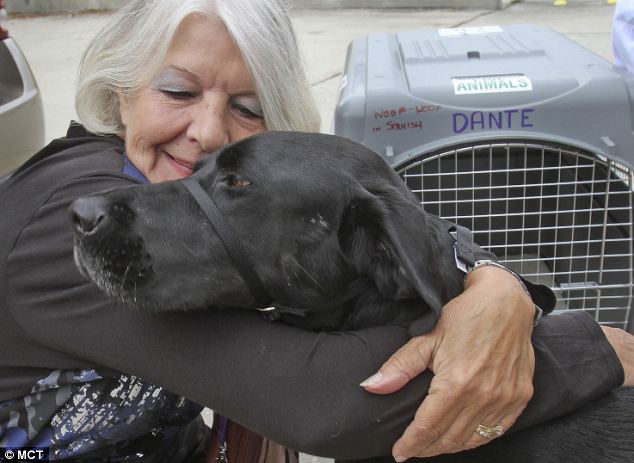
Older woman hugging black lab

Author: C. Michele Martindill

Within the animal rights movement there is some understanding that vegans have a responsibility to lead by example in stopping the oppression and exploitation of animals. A meme recently making the rounds of various Facebook pages is a call to positive action and leadership for all vegans:

“As vegans, we must lead the way in ending animal use, and so we must be committed to ending it. This means that we must reject exploitation and commodification of nonhumans in all its forms. We ought never seek to regulate or perpetuate that which we want to end. Don’t participate in nonveganism by endorsing it. Unequivocally embrace veganism and educate others to it.”
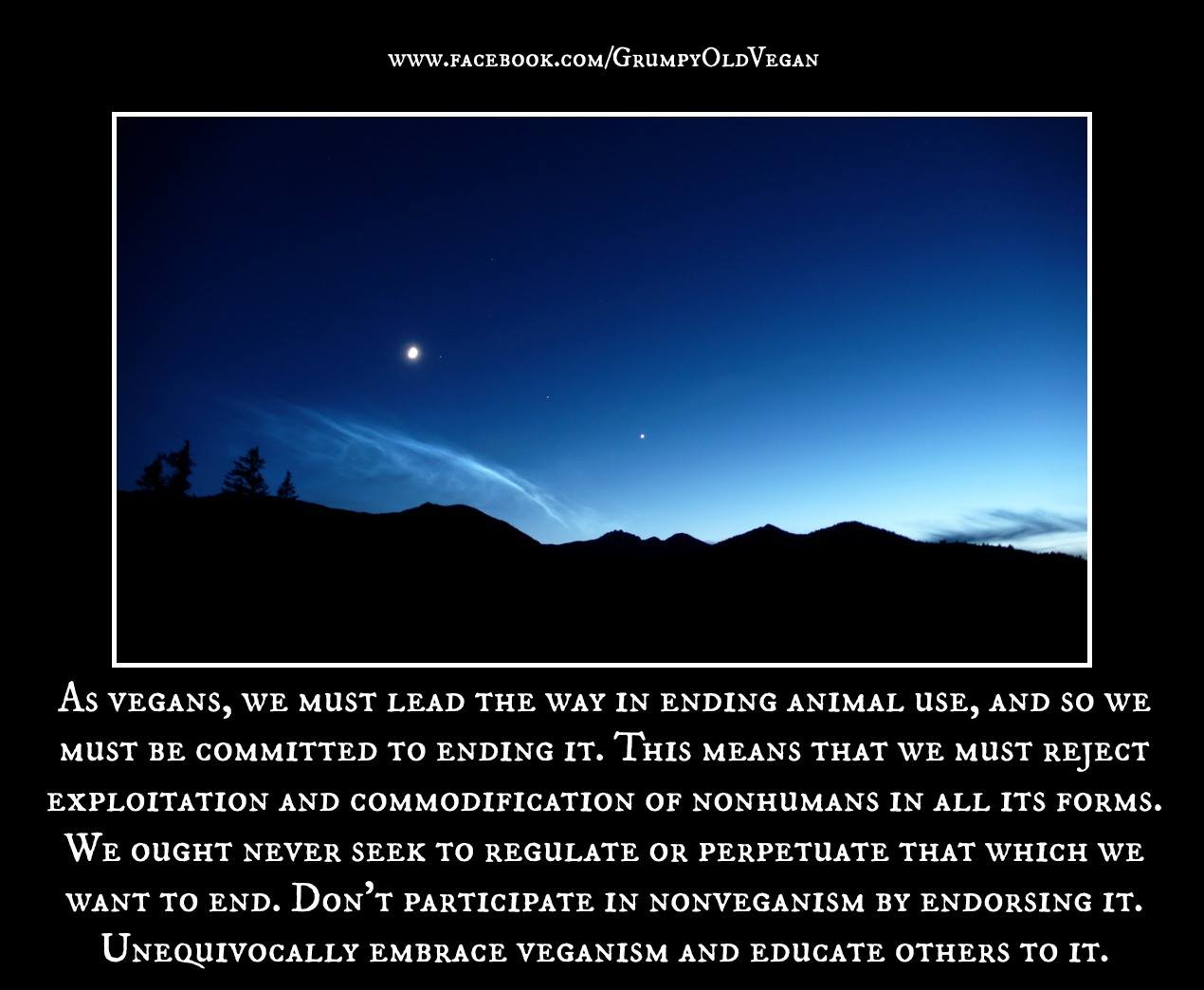
Image of the meme discussed. Pictures a mountainscape in the night with a bright star in the sky.

The message is clear. In order to end the use of animals vegans have to completely stop all use of animals and not settle for merely regulating the use of animals. Laws that try to make slaughterhouses more humane or stores that sell so-called happy meat still treat animals as products and insure their continued suffering, although the humans who consume these animals are lead to believe life is better for all concerned. The part of the message in the aforementioned meme that makes no sense in terms of veganism is the last sentence, the admonition to not equivocate in accepting veganism and to get others to learn about veganism. Why then does the organization responsible for this meme have a name and logo that reflect ageism and sexism? How can the animal rights movement consider itself inclusive of all members of society as long as any group openly stereotypes, objectifies and commodifies older people, specifically older women? If veganism is defined by a “rejection of exploitation of nonhumans in all its forms” then it’s time for vegans to realize the same call to social justice must be extended to all marginalized groups. Vegans do not get to exploit one group as a means to end the exploitation of another group.

It is unfortunate when any group within the animal rights movement fails to think reflexively or critically about its role in the oppression of others. Most of the time these groups do good work on behalf of all animals and do express a desire to be inclusive in their membership, especially in terms of accepting people of all races, genders, ages, physical abilities and social classes. Still, the group Grumpy Old Vegans remains defensive over its name and logo. The group used to be named Grumpy Old Vegan (GOV) and was the brainchild of a man who quickly drew well over a thousand Facebook followers to his animal rights group, a group that focuses on abolitionist veganism. Dating back to the launch of the group, the membership has been mainly comprised of women. When GOV was approached about the exclusion of women in the leadership of the group, the name of the group became Grumpy Old Vegans, with the addition of an ‘s’ to the name which implied the leadership was not just that of one man. To further deflect criticism of sexism within GOV the logo of the group went from being a caricature of just an older man to a caricature of both an older man and an older woman. The caricatures add to the ageism by depicting the man and woman as having oversized ears and noses, toothless and pinched oversized frowns, deep and exaggerated wrinkles, baldness for the man and gray hair in an outdated style for the woman. The overall message conveyed by the name of the group and logo is that old people are always grumpy, wrinkled, toothless, and possess oversized facial features. In short, they should be dismissed as nothing more than a joke. It’s too bad the GOV group members do not see how deeply their ageism cuts.

Actual avatar for Grumpy Old Vegans as described in text.

It should be noted that the GOV group has dismissed these concerns about ageism with a litany of clichés, claiming that anyone finding ageism in their name or logo “clearly has too much time on their hands,” and that they, too, are aged fifty or older and don’t see a problem with the caricatures. One person even mentioned how the logo makes the group seem fun, a place for jokes. Others added that all that really matters are “the animals.” Not one single person tried to understand ageism or see how even if they felt fine with the name and logo, others might not feel the same way. Empathic understanding or sensitivity to the perspectives of others was nowhere to be found. Certainly if the name of the group had been Grumpy Old Women, Grumpy Old Indians or Grumpy Old Blacks, and had the logo featured caricatures of women, Native Americans or Persons of Color that stereotyped their appearance, this essay would not be necessary because most vegans know it is inappropriate to stereotype marginalized groups; nor would we need to define sexism and racism in relation to those caricatures or the resulting effects on the animal rights movement—those definitions are known and discussed throughout the movement. Now it’s time to recognize ageism, what constitutes an ageist stereotype and the consequences of exploiting older people with oppressive imagery.

Collection of racist Native American sports mascots

Stereotyping iconography is known to incite racist attitudes as well. The popularity of redface sports imagery has necessitated heavy campaigning by Native American activists and their allies.

Ageism refers to the discrimination and stereotyping of people based on the number of years they have spent on earth, their appearance, and the perception they have diminished physical and mental capacities. Ageism is a form of oppression and exploitation, and it mainly involves ignoring older people or silencing their voices in order for younger people to assert their positions of power and privilege. On occasion the very young can experience ageism when their lives and opinions are devalued solely based on their age; however, this essay addresses ageism directed toward people over the age of fifty, those who, as economist Joanna N. Lahey (Lahey, 2006) (Barnett, 2005) observes are finding their age is making them unwanted in the work world. Employers are buying into the stereotype of older people as ill-tempered, out of touch and in physical decline. When ageism intersects with sexism the invisibility, lack of respect for and devaluing of women becomes more profound, and yet it is ignored or treated like a joke among those who have yet to see their hair turn white or those making an ill-advised attempt at self-deprecating humor. The ageism-sexism intersection is particularly embedded in (Lahey, 2006) the structure of the animal rights movement, preventing the movement from both gaining the knowledge and experience of older women, and from being regarded as an inclusive, progressive social movement.

Senior woman holding large pan of food for a huge group of hungry dogs

The contributions of older women in animal liberation spaces are invaluable, and yet devalued. A group of senior women in China feed and care for hundreds of homeless dogs.

The sexism of the animal rights movement is well documented (Abolitionist, 2015). Ageism, like the older women in the movement, is largely not considered an issue. It is easy enough to point to the leading members of the movement who are older and have achieved the revered status of founders, philosophers or experts, members like Tom Regan and Peter Singer. Women are not prominent on these lists. As Rosalind Chait Barnett establishes, there are attitudes and social structures in our workplaces that leave women more vulnerable than men to the hardships of aging (Barnett, 2005). Those hardships are found in the animal rights movement, as well. While aging is seen as a state of decline for both men and women, successful men are viewed as “having grown in skill and wisdom,” [p. 26] but older women are too often stereotyped as round-tummied grandmas, kind and nurturing till the end of their days. Older women are making a strong drive to dispel this stereotype by pushing against the glCloseup of an older woman's face. She has "BEST BEFORE MAR 73" printed across her forehead.ass ceilings of their workplaces, by working in fields traditionally dominated by men, by demanding equal pay for equal work; however, none of the advancements made by women have given them secure futures in their old age. They often have to leave work to be caregivers to family members, and lose both opportunities for advancement and robust pensions. When it comes to women animal rights activists, they continue to encounter men in most of the leadership roles, to inherit strategies for activism that were created by men and to operate in social movement structures that men continue to enforce. As women animal rights activists age, if they are visible at all they are many times type-cast as nurturing and lacking the youthful exuberance of the majority of movement members (Barnett, 2005). Their online involvement in activism is too often unquestioning support of the men who run the animal rights groups. They become groupies who seek approval through their comments, knowing that any criticism or critical thinking will be deleted.

It must also be mentioned that women are objectified in terms of their appearance on a daily basis. Saggy skin and wrinkles are treated as a problem that needs to be solved rather than a part of the aging process that has its own beauty. Gray hair is something to be avoided at all costs through expensive color treatments. Surgeries exist to remove varicose veins and veins running across women’s hands simply because society deems veins to be ugly. Age spots are the targets of countless lotions and potions, even laser treatments. It is hard enough for aging women to accept their own bodies and fight against societal stereotypes of the aging body without a logo for an animal rights group adding to this stereotype of aging women’s bodies. Series of road signs pointing to senior center. Underneath them are another series of signs reminding them to make the turn and not forget.GOV could easily become an exemplary leader in the animal rights movement by addressing the intersection of ageism and sexism. Why not name the group simply Grumpy Vegans? Why not find a logo that doesn’t socially reproduce the stereotypes of aging in our society? Surely in a group so concerned with a call to “reject exploitation and commodification” of animals they could reject the exploitation and commodification of aging women—and men—by finding some other name and logo to promote their group. Just as sports teams are rejecting names and logos that stereotype women, Native Americans and POC, rejecting ageism in the animal rights movement is an important next step. Just as the language of racism and actions like dressing in red or black-face are rejected, ageism in the animal rights movement must be rejected. Reject ageism.

 

References

Abolitionist, T. A. (2015, March 27). About this Project. Retrieved from The Academic Abolitionist Vegan: http://academicabolitionistvegan.blogspot.com/

Barnett, R. C. (2005). Ageism and Sexism in the Workplace. Generations, 25-30.

Lahey, J. N. (2006). Age, Women, and HIring: An Experimental Study. Chestnut Hill, MA: The Center for Retirement Research at Boston College.

Dr. Martindill earned her Ph.D. in sociology from the University of Missouri and taught there in the Sociology Department, the Peace Studies Program and the Women’s and Gender Studies Department. Her areas of emphasis include political sociology, organizations and work, and social inequalities. Dr. Martindill’s dissertation focuses on the no-kill shelter social movement and is based on ethnographical research conducted during several years of working in an animal shelter. She is vegan, a feminist and is currently interested in the stories women tell through their needlework, including crochet, counted cross stitch and quilting. It is important to note that Dr. Martindill consistently uses her academic title in order to inspire women and members of other marginalized groups to pursue their dreams no matter what challenges those dreams may entail, and certainly one of her goals is to see more women in academia.
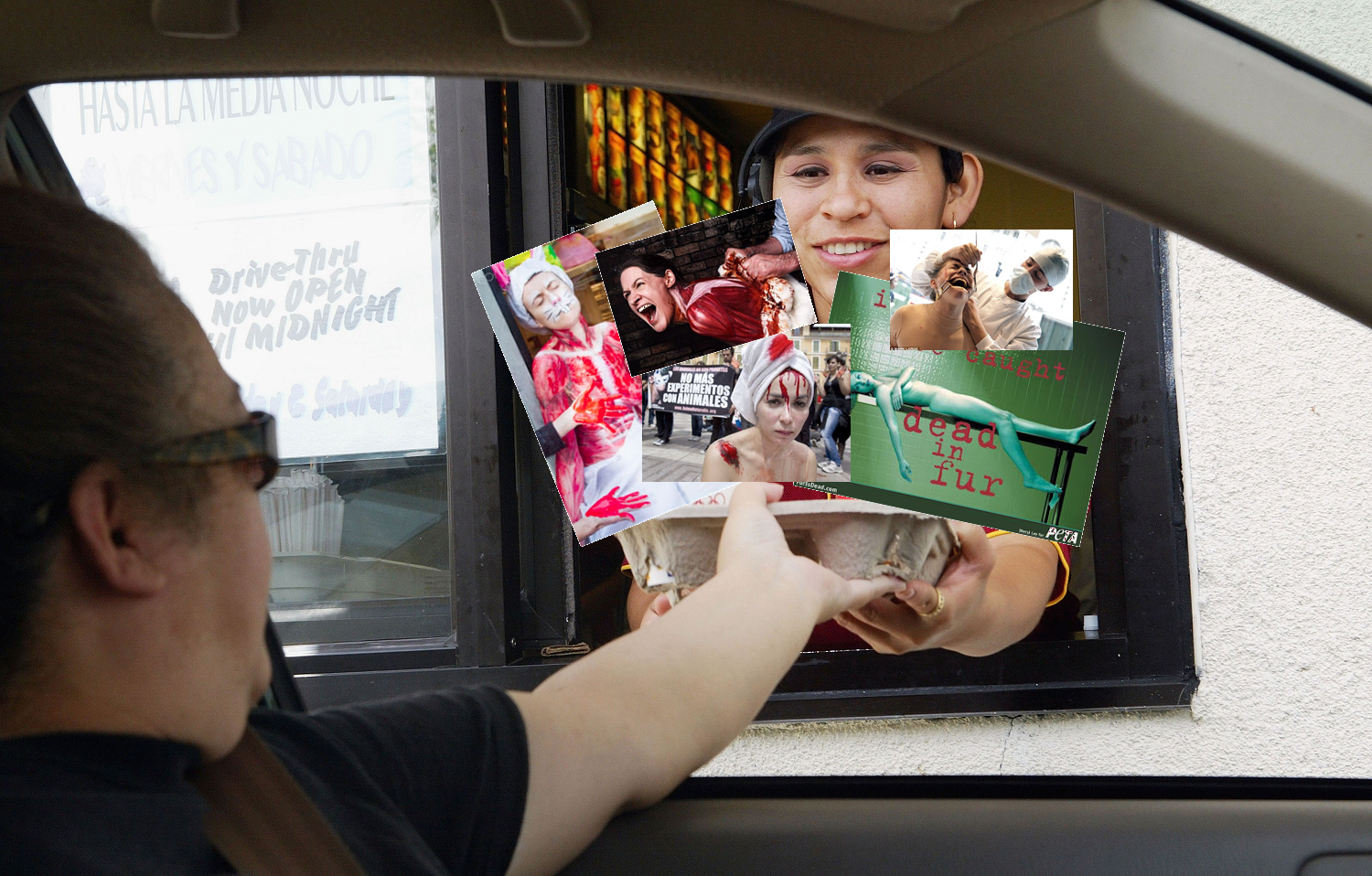
Rape Analogy as Fast Food Advocacy

TRIGGER WARNING: This essay contains a frank discussion of rape analogy in the Nonhuman Animal rights movement, including images that depict violence against women. There are also discussions of other forms of human suffering (like pedophilia and racism) that may be painful for some readers.

Fast Food Advocacy

In this essay, I want to quickly address some common responses to Vegan Feminist Network’s position on misogynistic imagery as a tactic in Nonhuman Animal rights. I believe much of the response reflects a commitment to sexism, but some also reflects a general ignorance to the impact that patriarchal ideology and a social environment of misogyny has on the activist imagination. The response also reflects a need to deflect discomfort, because these are tactics that have come to dominate our social movement space, and many have taken them for granted as acceptable and useful. Being made aware of participation in violence triggers cognitive dissonance, and it is a natural response to debate, deride, or deflect in order to protect a positive self-concept.

One of the most common responses we receive is an appeal to alternatives (the implication being that alternatives are either too difficult to imagine or simply do not exist). Activists may be sincere in their inquiries for alternatives to misogynistic tactics, but I believe this response is often engaged to derail the discussion. All activists know that there are certain lines that should not be crossed because they will be so offensive that they will hurt others and repel participants.1 We don’t want to cause hurt and we want to grow our movement, so analogies that go too far are inappropriate.

Man artificially inseminating a cow

Just today, this image was shared by A Well Fed World and Free From Harm. While no women are pictured, the analogy is implicit. Research into morally shocking imagery suggests that this approach can easily repel audiences. We can imagine how this response would be magnified by female audiences that are triggered by images of sexual assault and rape.

More and more activists in the movement recognize that slavery and Holocaust analogies are problematic. True, there are still some white-identified/non-Jewish persons clinging onto these analogies, but there are other analogies that I daresay no one would get behind. For instance, I think it is fair to say that everyone agrees that pedophilia analogies would go too far. A common analogy between women and other animals involves the violence of dairy production. Women are often depicted as being assaulted, beaten, and raped to make a point about what happens to cows. When women are targeted, there seems to be little objection. However, if activists were to produce and promote memes of children being sexually assaulted to raise awareness to dairy cows being violated, most would have to agree that this approach would be so triggering and hurtful, that it would be an act of violence and would put the movement in a bad light. Indeed, because the cows in the dairy industry are still babies and children themselves when they are hoisted onto the industry-termed “rape rack,” wouldn’t pedophilia analogies be more accurate than those that draw on violence against adult women?

But it isn’t about accuracy. It’s about swapping out one degraded and worthless body for another. As one reader pointed out, PETA’s foie gras campaign that positions women as the duck victim in advertisements and demonstrations across the world is illogical because ducks used in the industry are male. That doesn’t stop PETA from “telling it like it is.”

Woman at a dining table being forcefed by a man with a tube, she looks frightened Woman bound by rope face down on a dining table covered in her blood and vomit in an anti-foie gras demo PETA Founder Force-Fed Outside Fortnum&Manson Man standing over woman on her knees being choked by a feeding tube in an anti-foie gras demo Woman force fed with feeding tube, her mouth is stretched and bleeding Man standing over bound and kneeling woman, he is pushing her head down and forcefeeding her with a feeding tube, she looks scared

Indeed, a common response to misogynistic analogies is that “this is accurate; this is how it really is.” Vegan Feminist Network isn’t arguing against that, but we must be cognizant of media as a social construction. Media creators choose what story they want to tell and they seek to manipulate how audiences will interpret them. We live in a rape culture where violence against women is commonplace. The movement draws on this social reality to trigger a specific response. Patriarchal ideology may make many unconscious to this language they are using, but activists are not ignorant. No one (I hope) uses images of lynching or violence in nursing homes or mental institutions. No one uses images of humans with deadly diseases like cancer, AIDS, or ebola. All of these human experiences with violence and suffering could easily be enacted to make analogies about Nonhuman Animal exploitation. Fortunately, activists know better than to use them, because it is understood that they will be offensive and painful to the vulnerable groups whose experiences are appropriated. Except for women. The movement produces thousands of images and reenactments of women bloodied, bruised, assaulted, raped, dying and dead. Because women don’t count.

Women are still at the bottom of the ladder. Violence against women is so commonplace, it is rarely even questioned as a painful subject in the Nonhuman Animal rights movement. This is to be expected. In all social movements, women have been ignored, exploited, and left behind.2 The anti-slavery movement would not let women participate and intentionally excluded gender from campaigns to make legislative language more inclusive. The Civil Rights movement kept women in organizational roles and pushed men into the leadership positions.  The gay rights movement seriously underserved lesbians. The free-thinking/atheist movement soundly denies the need to recognize feminist issues. In all efforts to advance social justice, women have been made to take a back seat, never considered fully equal or worthy of rights. The feminist movement has been seeking to challenge this ideology since women were first ousted from anti-slavery efforts in the 1800s, but female activists continue to be framed as loudmouthed, unattractive, mentally unstable, feminazis. Just last month, Time Magazine listed the word “feminist” on their reader poll of words that should be banned. We’ve come a long way baby…but not nearly far enough.

Sexism is so normalized in our society that it has become invisible. You cannot turn on the television without being exposed to sexist remarks, jokes at women’s expense, sexual harassment, sexual objectification, and violent assault and rape of women. We are all exposed to a nonstop onslaught of sexist imagery in our society. It becomes as natural as the air we breathe. The bodies of women have always been sites of violence and domination, to the point where it becomes mundane and expected. So, when Vegan Feminist Network takes a stand against the encroachment of this violent imagery in Nonhuman Animal rights spaces, readers are understandably taken aback. They’ve never been made to think critically about the gender-based violence they have taken for granted as acceptable and normal for all of their lives.

Readers often respond with disbelief or with weak justifications, demanding a soundbite explanation as to why this behavior is problematic in two Facebook comments or less. The information is out there (as just one example, the Vegan Feminist Network website is chock full of free information), but few really want to learn more, because I suspect that few really care. This is the way it has always been done, women are easy targets, and women’s pain doesn’t matter (or matters less).

Kim Socha refers to these kinds of trans-species tactics as “fast food activism.” There is no concern with investigating why these analogies might be problematic, that is, why they may not work as a scientific matter, how the state of sexism is in our society influences interpretation, or how they impact women. Just like McDonalds, these analogies pull on the readily available language of violence against women and pump out advocacy cheaply and quickly irrespective of the hurt it causes to vulnerable groups and the damage done to society.

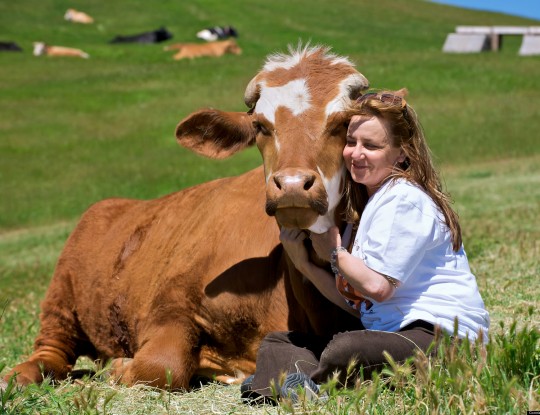
Woman hugging cow

Violence-free activism that brings attention to Nonhuman Animal exploitation and the intersectionality of oppression is not difficult to achieve.

There are tons of ways we can help other animals without resorting to this tokenizing approach. I’ve published hundreds of essays on this website and on my personal blog, The Academic Abolitionist Vegan, most of which are grounded in my research in social movement theory and social psychology, and all of which are freely available. There are also hundreds of books on effective social change available. There’s no excuse for allowing patriarchal norms and PETA’s influence to dictate our activism. We don’t need to hurt women to help animals. We do it because it is easy and because women don’t matter, and that is a problem.

Notes

1. There are a few exceptions, including Israeli group 269Life which, in addition to “reenacting” sexual assault and violence against women in public, also uses shackles, chains, and branding on humans in street demonstrations. PETA, too, has utilized graphic analogies of African slavery and the Holocaust.

2. This is not to say that women were not leaders and important players (in all movements there are important exceptions), but only to emphasize that movements act as microcosmic social systems and too often exclude women and ignore their interests.

Giving “Real” Feminism a Bad Name

I'm making history, what's your excuse?

In this essay I will be addressing some common tools of dismissal utilized by those who adhere to sexism or otherwise seek to block feminism in Nonhuman Animal rights spaces (though, this essay has potential for general application to feminism in any space).

Those who are targeted as an accomplice to sexist norms often retaliate by insisting that vegan feminists call out sexism in the Nonhuman Animal rights movement to “get attention” or achieve some sort of personal gain or interest. In short, people like us do a disservice to “real” feminists; we give “real” feminism a bad name.

So, what is “real” feminism from this point of view? “Real” feminism means working to advance opportunities for women without challenging the privilege of those who stand to gain from a system of inequality. People of this persuasion are all for feminism . . . as long as it doesn’t question their own actions, their own privilege, and their own unearned opportunities and advantages. Unfortunately, feminism that sticks to the rules of proper ladylike behavior by politely asking for more without disrupting the system of male rule is not the type of feminism that is likely to create any meaningful advancements for women. It maintains women’s status as inferior and subservient.

Feminist icon Anita Sarkeesian of Feminist Frequency is often accused of using feminism for personal gain, evidenced in "Gamergate"

Feminist icon Anita Sarkeesian of Feminist Frequency is often accused of using feminism for personal gain, evidenced in the “Gamergate” scandal. She has been targeted by thousands of men (and some women) with misogynistic messages and death threats, including one promising to conduct the world’s largest school shooting at one of her scheduled talks.

The abolitionist faction of Nonhuman Animal rights is perhaps one of the most sexist in the movement.1 Maybe not as bad as PETA’s outright sexist tactics which aggravate a culture of violence against women, but just as insidious because this faction cleverly masks itself behind post-sexist ideologies and the veneer of intersectionality. Prominent abolitionists often accuse Vegan Feminist Network contributors of using feminist critique to dishonestly shut down their approaches. These are approaches we identify as fundamentally uncritical and privileged, approaches that are doing real hurt to real people.  Simply slapping a label of intersectionality on outreach does not guarantee adequate comprehension or successful implementation. In too many cases, it appears that the label is used to protect privilege and deflect critical reflection on effective, non-violent activism.

A strong indication that someone is actively engaging in sexism is the nasty employment of gendered, derailing tropes that frame feminists as gossiping troublemakers seeking attention/personal gain/cheap shots. This is a sexist response that works to protect a violent social system because it obscures the validity of the feminist argument by ostracizing or attacking the character of the messenger in a gendered manner. For centuries, women have been stereotyped as greedy, untrustworthy gossipers, so it is all too easy for these labels to be applied to feminists. The unfortunate reality is that most people will believe the labels because society both hates and distrusts women: using sexist tropes to deflect feminist critique is very effective. Again, this has relevance beyond the Nonhuman Animal rights movement. It is a standard, sexist deflection of feminist thought. The same response is used to dismiss Anita Sarkeesian of Feminist Frequency (celebrity feminist in the gaming world) and Rebecca Watson of Skepchick (iconic feminist of atheist spaces). If a woman is speaking, the default is to dismiss her, not believe her, or presume her ignorant or up to no good. This is one reason why the contributors to this website rely on screen captures: women will always be accused of lying and deceit in a misogynist world, so we put the perpetrator’s own words on display. We let them speak for themselves.

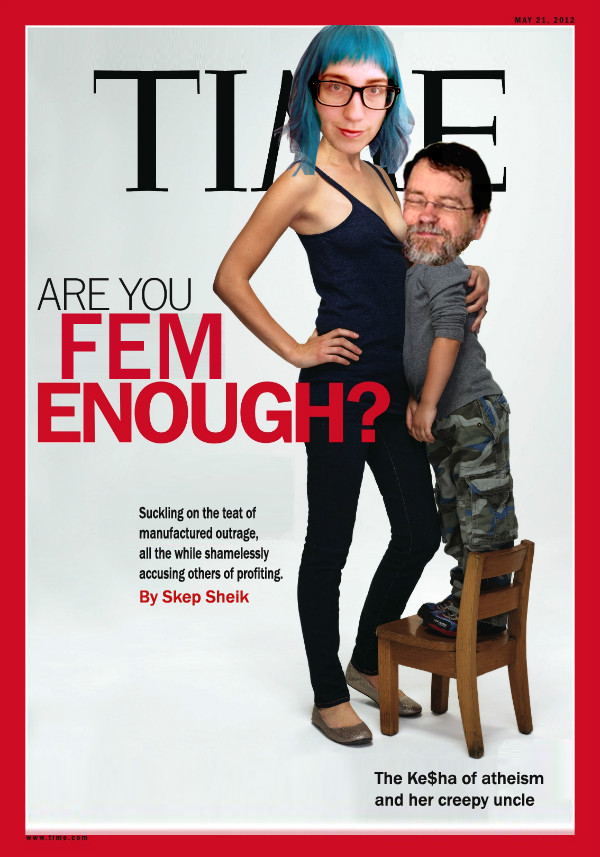
Feminist Rebecca Watson began criticizing sexism in the atheist movement, and has become the target of serious harassment, with many accusing her of profiteering and manufacturing sexism where it does not exist.

Feminist Rebecca Watson began criticizing sexism in the atheist movement and soon became the target of serious harassment, with many (including the famous Richard Dawkins) accusing her of profiteering and manufacturing sexism where it does not exist. The man pictured is PJ Myers, an outspoken male ally.

Suggesting that feminists are just a bunch of troublemakers is in of itself evidence of serious sexism. Make no mistake, the Nonhuman Animal rights movement is deeply sexist, and at times, very misogynistic (for those unfamiliar with these trends, please take the time to browse our previous essays and recommended readings). The idea that any feminist would challenge misogyny for fun or personal gain is nothing short of ridiculous and offensive–no woman enjoys retaliation from privileged persons upset by feminist critique. This is one reason why so few women (and men) are vocal about the sexism and misogyny that runs rampant in the movement. It is the proverbial elephant in the room. No one wants to speak out about it because it will result in a tirade of punishment.

It isn’t fun work. Every single day, contributors to Vegan Feminist Network deal with angry racists, classists, and men and their female supporters who insist we should have been aborted, that we are fascists, that we are despicable or disgusting, that we are “moronic/idiotic/stupid” or otherwise mentally ill,2 that we are divisive, that we are man-haters, etc. This happens Every. Day. Ironically, when we block or ignore these comments and emails, we’re then accused of censorship. It is common for some to pull on sexist expectations that women nurture men’s contributions by listening to them and entitling them platform (it is an expected privilege that men’s/whites’/higher classed persons’ opinions are always needed, relevant, and important and that they should be allowed to take up space, even where they are not welcome).  Some pull on sexist expectations that women “teach” them, instead of taking the initiative to read and learn without exploiting women to do the work for them. It is as though our website resources and Facebook activities aren’t enough. Indeed, nothing is ever enough as long as male/white/class privilege is at stake.

Screenshot_2014-11-12-12-50-24~2

Casey is correct to point out that sexist character attacks and offensive measures are more common than genuine concern for deconstructing inequality in the Nonhuman Animal rights movement.

We here at Vegan Feminist Network find oppression problematic, we find the sexist response to our feminist work problematic, and we want to put an end to it. Doing so is not attention-seeking, it is social justice in action. Some parting words of advice:  When an individual or group suggests that a feminist uses feminist critique to start trouble, there is a good chance that they are indeed engaging sexism and have something to hide (or protect). If derailers truly care about “real” feminism, perhaps they might spend less time demonizing feminists and more time learning about how they can be a positive force in social change.

Believe women.


Notes

1. Important exceptions include The Abolitionist Vegan Society, Vegan Information Project, and the Food Empowerment Project.

2. These disableist responses by prominent abolitionists offer further evidence that abolitionism has largely failed to put “intersectionality” successfully into practice

Male Privilege, Discussion Derailments, and the Politics of Politeness

dawson-leery-is-crying-male-tears

Yesterday I was in a conversation with a male colleague who supports violence and welfare reform in Nonhuman Animal rights efforts.  As an abolitionist, I reject these tactics as both ideologically flawed and counterproductive.  The violence/non-violence debate and the abolition/welfare debate have long histories in the movement, and debates over effectiveness are never ending.  Because I specialize in social movement theory in my academic life, I have some rather strong positions on these topics.  My colleague, however, is a non-academic and is not versed in the science of social movements, basing his position on the dominant (male-led) discourse of the movement.  As the conversation progressed and I continued to remain strong in my position, my colleague pointed out that he didn’t feel like he could talk to me without eventually being accused of sexism.  This may have been because I was using the language of privilege to discuss the dominance of welfarist organizations in the movement, or it may have been because I noted that violent tactics are patriarchal and tend to attract men.  Whatever the reason, I was being flagged for communicating my position within the framework of inequality.  I certainly never accused him of sexism. However, it soon occurred to me that my colleague was probably not making this claim out of true exasperation, but rather as a manipulative tool intended to derail the discussion and restore male supremacy.

Men tend to be socialized to expect domination in discourse.  They are socialized to believe they are right, that their opinions matter, and that these opinions are the most important.  This is not based on experience or expertise, rather, it is based on their privileged social status as a male.  Women, on the other hand, are socialized according to the politics of politeness.  We are taught to give men more room to talk, to value their opinions no matter how ridiculous or offensive, to soothe their egos, etc.  Decades of sociological research on talk, language, and social space regarding mixed gender interactions has confirmed that men talk more, they take up more space, they dictate the discussion, and their opinions are viewed as more credible and legitimate.  Women, on the other hand, speak less, support more, and take up less space.  Their opinions are also extremely devalued.

When men complain about not being able to say anything without being accused of sexism, what they are really saying is:

1.  I am used to having control over the conversation, your awareness of sexual politics makes it difficult for me to enact this invisible privilege smoothly.

2.  I am used to being able to speak about any topic without my authority being challenged, the possibility of being accused of sexism interferes with my authority.

3.  I am drawing on politics of politeness to shame you into putting my feelings and interests first.

4.  Feminist theory is a charade.  Sexism isn’t real, you’re just using that rhetoric as a way to win the argument.

This tactic is a variation of tone-policing. Rather than engaging the discourse, there is a derailment created by appealing to the bruised male ego, the woman’s character, and the authenticity of feminism.  Women are distracted from expressing their own authority on a subject when men exploit femininity and pressure women into paying deference to the patriarchal social structure.  The validity of my argument goes by the wayside, I have to put his feelings first.  Not putting the feelings of men first is a cardinal sin in the patriarchy.  Being a woman with an educated opinion seems to be a great offense as well.

Finally, it is extremely important to recognize that when we individualize oppression, we obscure its systemic nature.  If we can’t discuss systemic oppression because people of privilege prioritize their discomfort at what appears to be a personal attack, we will not be able to have the important conversations necessary for creating an egalitarian society.  Making it personal (“Hey, I’m not sexist!”; “Hey, are you calling me racist?!”) seriously derails the conversation.  Instead of challenging structural oppression, advocates find themselves tending to the feelings of people of privilege who are used to being shielded from discomfort. It becomes extremely wearisome for oppressed people to continuously pander to the feelings of privileged persons.  Doing so redirects attention from the oppressed to the oppressors.  It also shuts down the dialogue, interferes with critical thinking, and impedes social justice work.


Corey Lee WrennDr. Wrenn is Lecturer of Sociology. She received her Ph.D. in Sociology with Colorado State University in 2016. She received her M.S. in Sociology in 2008 and her B.A. in Political Science in 2005, both from Virginia Tech. She was awarded Exemplary Diversity Scholar, 2016 by the University of Michigan’s National Center for Institutional Diversity. She served as council member with the American Sociological Association’s Animals & Society section (2013-2016) and was elected Chair in 2018. She serves as Book Review Editor to Society & Animals and has contributed to the Human-Animal Studies Images and Cinema blogs for the Animals and Society Institute. She has been published in several peer-reviewed academic journals including the Journal of Gender Studies, Feminist Media Studies, Disability & Society, Food, Culture & Society, and Society & Animals. In July 2013, she founded the Vegan Feminist Network, an academic-activist project engaging intersectional social justice praxis. She is the author of A Rational Approach to Animal Rights: Extensions in Abolitionist Theory (Palgrave MacMillan 2016).

Receive research updates straight to your inbox by subscribing to my newsletter.

Veganism, Vulnerable Women, and Organ Trafficking

In the Winter 2014 issue of Contexts, a magazine published by the American Sociological Association, Anne T. Gallagher reports that trafficking for organ removal is on the rise:

Trafficking of persons for organ removal is not an urban myth, but an increasingly common means by which the global shortage in organs is being met. Recipients are generally independently wealthy or are supported by their governments or private insurance companies. Victims are inevitably poor and from poorer countries, often unemployed and with low educational levels, which makes them vulnerable to deception about the nature of the transplant procedure and its potential impacts.

She furthers that many are forced to comply, are bribed or manipulated, and threatened into silence. Many become dangerously ill or die from complications from hastily performed procedures and inadequate (or absent) follow up care. Some are simply left to die with no intention of them surviving. Compensation promised is rarely paid in full, and is generally a tiny fraction of the promised price. Debt bondage or extortion often pressure individuals to “donate.” In many cases, organs are outright stolen.

Both men and women are victims of organ trafficking, but women tend to be especially vulnerable, as victims come from areas where women are still considered second-class citizens or property. Women are also more likely to be illiterate and have fewer opportunities and resources at hand. Sex trafficked women, not surprisingly, are especially vulnerable to organ trafficking as well. Just like other animals, women’s bodies are literally fragmented, butchered, bought and sold, and consumed by those with more power. Both women and other animals exist as (temporarily) living resources waiting to be harvested.

Veganism Diabetes Kidney Failure

Not surprisingly, this horrific industry is rooted in patriarchy. As diet-related diseases increase as a result of our growing consumption of other animals, the demand for organ transplants rises. Kidneys are one of the top organs in demand, and the primary reason for transplant is diabetes. Diabetes is one of many diseases directly related to a non-vegan diet. The masculinization of meat and the association of animal foods with wealth fuels this irrational demand.  Traditional plant-based (and feminized) diets become devalued and are quickly disappearing as Westernization spreads. Patriarchy not only influences the deterioration, but also the access to solutions. Not everyone enjoys equal access to a transplant. It is generally those in wealthier Western nations and usually men with this privilege.

In a previous essay, I discussed the ethical considerations behind organ donation as a vegan. I do not think it is appropriate to punish individuals who are suffering for systemic problems rooted in Western imperialism, patriarchy, and speciesism. I believe everyone should register as an organ donor, not only for the interests of the individuals in need, but also those animals (used as “donors” and in vivisection) and vulnerable humans who might be spared exploitation and death.

Kidney Scar

But it should not end there. Veganism is an ethical imperative for deconstructing these systems of oppression. While Westerners poison their organs with the death of Nonhuman Animals, poor women in India, Africa, and Asia suffer and die to replenish the bodies of the global rich. Of course, their poverty is also intimately linked with the West’s resource-intensive need to extort massive amounts of grain and water to funnel into livestock. The resulting pollution from this animal-industrial complex further weakens third world regions struggling to survive under the weight of colonialist and capitalist oppression. The consumption of other animals entails widespread global violence against all vulnerable groups for the pleasure, convenience, and privilege of a small few. Sadly, organ trafficking is but one of many cruel injustices bound to gross power imbalances. Anti-capitalist vegan feminism must be at the root of our activism. We must take an intersectional approach if we are to have any hope at success.


Corey Lee WrennDr. Wrenn is Lecturer of Sociology and past Director of Gender Studies (2016-2018) with Monmouth University. She received her Ph.D. in Sociology with Colorado State University in 2016. She received her M.S. in Sociology in 2008 and her B.A. in Political Science in 2005, both from Virginia Tech. She was awarded Exemplary Diversity Scholar, 2016 by the University of Michigan’s National Center for Institutional Diversity. She served as council member with the American Sociological Association’s Animals & Society section (2013-2016) and was elected Chair in 2018. She serves as Book Review Editor to Society & Animals and has contributed to the Human-Animal Studies Images and Cinema blogs for the Animals and Society Institute. She has been published in several peer-reviewed academic journals including the Journal of Gender Studies, Feminist Media Studies, Disability & Society, Food, Culture & Society, and Society & Animals. In July 2013, she founded the Vegan Feminist Network, an academic-activist project engaging intersectional social justice praxis. She is the author of A Rational Approach to Animal Rights: Extensions in Abolitionist Theory (Palgrave MacMillan 2016).

Receive research updates straight to your inbox by subscribing to my newsletter.

“Booth Babes” Bad for Business & Animal Rights

Two teenagers in mini-dresses pose on a PETA Youth booth offering "Free hugs"

The animal rights movement loves using young women to sell veganism, but whether or not this tactic is effective has come under serious scrutiny.

New research on the effectiveness of “booth babes” at techie conferences suggests that the use of provocatively dressed young women to sell items at trade shows doesn’t work. The comparison group, which consisted professionally dressed older local women, performed significantly better:

The results? They were great. The booth that was staffed with the booth babes generated a third of the foot traffic (as measured by conversations or demos with our reps) and less than half the leads (as measured by a badge swipe or a completed contact form) while the other team had a consistently packed booth that ultimately generated over 550 leads, over triple from the previous year.

Why don’t booth babes make good salespersons?  Marketing executive Spencer Chen suggests that they are intimidating to men.  That is, rather than attracting men, they repel men.  Chen also suggests that women who are hired specifically for these events have little incentive to work for the company. As he explains, “They are used to not doing much except showing up to make their fee for the day.”  Customers are looking to learn more, something models are not often invested in.  This point may or may not apply to vegan booths, as PETA and other organizations that objectify women rely on volunteers as well as paid models.

Chen also reports, “Business and product execs don’t talk to booth babes.”  While vegan “booth babes” are not targeting important business persons, the effect is similar.  Animal justice is a serious matter, as is changing one’s diet, and “booth babes” simply do not convey seriousness:

Many times I observed that while my team was busy in demos with other prospects, the booth babes were unable to hold the interest of these execs for the extra five minutes that I needed to get a person from our team to engage.

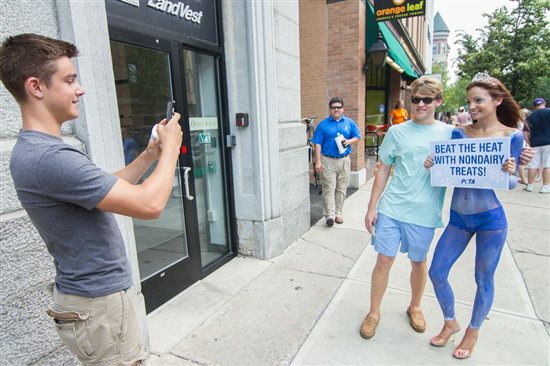
Who they do tend to attract, however, are young men who are interested more in photo ops than business.

Young man poses next to the "Ice Queen" while another young man takes their picture. The woman is very thin, white, and painted in blue. She wears a tiara and high heels. Sign reads: "Beat the heat with nondairy treats."
So why use booth babes at all? Chen suggests that it’s simply cheaper than relying on qualified individuals and experts.  It’s not only easier on the budget, but it’s indicative of cheap advertising standards that dominate the marketplace:

[…] there still exists the “stripper and steaks” mentality in sales, where it’s less about the product and more about relationships and the art of the “close.” Booth babes have long been a part of this dog-and-pony show in this old approach to sales.

This study comes on the heels of the Australian study published in December of 2013 that demonstrated PETA’s “sex sells” approach is actually counter-productive.  Male participants recognized that the women were dehumanized and were subsequently less likely to support the animal rights cause.

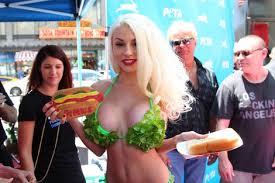
Courtney Stodden poses with a veggie dog in a revealing lettuce bikini. Men in the background stare at her.


Corey Lee WrennDr. Wrenn is Lecturer of Sociology. She received her Ph.D. in Sociology with Colorado State University in 2016. She received her M.S. in Sociology in 2008 and her B.A. in Political Science in 2005, both from Virginia Tech. She was awarded Exemplary Diversity Scholar, 2016 by the University of Michigan’s National Center for Institutional Diversity. She served as council member with the American Sociological Association’s Animals & Society section (2013-2016) and was elected Chair in 2018. She serves as Book Review Editor to Society & Animals and has contributed to the Human-Animal Studies Images and Cinema blogs for the Animals and Society Institute. She has been published in several peer-reviewed academic journals including the Journal of Gender Studies, Feminist Media Studies, Disability & Society, Food, Culture & Society, and Society & Animals. In July 2013, she founded the Vegan Feminist Network, an academic-activist project engaging intersectional social justice praxis. She is the author of A Rational Approach to Animal Rights: Extensions in Abolitionist Theory (Palgrave MacMillan 2016).

Receive research updates straight to your inbox by subscribing to my newsletter.