Vegan Porn is a Barrier to Egalitarianism

A new study in Psychology of Women Quarterly, reports that people who admitted to watching pornography were less likely to support affirmative action for women in a subsequent interview.  Why?

“[ . . . ] sexual media activate abstract social scripts, which may then be used to inform opinions about social issues.”

“Pornography often presents women as sexual objects deserving of degradation, and even aggression.”

“In alignment with these depictions, prior studies have found that pornography viewers are more likely to hold a variety of antisocial attitudes towards women.”

Countless studies similar to this one have supported the link between exposure to pornography and a rejection of egalitarian values.

So, my question is: Why does the Nonhuman Animal rights movement (PETAJames McWilliamsCUFA269Life, VOKRA, VGirls|VGuys, Animal Liberation Victoria, Vegan PinupLUSH, etc.) use porn?  How can “sex sell” Nonhuman Animal rights if it fosters anti-egalitarian attitudes?  If pornography fosters female objectification and degradation and aggression against women, why would we expect that reaction to magically transform to respect for other animals?  And do we not have a duty to protect the safety and dignity of the women who compromise 80% of our movement?  How can we build a strong collective if we’re giving the green light to antisocial attitudes against our largest demographic?

This post was originally published on  The Academic Abolitionist Vegan on September 16, 2013.


Corey Lee WrennDr. Wrenn is Lecturer of Sociology. She received her Ph.D. in Sociology with Colorado State University in 2016. She received her M.S. in Sociology in 2008 and her B.A. in Political Science in 2005, both from Virginia Tech. She was awarded Exemplary Diversity Scholar, 2016 by the University of Michigan’s National Center for Institutional Diversity. She served as council member with the American Sociological Association’s Animals & Society section (2013-2016) and was elected Chair in 2018. She serves as Book Review Editor to Society & Animals and has contributed to the Human-Animal Studies Images and Cinema blogs for the Animals and Society Institute. She has been published in several peer-reviewed academic journals including the Journal of Gender Studies, Feminist Media Studies, Disability & Society, Food, Culture & Society, and Society & Animals. In July 2013, she founded the Vegan Feminist Network, an academic-activist project engaging intersectional social justice praxis. She is the author of A Rational Approach to Animal Rights: Extensions in Abolitionist Theory (Palgrave MacMillan 2016).

Receive research updates straight to your inbox by subscribing to my newsletter.

A Commentary on Non-Humans First

There is an animal rights activist group trying to shake things up by taking three steps backwards and dragging veganism/ animal rights to an all-time low. They recently put forward a declaration titled “Non-Human Animals First.”  Their mission? Vegans need to put animals first because apparently we are back in the activist dark ages, during which we assumed activism was a zero-sum game. Also, something about temporality because certain groups have to be “first” or “not first” or something like that for a movement to achieve anything.

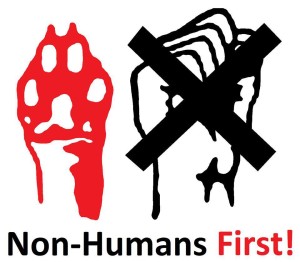
Reads "Non-Humans First!" Image of upraised dog paw and human fist, with human fist crossed out

A representative of the group (which I will refer to as NHFirst) wants us to use the single-issue mindset espoused by early women’s liberation efforts, civil rights, etc as evidence that an intersectional approach is not needed. For instance, NHFirst points out that MLK Jr. was a “sexist” and “homophobe” and that while “it is great to be against all injustice, in reality people are complex and have differing views.” Who knew that being a sexist or a homophobe was simply a sign of character complexity?!

It speaks volumes that NHFirst is willing to deal with and accept “complex” characters like racists, sexists and homophobes, but not willing to deal with and accept speciesists.  This position echoes the ridiculous synchronic position I keep seeing in the animal rights movement which goes like this:  If we just accept everyone, no matter how horrendous they are, we’ll have more people “for the animals.”  They don’t seem to realize that over time, we will lose people from the movement since women, people of color, homosexuals, disabled people, etc will run the hell away. If we are all in a movement, we have to work together and that’s not going to happen if the movement is filled with people who have attitudes that motivate particular behaviors toward particular people against whom they hold those attitudes.

Moreover, they seem to overlook the fact that the lack of intersectionality that plagued (and continues to plague) many early (and current) movements is the precise reason we are still dealing with the very same problems those movements sought (and seek) to dissolve. Corey Lee Wrenn has already pointed out that NHFirst’s approach fails to appreciate what I call the ‘pernicious holism’ existing among speciesism, sexism, racism, ecocide, etc., and, as such, cannot possibly begin to dismantle our dependence and subsequent exploitation of animals. In other words, if we correctly identify the depth of the problem- that is, that the exploitation of animals is systemic and a crucial element of the ‘pernicious holism’- but we refuse to engage with the problem -the system of pernicious holism itself- then, we are doing absolutely nothing to address the problem of animal exploitation. All of NHFirst’s words are basically a lot of hot air.

As a charitable reader, I initially assumed NHFirst had good intentions that simply went horribly awry. After all, at one point many of my vegan companions were very animal-focused in their activism and never thought to incorporate human rights activism into their “animal work.” NHFirst, on the other hand, explicitly go out of their way to mention their awareness of (daily) human rights violations and human suffering only to point out that those violations should remain outside the range of our concern as vegans. Animal exploitation is an emergency situation whereas human exploitation is. .. well, just something brown people and women need to suck up because ANIMALS FIRST.

I don’t think the “brown” and “woman” stuff is wholly coincidental to NHFirst’s insistence to downplay the extent of human suffering. In fact, I think it is precisely because exploited humans are generally non-white and/or women that NHFirst thinks it’s totally fine to pretend human suffering has nothing to do with or cannot be addressed in conjunction with animal suffering. We all know that if there were to be a holocaust disproportionately impacting white or white-looking people, everyone would think it highly inappropriate to start yelling, “ANIMALS FIRST!”

Having said all of that, I don’t mean to claim that vegan/animal rights activism is reducible to civil rights activism or feminist activism or other human rights activism and I don’t mean to suggest that any species of human rights activism is reducible to vegan/animal rights activism. Certainly feminism has a specific beneficiary in mind; namely, feminism seeks to grow the rights and improve the lives of women, while gay rights activism seeks to grow the rights and improve the lives in the LGBTQ community, and so on and on with other oppressed groups. In the same vein, veganism/animal rights activism seeks to grow the rights and improve the lives of non-human animals. I don’t mean to deny the constraints that determine the specific flavor of distinct activisms. However, what I do claim is that achieving those specific ends of distinct activisms requires taking into account other social forces that shape and affect the specific -ism we seek to dismantle in any activist site.

For (an easy) example, a feminist activist who fails to acknowledge the unique role race and class plays in shaping the very gendered oppression that women face, especially women of color or poor women, cannot begin to adequately engage with, address, or dismantle gender oppression. She would be missing crucial components that shape sexism. So, one activism cannot be carried out in isolation from other activisms. It has to be done in concert with other movements (which is why the great Frederick Douglass said, “All great reforms go together.”)

I would like to take this one step further in the case of animal exploitation. Unlike any other oppressed group (possibly with the exception of prison inmates), animals are the only group that has never been granted rights. That is, although (some) animals have been granted some measure of legal protections, none have been granted proper rights in the United States. Rights language is needed to formally acknowledge the vulnerability and violability of beings. Unlike animals, humans have all been granted rights simply by virtue of being human. The distinction that rests between oppressed humans and animals, then, is this: while oppressed humans’ rights remains in the space of theory- that is, those rights are rarely enforced in practice despite having been granted- animals simply don’t have rights. There is nothing to enforce since nothing has been granted. This leads to a terrifying revelation: beings can be rights-having subjects and still face horrifying violence and exploitation, as we see with oppressed humans.

Hence, taking oppressed humans into consideration, the problem we face as vegan activists is actually two-fold: first, animals are not granted rights. In other words, even in the space of theory, animals are not seen as subjects that can be rights-having, which means they are not seen as beings that can be properly violated or vulnerable. Killing them, eating them, torturing them, raping them, etc are not considered ‘violations’ in the robust sense of the word. Second, even if animals were to be granted rights, there would be no assurance that these rights would be enforced in practice. Like most humans, animals’ rights would remain in the space of theory, which leaves them practically in the exact same position they were in before: subject to violence and exploitation.

Monkey in cage looks up to viewer, hands on bars

Even if one cannot see the pernicious holism among the -isms that Corey Lee Wrenn and other writers point out, the fact remains that vegans have a duty to involve themselves in human rights activisms to make sense of and work to close the gap between rights in the space of theory and rights in the practical sense. If granting rights is the only means to formally establish violability and vulnerability, but rights-having subjects continue to be violated and exploited in practice, then rights-having is essentially useless. It would be a shame if we worked this hard and this long to gain rights for animals only to have those rights ring hollow in the face of violence and exploitation.

NHFirst, then, is very, very wrong. It does matter if your movement is riddled with sexists, homophobes, racists, and the like because these are the very kinds of attitudes that play a role in nullifying the practicality of rights-having. Sure, plenty of historical figures that played a large part in movements were sexists, homophobes, racists, etc., but that only explains why sexism, homophobia, racism, etc are even more deeply (and invisibly) embedded in the structure of present-day society. It doesn’t explain why that’s a good template to follow in our movements today. We know better.

By Syl 

Social Movement Prostitution

Trigger Warning: Discusses prostitution and pornography.

Not Safe for Work: Contains nude images.

Nude PETA protester (white and female) stands in city street and is surrounded by menNude protest has a long history in social activism, but it is certainly gaining a lot of momentum in today’s hyper-sexualized world where pornography is mainstream and third-wave feminism prioritizes sexualization as empowerment.  Media attention is a social movement’s best asset.  It gets the organization more recognition, attracts more volunteers, and more importantly, it brings in more donations.  These days, to get media attention in a digitized, high-speed media landscape that is bombarded with trillions of competing images, some social movement organizations attempt to stand out with free soft-core porn. Free sampling is a technique heavily utilized by pornographers in a highly competitive online pornography space.  They give the consumer a little taste of the product with the expectation that the consumer will become excited and will want to purchase more.

When I set out to write this essay, I had hoped to explore social movements as a whole, but sadly, once again, the Nonhuman Animal rights movement steals the show in its problematic treatment of women.  The only other large social movement (that isn’t the nudity movement itself, where people advocate for the freedom to be naked without penalization) is the peace and anti-war movement.  Breasts Not Bombs, for instance, has female volunteers march in public spaces holding political signs.

Protesters (mostly white and middle-aged or older) holding a number of signs, predominantly a banner that reads "Breasts Not Bombs"

Then there’s Femen, a male-led feminist group of mostly white, thin young women who claim to speak on behalf of all women (and sometimes brown women in particular) by going topless in public spaces.

Four young white thin women wearing only underwear holding signs in front of the Eiffel tower, "Muslim women, let's get naked," and "I am a woman, not an object"

Aside from these exceptions, getting naked for a cause is the Nonhuman Animal rights movement’s modus operandi. And, though many supporters of Nonhuman Animal rights organizations that utilize sexualization as a tactic may claim that men’s naked bodies are used, too, the overwhelming majority of sexualized bodies presented to the public are that of young, thin, white women. With 80% of the movement identifying as female, the movement’s largest volunteer pool offers to organizations a wealth of physical assets. Body parts are politicized to the exclusion of women’s intelligence, skills, creativity, dedication, or leadership ability.

Organizations like PETA take female volunteers, put them on street corners, posters, and film, and, for all intents and purposes, prostitute these unpaid women to extract funding, media attention, or other resources (incidentally PETA may be the most infamous, but it is certainly not the only organization engaging this tactic). This systemic social movement prostitution is defended in ways similar to that of typical street prostitution: women choose to do it, or she’s getting something out of it. But free choice is often an illusion. Women do not have the same choices available to them that men do. Women in Nonhuman Animal rights are being funneled into the “choice” of stripping down for the male gaze in public spaces. Do women get something out of it? Some do, particularly middle-class white women. Is nudity a bad thing? No, of course not. But we need to be cognizant of patterns and power. There is a pattern of women’s bodies being used in a world where men have the power.

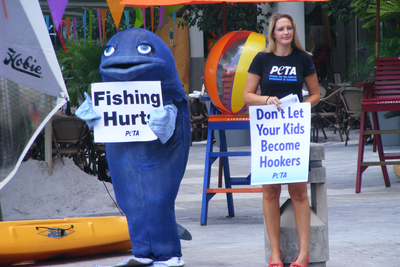
PETA protest with person in fish suit holding sign that says "Fishing hurts," next to a thin white woman holding a sign that says, "Don't let your kids become hookers."

PETA sign reads, “Don’t Let Your Kids Become Hookers.”

Female activists are “selling” their bodies for resources, but none of the profit goes to these sex workers.  Instead, the money raised goes to the organizations that they represent.  If a John buys a prostituted woman for sex acts, he pays her, and more often than not, the money goes to her pimp.  If a John buys a PETA membership because of his interest in PETA’s women (see PETA’s “Veggie Love” campaign for example), the money goes to her organization.

Incidentally, there is a vegan strip club in Portland, Oregon where women are also being prostituted for “the cause.”  The male club owner insists that “throwing boobs out there” is the only way to get people to visit his restaurant and try his vegan menu.  He claims he wants to “end the suffering of all creatures,” but it seems that he and the movement ignore the fact that women are “creatures,” too. We can be certain that “throwing penises out there” would draw some attention as well, but, patriarchy ensures that it is female nudity that will expected.

Stripping, like prostitution, is sex work that often preys on vulnerable populations of women (many feminists and survivors regard “sex work” to be a euphemism; for women who are trafficked, we must recognize it as sex slavery).  It is “work” with extremely high rates of sexual assault, rape, and other forms of violence.  It is “work” that is extremely difficult for most women to make a living with and it is “work” with little job security.  Strip clubs have a strict set of rules that ensure most money stays in the hands of the male owners, not in the hands of the hard-working women.  Like prostitution, stripping is glamorized or romanticized in the liberal imagination as something freely chosen by independent women who have full control over their work and lives. Some women enjoy that kind of agency, but most women do not.

Social activism today has been swept into the Non-Profit Industrial Complex, where organizations must compete for vital fundraising in order to survive. This extreme dependence on funding means that tactics are compromised, and advocacy becomes a means of making money to sustain the organization, not changing the world. In other words, even if viewers were to begin supporting Nonhuman Animal rights organizations as a result of being exposed to these sexualized tactics (and there is no evidence to support such a notion), most of the money raised will not be used in support of anti-speciesism. Instead, most of it will be put toward keeping the lights on, paying staff members, and funding more ways to raise money.

I argue that the Nonhuman Animal rights movement squanders an important resource by degrading women’s participation to stripping and legal forms of prostitution. So much more could be accomplished by nurturing women’s brains instead of objectifying their bodies. Beyond the negative impact that these tactics are having on so many of the girls and women groomed by the movement, we also need to take into account the impact that this type of activism has on women as a demographic. The socially-accepted degradation of women and their sexual objectification is directly linked with discrimination and violence against women. This is a consequence that social justice movements should take very seriously.


Corey Lee WrennDr. Wrenn is Lecturer of Sociology. She received her Ph.D. in Sociology with Colorado State University in 2016. She received her M.S. in Sociology in 2008 and her B.A. in Political Science in 2005, both from Virginia Tech. She was awarded Exemplary Diversity Scholar, 2016 by the University of Michigan’s National Center for Institutional Diversity. She served as council member with the American Sociological Association’s Animals & Society section (2013-2016) and was elected Chair in 2018. She serves as Book Review Editor to Society & Animals and has contributed to the Human-Animal Studies Images and Cinema blogs for the Animals and Society Institute. She has been published in several peer-reviewed academic journals including the Journal of Gender Studies, Feminist Media Studies, Disability & Society, Food, Culture & Society, and Society & Animals. In July 2013, she founded the Vegan Feminist Network, an academic-activist project engaging intersectional social justice praxis. She is the author of A Rational Approach to Animal Rights: Extensions in Abolitionist Theory (Palgrave MacMillan 2016).

Receive research updates straight to your inbox by subscribing to my newsletter.

The Neoliberalism Behind Sexy Veganism: Individuals, Structures, and “Choice”

Not Safe for Work:  Contains a pornographic “pin-up” drawing.
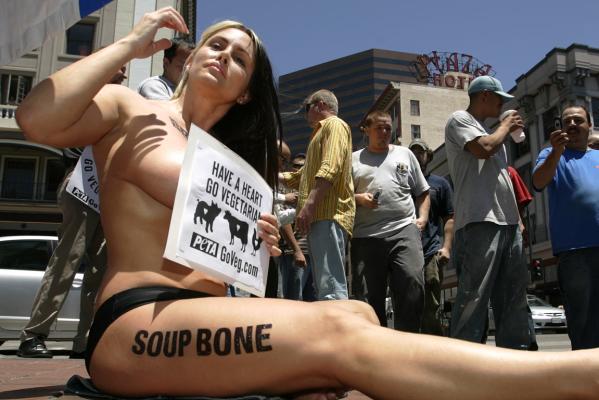
Woman sitting on street holding PETA sign. She is naked except for underwear. "SOUP BONE" is written along her thigh. Men are gathered around her, one is taking a picture with his cellphone.

Some time ago, I published a piece with Feminspire on the spread of sexualized Nonhuman Animal advocacy. In doing so, I spotlighted a small organization in Wisconsin that had either encouraged or otherwise allowed two young women—naked from the waist up with cabbage leaves fastened to their breasts—to hand out “I SPONSORED A PUSSY” stickers to passerby who donated.

I wrote the article for two reasons. First, the “cabbage chicks” stunt demonstrated how normalized the sexualization of female volunteers has become in the Nonhuman Animal rights movement. In fact, I suggest that this tactic amounts to little more than prostitution (these women are displayed as sexual objects in public places without compensation to raise money for the organization they represent).

I also published the piece to reopen the dialogue. You see, the organization had blocked out any discussion of the wider implications of its tactics. As is often the case in the movement, these important conversations are shut down.

Shortly thereafter, the president of the organization, who had blocked myself and my colleagues from participating in a polite (no, really) discussion on its Facebook page, visited the Vegan Feminist Network Facebook page along with one of the female volunteers. They took our criticism of their approach to be, among other things, an individual attack. The president reassured us that the young women who participated in this promotional stunt were doing so of their own personal choice.

CUFA sticker that reads: "I SPONSORED A PUSSY"

But social scientists implore us to understand that there is no “choice.”

This isn’t about the individual. Instead, this is about systems of oppression and social structures that shape our behavior and limit what choices are available to us based on our social identity.  If you are a young, thin, white woman advocating for Nonhuman Animals in a pornified, hyper-sexualized society, one choice stands out loud and clear:  get naked.  It’s supposed to be empowering, and we think maybe it helps animals.

As sociologist Gail Dines puts it, women can either be “sexy” and visible, or “unsexy” and invisible. Therefore, women and girls are under intense pressure to be “sexy” because, honestly, who would want to be invisible? Also, we mistakenly believe that this requirement for visibility in a patriarchal world also holds true in the public’s social justice schema. In other words, if activists aren’t sexy, they must be invisible. If so, that can’t be good for the cause, right? However, research clearly shows us otherwise. The public is less likely to support anti-speciesism when it is presented by naked women, because they understand that sexually objectifying women is unethical.

Women who support the tactic justify naked protest because it is considered “empowering.” But this framework begs the question: is our participation about individual women’s experiences? Or is it about the systematic torture and killing of other animals? Choice feminism makes this distinction unclear. The Nonhuman Animal rights movement’s strong desire to make violence a turn on is also problematic. I suspect that this relationship speaks to society’s tendency to juxtapose women with violence. The sexualization of violence against women and other feminized social groups like Nonhuman Animals is evidence to the rape culture we inhabit. It follows the script of patriarchy and oppression.

Regardless, “choice” is often thrown into the dialogue as a means of deflecting critical considerations of systemic violence.  If it’s all about your individual choice, then only you are responsible and only you are to blame.  Anyone who has a problem with that must be judging you as a person. So often, our advocacy is framed as personal choice or an individual expression.  If you aren’t vegan, that’s your “choice.”  If you want to have sex with vegetables and have it filmed by PETA, that’s your “choice,” too.

“Choice” in this context is actually a co-optation of anti-oppression activism in a neoliberal structure of exploitation.

Neoliberalism is all about “freedom”:  freedom from government, freedom from regulation, freedom to buy, freedom to sell, freedom to reach your full potential, etc.  It’s about individuals out for themselves. Individualized competition in supposedly “free” social spaces (the market in particular) is foundational to capitalism. Ultimately, however, this freedom afforded to a privileged few comes at a cost to those who will inevitably be exploited to pay for that “freedom.”  The ideology of neoliberalism and individualism works to benefit the privileged when individuals can attribute their success to their own individual hard work (when, in reality, they had considerable help from their race, gender, class, ability, and age privilege).  Importantly, this ideology also works to blame those less fortunate for their supposed failure.  We call them lazy, “stupid,” or bums. We overlook the extensive barriers placed in front of them.

This myth of freedom and meritocracy is actually pretty toxic for social movements.

This myth of freedom and meritocracy is actually pretty toxic for social movements. If we fail to recognize how structural barriers impede some, while structural privileges benefit others, we will find it difficult to come together as a political collective.  When we absorb neoliberal ideology and begin to understand social movements (which are inherently collective endeavors designed to challenge unequal power structures) as something done by the individual, for the individual, then we’ve lost the fight right off the bat.

In other words, neoliberalism asks us to focus on the individual, not the collective. It also encourages us to ignore the structural influence of social inequality in shaping our attitudes and behavior. Neoliberalism also prioritizes the market and understands that our legitimacy and self-worth can be found in our resource accumulation and purchasing power (in this case, the belief that “sex sells” rationalizes the support for naked protest). These are all reasons why neoliberalism is so very not good for a movement that prioritizes anti-oppression.
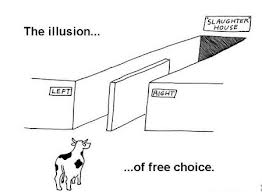
Cartoon of cow facing two doorways, both of which lead to a slaughterhouse

Neoliberalism attempts to convince us otherwise, but our values and actions, successes and failures are not about personal “choice;” there is no personal choice.  Choice is socially constructed.  Who you are and where you come from will influence exactly what “choices” are or are not available to you.  Why are so many young women “choosing” to masturbate with vegetables on film to promote veganism? Why is it just women “choosing” to dance on mobile stripper poles on parade floats to promote kitten adoption?  Why choose sex and stripping instead of some other “choice,” such as leading a protest, composing a song, or writing a book? The answer lies in the unequal allocation of opportunities and possibilities across demographics. Sex and stripping are the “choices” forced on women, while leadership and innovation (activities that respect the personhood of activists instead of objectifying them) are reserved for men.

Making it all about the “individual” also means prioritizing one’s privilege to engage certain behaviors at the expense of other less fortunate groups who suffer as a result.  Middle-class, cis gender, able-bodied, white women represent our movement with their thin, sexy forms, but where are the women of color?  Where are the women of size?  That’s right: they don’t get to be sexy. What about their “choice?” There is none. Not everyone is granted the “choice” to participate in the so-called “sexual revolution.” Women from less advantaged demographics who do participate are disproportionately vulnerable to shaming and stigmatization.
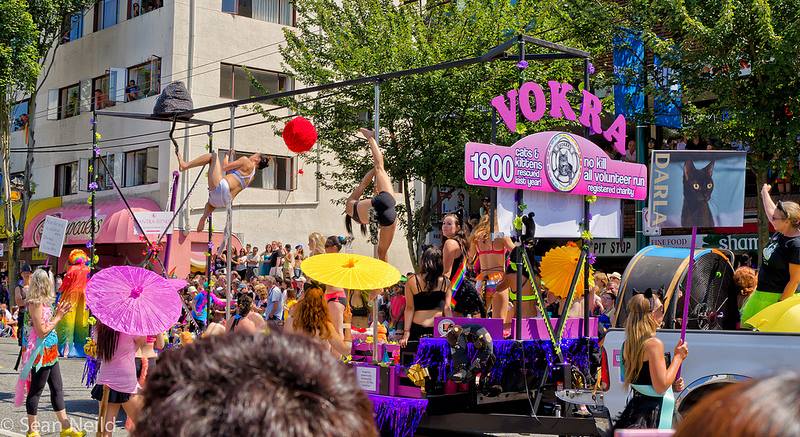
poleRelatedly, the sexual objectification of women and the consumption of pornography is linked to increased violence and rape against women.  Take a guess which women experience the highest rates of violence and rape?  The privileged able-bodied white cis women who dominate naked protest?  Nope, guess again.  It is actually women of color, poor women, lesbian women, trans women, disabled women, and other vulnerable women pay the price of white women’s “empowerment.”  Privileged young white women can enter public spaces, flaunt their sexuality, and find it “liberating,” but it’s the masses of poor and disadvantaged women who are not allowed to participate who also bear the brunt of that “liberation” through rape, sexual harassment, and beatings.

Listen up, it’s a trick. The “individualization” of social advocacy divides.  It masks privilege, otherizes, and excludes disadvantaged groups. Neoliberalism is what created the problem (speciesism) in the first place, so why would we think that digging in deeper with neoliberalism would fix it? Neoliberalizing our movement means we lose our collective power. When we play by the rules of this patriarchy with the bizarre assumption that we can only get people to drop that hamburger if they get a hard on, then we simply reinforce oppression.

We surrendered our power; we repackaged our social justice claimsmaking for pornified Playboy-speak. 

Neoliberalism has co-opted our  movement. We surrendered our power; we repackaged our social justice claimsmaking for pornified Playboy-speak.  Instead of loudspeakers, pens, and protests, it’s thongs, bums, and boobs. This isn’t a social movement anymore, it’s quelled resistance.  Not only are we disempowered, but we’re exploited further because we become another site of sexual objectification. The system not only gets us to shut it up, but it gets us to take it off, too. Take, for example, this Playboy image. Porn? Or Liberation?
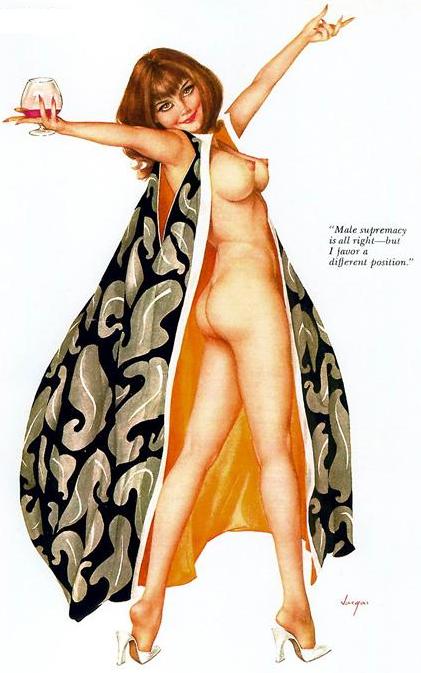
White woman in high heels twisting around to expose her buttocks and breasts. She is completely naked except a swirling robe. She holds a wine glass and smiles at the viewer. Reads, "Male Supremacy is alright--but I favor a different position."

The caption reads, “Male supremacy is fine–but I favor a different position.”  The feminist position or a sexual position? Porn? Or liberation?  Having trouble deciding?  You should, because there is no difference.

Feminism is being repackaged in a way that absolutely eliminates any female threat to male power, it is being repackaged in a way that benefits men.  Women are stripping and performing for patriarchy, and they’re doing it willingly.  They’re doing it under the mistaken assumption that they’re liberated, as though they are acting of their own free will and individual choice.
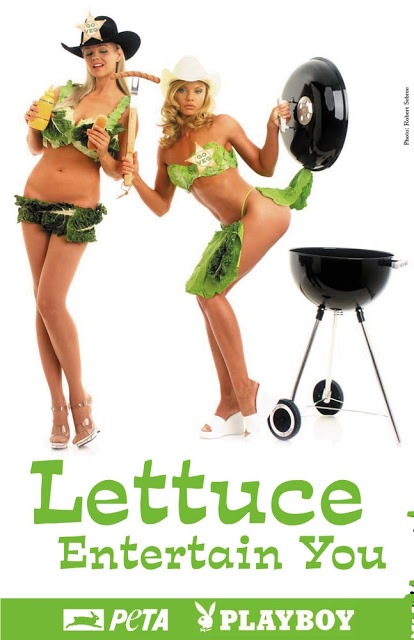
Peta/Playboy ad with two thin white women dressed in lettuce bikinis. Reads: "Lettuce Entertain You"

The cult of “free choice” is so powerful in the Nonhuman Animal rights movement that some of the most ridiculous stunts can be approved of and protected by the movement, even when faced with public feedback and scientific research demonstrating that these tactics do not work, discredit the movement, and hurt women as a group. PETA regularly hires Playboy “bunnies” to perform their pornographic demonstrations.  There’s even a vegan pinup website and a vegan strip club.  It’s liberating!

See the adjacent PETA/Playboy pinup as an example.  “Lettuce entertain you.”  Get it? Veganism or sexual favors?  Which is it?  Serious social movement, or more patriarchal noise in the crowded pornography landscape of Western culture? Confused? You should be.



Corey Lee WrennDr. Wrenn is Lecturer of Sociology. She received her Ph.D. in Sociology with Colorado State University in 2016. She received her M.S. in Sociology in 2008 and her B.A. in Political Science in 2005, both from Virginia Tech. She was awarded Exemplary Diversity Scholar, 2016 by the University of Michigan’s National Center for Institutional Diversity. She served as council member with the American Sociological Association’s Animals & Society section (2013-2016) and was elected Chair in 2018. She serves as Book Review Editor to Society & Animals and has contributed to the Human-Animal Studies Images and Cinema blogs for the Animals and Society Institute. She has been published in several peer-reviewed academic journals including the Journal of Gender Studies, Feminist Media Studies, Disability & Society, Food, Culture & Society, and Society & Animals. In July 2013, she founded the Vegan Feminist Network, an academic-activist project engaging intersectional social justice praxis. She is the author of A Rational Approach to Animal Rights: Extensions in Abolitionist Theory (Palgrave MacMillan 2016).

Receive research updates straight to your inbox by subscribing to my newsletter.

Wichsen für den Tierschutz

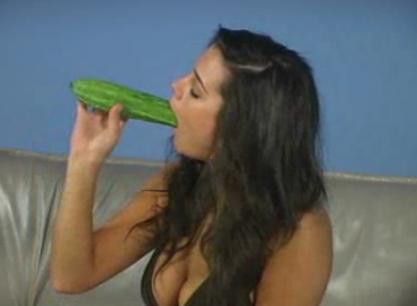
A bright-eyed white woman simulating oral sex on a cucumber. Meant to resemble an internet porn advertisement. Reads: "Can't get enough veggies? Join now!!! All access starting at $16/year."

Selbstbefriedigung ist doch total langweilig. Überall ist eh alles voll mit Pornographie. Wäre doch gut, wenn das ganze Gewichse, Gefingere und Gedildo noch einen anderen Sinn hätte als nur das eigene Ego zu befriedigen. Das haben sich wohl auch die brillanten Köpfe der Tierschutzvereinigung PETA in den USA gedacht und haben die Idee für eine glorreiche neue Kampagne verwurstet, die „Veggie Love-Casting Session“.

Das Konzept ist simpel: knapp bekleidete Frauen, Gemüse und viel Eigenliebe. Bereitgestellt werden kurze Clips, die Ausschnitte aus der Casting-Session sind. Die wie gesagt spärlich bekleideten Frauen müssen zunächst zeigen, was sie zu bieten haben. Wie es sich gehört, werden ihnen von einer männlichen Stimme aus dem Off Befehle erteilt. Nach der Frontansicht müssen sie sich drehen, damit du auch ihr Hinterteil begutachten kannst und aus einem, für mich völlig unverständlichen Grund, werden sie aufgefordert ihre Hände zu zeigen—die Handfetischisten unter euch können mir das ja in den Kommentaren erklären. Ein Händler stellt hier seine Waren zur Schau. Hätte PETA hierfür einen authentischen Hamburger Fischhändler engagiert, wäre diese Kampagne vielleicht noch zu retten gewesen …

Ist der Körper der Frau ausreichend gemustert worden, darf sie sich ein Gemüse von einem üppig gedecktem Erntedankfesttisch aussuchen und beweisen, wie sehr sie Gemüse liebt: „Choose a vegtable and show us how much you love it.“

Danach folgt das Vorspiel eines üblichen Pornoschinkens, wie du ihn selbst auf der zweitklassigen Plattform xhamster.com streamen kannst. Wie mir PETA mitteilte, seien aber ihre „Materialien wohl kaum als pornographisch zu bezeichnen“. Für mich ist es aber eindeutig, wenn sich eine Frau eine Gurke tief in den Rachen schiebt und dabei laut stöhnt … na ja was soll es denn anderes sein?

A white woman deep-throating a cucumber.

Warum aber aufregen? „Sex sells“ und wenn damit erreicht wird, dass etwas für den Tierschutz unternommen wird, ist das doch legitim. Dieser Meinung ist auch die PETA:

„Wir setzen „Nacktheit“ nicht grundlos ein; sie soll unsere Botschaft unterstreichen, ob die nun lautet „Lieber nackt als in Pelz” oder ob es darum geht, die Vorteile einer veganen Ernährung zu unterstreichen. Unser Ziel ist es, Tierleid zu stoppen, und wir nutzen dazu alle sich bietenden Gelegenheiten. Wir haben festgestellt, dass die Menschen eher unseren „aufreizenden“ Aktionen Beachtung schenken.“

Mal kurz durch den “PR-Gebrabbel”-Übersetzter gejagt, ergibt das folgende Message: Kein Trick ist uns zu billig, um mal wieder Aufmerksamkeit zu erhalten. Und seit den Pelzprotesten aus den 90ern haben wir eigentlich auch keine neue Strategie dazu gelernt.

A white woman in a bikini and high heels spanking herself with a stalk of celery.

Der Zweck heiligt aber nicht die Mittel. Es ist nicht legitim, wenn der Zweck von Frauen ist mit ihren Körpern Aufmerksamkeit zu erregen. Dadurch wird das Bild der Frau als Sexobjekt nur noch verstärkt. Damit wird signalisiert, dass Frauen einzig für die Befriedigung männlicher Bedürfnisse gedacht sind.

A woman (possibly of color) in a bikini and high heels leaning against a couch on the floor. Her head is back and her back is arched. She is rubbing herself with tomatoes.

Nun sagst du wahrscheinlich, dass sich die Frauen aus den Clips freiwillig für ihr Mitwirken in dieser Kampagne entschieden haben. Das wollte mir auch die Presseabteilung der PETA ans Herz legen und mir durch eine recht graphische Darstellung von Unrecht an Tieren ein schlechtes Gewissen machen:

„Nackte Demonstranten und Plakatmodelle – egal ob männlich oder weiblich – haben sich selbst zu dieser Art der Teilnahme an unseren Kampagnen entschlossen, weil sie die Aufmerksamkeit der Öffentlichkeit auf die ernste Problematik des Tiermissbrauchs lenken wollen:

Diese Aktivisten sind entschlossen, Füchsen zu helfen, die in Millionenzahl für die Pelzindustrie per Stromschlag getötet und gehäutet werden, Kälbern, die ihren verstörten Müttern entrissen und für die Fleischindustrie geschlachtet werden, Elefanten, die blutig geschlagen und zu einem jahrelangen Leben in Ketten in Zirkussen gezwungen werden, und den Milliarden Tieren, die Qualen, die zum Wahnsinn treibende Isolation, Hunger, Terror und einen gewaltsamen Tod aus den Händen völlig gleichgültiger Industrien erleiden.“

Ich will natürlich nicht behaupten, dass die Frauen aus den Castings zu ihrem Mitwirken gezwungen wurden. Diese Ausrede wird auch zu gern von Pornoproduzenten verwendet, um ihre erniedrigenden Filmchen zu rechtfertigen. Wie freiwillig kann die Teilnahme sein, wenn Frauen in unserer Welt immer noch überwiegend als Sexobjekte gesehen werden, dafür gedacht, Männer zu befriedigen? Viele Frauen haben es aufgrund ihrer Umgebung oder ihres Status schwer, sich von diesem Konstrukt zu befreien. Niemand kann also hier behaupten, dass alles auf freiwilliger Basis geschieht.

Image depicts two women in bikinis performing oral sex on a carrot. From PETA's Veggie Love campaign.

Sogar vor angedeutetem Inzest macht die PETA nicht Halt. Ein Bild aus einem Clip mit dem Namen „The Twins“.

Die Rolle der Frau scheint PETA jedoch wenig zu interessieren, sie sind ja eine Tierschutz- und keine Frauenrechtsorganisation. Leicht bekleidete Frauen wurden schon sehr oft für Kampagnen missbraucht, wie etwa für die „All Animals have the same parts“-Plakate, auf denen auch schon Pamela Anderson zu sehen war. Offensichtlich ist, dass nur Frauen für diese Art von Marketingstrategie benutzt werden. Der einzige Casting-Clip mit einem Mann ist kaum ernst zunehmen. Anstatt ebenfalls seine große Liebe für Gemüse zu beweisen, wirkt die Szene eher wie ein Sketch.

Der Grund für die spärliche Männerquote scheint offensichtlich zu sein. Es wird angenommen, dass Männer „sexbesessener“ sind und Kampagnen mit Frauen deshalb ein größeres Publikum erreichen.

PETA Porn Animalized Woman of Color

Die Darstellerin soll wie ein Tier ihren Broccoli auf allen Vieren und ohne Hände verzehren.

Aber die Casting-Kampagne der PETA stört mich nicht nur, weil ich sie für frauenverachtend halte, sondern weil sie zur Realisierung ihre Ziele, sogar ihre eigenen Prinzipien vergisst.

Denn ein offizieller Slogan der PETA lautet: „Animals are not ours to eat, wear, experiment on, use for entertainment, or abuse in any way.“

Wozu sind denn aber die Casting-Clips gedacht? Natürlich um Aufmerksamkeit für den Tierschutz zu erregen. Aber wie geschieht das?

Durch Unterhaltung oder neudeutsch: Entertainment! Die Frauen in den Filmchen dienen unserer Unterhaltung. Wir sollen angelockt werden. Erst danach sollen wir auf Tierrechte aufmerksam gemacht werden. Menschen sind auch nur Tiere. Das wird von PETA immer wieder betont. PETA missachtet ihre eigenen Werte und reduziert die Frau zur Sex-Maschine, zum Unterhaltungs-Objekt unterster Schublade.

Es existieren auch abseits von PETA ausreichend Möglichkeiten sich für den Tierschutz einzusetzen. Aber falls euch die Clips immer noch aufgeilen, dann wichst und fingert wenigstens eine Runde für das Recht von Tieren. Bringen wird das natürlich nichts.

Von Luca Antonio Sagnotti

Empleados de PETA del sexo masculino hacen que las mujeres realicen actos sexuales con vegetales “Por la defensa de los animales”

Advertencia: Este artículo contiene imágenes pornográficas, se recomienda no leerlo en el trabajo.

Si ustedes recuerdan,  hace un par de años, PETA lanzó una página web de pornografía en la cual se mezclaban escenas explicitas de violencia con imágenes sexuales de mujeres ¿Parece un mensaje positivo y coherente, ¿no cierto? afortunadamente, las imágenes de las mujeres fueron removidas, y la página web de porno, no es más que videos cortos de granjas de cría intensiva. Sin embargo, las personas vienen por las imágenes morbosas de mujeres usadas como objetos sexuales, y son expuestos a la violencia explicita.  La perturbadora conexión entre sexo y violencia permanece intacta.

En cualquier caso, la pornografía de PETA está de vuelta con un proyecto llamado “Veggie Love Casting Session.” En mi opinión, este es sin lugar a duda el material más obsceno que PETA haya producido con las donaciones bien intencionadas de personas que realmente se preocupan por el sufrimiento de los animales.

A bright-eyed white woman simulating oral sex on a cucumber. Meant to resemble an internet porn advertisement. Reads: "Can't get enough veggies? Join now!!! All access starting at $16/year."

¿Conviértase en un miembro de PETA para ver más porno? ¿O para ayudar a los animales no humanos?

En la página web, se encuentran diferentes videos cortos de mujeres realizando actos sexuales con vegetales. En el comercial, las mujeres desfilan delante de la cámara y son inspeccionadas como si fueran esclavas en la tarima de subastas, como si fueran carne humana lista para consumir. Este proyecto es liderado por hombres, los cuales toman las decisiones. Al fondo  se escuchan las voces masculinas dando instrucciones a las mujeres, pidiéndoles que “muestren cuanto les gusta” el vegetal que se les asigno; para finalmente reírse de la humillación de ellas al final de la sesión. Las fotos de estas mujeres están incluidas al final de la página web donde los espectadores puedan otorgarles una calificación con “pulgar arriba” para darles su aprobación o “pulgar abajo” para darles un voto negativo, tratándolas como objetos de forma descarada.

Image depicts two women in bikinis performing oral sex on a carrot. From PETA's Veggie Love campaign.

Hermanas gemelas cometiendo incesto para abogar por los derechos de los animales no humanos para la diversión de los directores de PETA del género masculino y los espectadores.

PETA imita perfectamente la desagradable prevalencia del racismo en la pornografía. La única mujer Afroamericana que aparece en el video es presentada como si fuera un animal, gateando en el sofá hacia un brócoli el cual devora sin usar sus manos.

An African American woman in a bikini and high heels crawling across a couch towards broccoli.

Muchas personas argumentarían que estas mujeres hacen esto  por “elección propia” y porque  lo “disfrutan”. Hasta cierto punto esto es probablemente cierto. Pero este argumento carece de objetividad. Tomen en cuenta los factores que determinan esas elecciones: un ambiente en el cual las mujeres son vistas como objetos sexuales y como un medio para el entretenimiento masculino. Las mujeres tienen una gran presión para asumir los roles correspondientes a su  género. Bajo un patriarcado, las mujeres son socializadas para que sean esclavas de los hombres. Las mujeres son preparadas como niñas pequeñas, a las cuales se les educa en la premisa que se espera y que es obligatorio  que ellas provean sexo y placer al hombre. En este mundo, las mujeres tiene pocas oportunidades para ser exitosas con base en sus habilidades, conocimiento, y otras cualidades dignas; el trabajo sexual es una de las pocas opciones disponibles. Esta opción ni siquiera es contemplada para los hombres.

Por cierto, la pornografía y otras formas de explotación sexual tienden a utilizar especialmente a mujeres vulnerables,  aquellas provenientes de familias de bajos recursos, o de un ambiente familiar violento o con pocas oportunidades laborales o educacionales, y  también aquellas mujeres que sufren de adicciones. La pornografía lastima a todas las mujeres pero especialmente a las mujeres en riesgo.

A white woman in a bikini and high heels spanking herself with a stalk of celery.

Mujer dándose una zurra con un apio para que los espectadores masculinos aprendan acerca de especismo

Cuando los visitantes de esta página web terminan de ver los videos de las mujeres realizando actos sexuales con vegetales, aparecen videos de animales que son golpeados y asesinados…porque nada es más sexy que colocar la imagen de una mujer siendo explotada junto a la imagen de una animal que está agonizando. Esto es en realidad lo que se ha hecho de la sexualidad: Subyugar y herir a los vulnerables para el placer de los privilegiados. Observar a alguien humillado y sufriendo para nuestro entretenimiento se ha convertido en algo sexy.

A woman (possibly of color) in a bikini and high heels leaning against a couch on the floor. Her head is back and her back is arched. She is rubbing herself with tomatoes.

Mujer pretendiendo que tiene sexo con tomates para educar a otros acerca del veganismo

PETA está dando una connotación sexual a la degradación y humillación de las mujeres. PETA le da una connotación sexual a la explotación de la población vulnerable. PETA dota de sexualidad a la violencia hacia la mujer. PETA otorga una connotación sexual a la opresión.

La investigación es abrumadoramente clara. La pornografía conlleva a la degradación de la mujer, a ver a la mujer como un objeto, a la deshumanización de la  mujer y a la violencia hacia la mujer. Esto hace que las mujeres internalicen esta devaluación y que ellas mismas se vean como objetos. Les quita poder  y permite que sean susceptibles a la violencia intrafamiliar, alimenta la cultura de la violación. Para mayor información en qué manera la pornografía lastima a las mujeres, échele un vistazo a The Price of Pleasure  (se advierte que es extremadamente provocador y gráfico). Haga un poco de búsqueda en la internet para encontrar esta video gratis.

A white woman deep-throating a cucumber.

Sus donaciones de PETA siendo utilizadas para la explotación de las mujeres.

Sostengo que abogar con tácticas sexistas es un insulto despreciable hacia nuestro importante movimiento por la justicia social. PETA asesina a los animales, (visite el enlace PETA kills animals) y asesina a las mujeres de manera simbólica. Por favor, por el amor hacia cualquier cosa buena que exista en este mundo,  nunca vuelvan a hacer donaciones a PETA, no permitan que sus amigos y familias hagan donaciones. Ustedes no necesitan a PETA para que haya un cambio verdadero para los Animales no humanos: Promuevan el veganismo de manera pacífica, apoyen la estrategia de atrapar, esterilizar y dejar en libertad (en inglés, trap-neuter-release), apoyen los santuarios de animales veganos, apoyen su refugio de animales local, adopten, luchen contra la opresión de toda clase. RESPETEMONOS LOS UNOS A LOS OTROS en nuestra lucha para acabar con el especismo.

Traducido por Tatiana Rodriguez Labrador


Corey Lee WrennDr. Wrenn is Lecturer of Sociology. She received her Ph.D. in Sociology with Colorado State University in 2016. She received her M.S. in Sociology in 2008 and her B.A. in Political Science in 2005, both from Virginia Tech. She was awarded Exemplary Diversity Scholar, 2016 by the University of Michigan’s National Center for Institutional Diversity. She served as council member with the American Sociological Association’s Animals & Society section (2013-2016) and was elected Chair in 2018. She serves as Book Review Editor to Society & Animals and has contributed to the Human-Animal Studies Images and Cinema blogs for the Animals and Society Institute. She has been published in several peer-reviewed academic journals including the Journal of Gender Studies, Feminist Media Studies, Disability & Society, Food, Culture & Society, and Society & Animals. In July 2013, she founded the Vegan Feminist Network, an academic-activist project engaging intersectional social justice praxis. She is the author of A Rational Approach to Animal Rights: Extensions in Abolitionist Theory (Palgrave MacMillan 2016).
Receive research updates straight to your inbox by subscribing to my newsletter.